Get Full Government Meeting Transcripts, Videos, & Alerts Forever!
Get email alerts on the Coastal Resilience Conservation Coordination topic
No spam. Unsubscribe anytime.
New Shoreham committees outline coordinated response to sea-level rise, water and lighting concerns
Summary
Members of the New Shoreham Conservation Commission and the Coastal Resilience Committee met to identify overlapping priorities including bluff protections and CRMC oversight, freshwater monitoring, Corn Neck Road planning, outdoor lighting, and public education; the commission approved minutes and adjourned by voice vote.
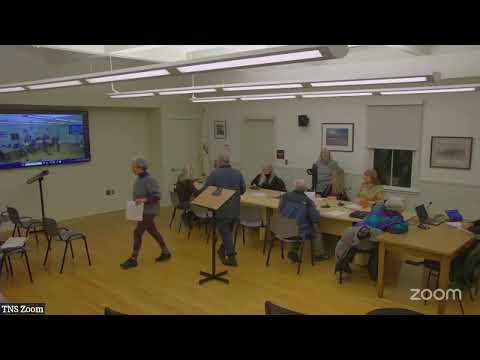
The New Shoreham Conservation Commission met jointly with the town’s Coastal Resilience Committee on Jan. 14 to coordinate responses to sea-level rise, groundwater salinity and town planning issues, and to plan public outreach and data collection on water quality and coastal projects.
Commission Chair Taryn McGregor opened the meeting and emphasized the groups’ shared interest in outreach and preventing uncoordinated work around major bluff projects. "That never came to us, unfortunately," McGregor said of a recent bluff project that proceeded without notice to the commission, calling it "hard to witness" and stressing the need for better insertion of advisory committees into permitting and enforcement processes.
The meeting focused on several areas the committees said overlap and require joint work: monitoring the island’s freshwater aquifer and private wells, clarifying which projects should come to the conservation commission for review or comment to the Coastal Resources Management Council (CRMC), coordinating on the Corn Neck Road nature-based project, and public education efforts aimed at seasonal residents and renters.
Why it matters: Participants said the issues combine environmental change (shoreline geomorphology, marsh migration and saltwater intrusion) with town capacity constraints (limited town water supply and enforcement of existing ordinances). Sue Gibbons, a member of the conservation commission, read the group’s enabling language to underline the commission’s advisory role: "By statute, the conservation commission may recommend to municipal councils, boards, or agencies a program for the better promotion, development, utilization, or preservation of open areas, streams, shores, wooded areas, roadsides, swamps, marshlands, and natural aesthetic areas." Gibbons and other members said the commission’s statutory remit intersects closely with coastal-resilience priorities.
Freshwater and well monitoring: Committee members discussed past and planned water-quality testing. BIMI-sponsored well testing has been run periodically and samples have been analyzed by the University of Rhode Island, though participants said testing has been episodic and not consistently publicized. Meeting participants raised two monitoring options: periodic lab testing of selected wells (more costly) and lower-cost conductivity sensors logged over time to detect gradual salinity increases. A Coastal Resilience participant said BIMI and volunteers have done sampling previously and that more systematic, public reporting would be useful to detect trends.
Town water capacity and new infrastructure: The committees discussed the water department’s recent work to increase storage and add a deeper well and reverse-osmosis capacity. Participants said those measures were intended primarily to support existing town service and emergency reserves rather than to expand unconstrained new development. Commissioners said they will continue to review permit applications and ask applicants about water source and demand (for example, whether a project is tied to town water or private well).
Bluff work and CRMC oversight: McGregor characterized a recent large bluff alteration as an owner-contractor action that did not come before the commission; she said the matter has been identified as a CRMC enforcement issue. Members said they want clearer processes so that significant shoreline work is noticed by local committees and the public before geomorphology-altering activity proceeds.
Corn Neck Road and grants: Coastal Resilience members reported coordination with town planning staff and with outside partners; they said the project around Corn Neck Road is receiving support through the Rhode Island Infrastructure Bank and grants from the National Fish and Wildlife Federation and that University of Rhode Island researchers are studying shoreline inundation and nature-based options for Crescent Beach.
Lighting and development reviews: Committee members discussed a pending rewrite of the town’s outdoor lighting ordinance and suggested adding wildlife- and conservation-focused language, stronger education for applicants, and practical enforcement mechanisms (timers, motion sensors, downcast or amber fixtures). Participants said the ordinance exists but felt enforcement and public awareness are limited.
Public outreach and next steps: Both committees favored a joint public-engagement event (suggested venues included BIMI) with informational stations—water testing, town departments, conservation and resilience resources—and targeted materials for seasonal residents and renters. Participants proposed forming hybrid working groups that include members from both bodies, using shared email lists for meeting notices, and assigning education tasks to existing working groups. Members committed to exchange contact lists and prepare a short overlap checklist to guide the next steps.
Formal actions: The commission approved the minutes from the December meeting by voice vote (motion by Dorothy, second by Taryn) and then voted to adjourn; both motions were adopted by voice vote.
Ending: Committee members agreed to follow up by email to set dates and coordinate a public education event and to continue sending representatives to each other’s meetings so that jurisdictional gaps and enforcement pathways are clearer going forward.