Get Full Government Meeting Transcripts, Videos, & Alerts Forever!
Get email alerts on the Housing Affordability topic
No spam. Unsubscribe anytime.
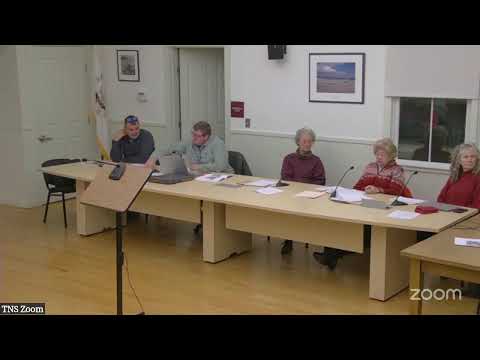
New Shoreham planning board outlines multi-pronged push on affordable and attainable housing
Summary
The New Shoreham Planning Board reviewed a suite of housing strategies—revising 5-13 rules, promoting ADUs, exploring community land trust models and targeted funding—and directed staff and a subcommittee to pursue legal, financial and design follow-ups ahead of next month’s meeting.
The New Shoreham Planning Board on Jan. 8 discussed a package of measures to increase affordable and attainable year‑round housing, including possible changes to zoning section 5-13, expanded use of accessory dwelling units (ADUs), creation of community land trust options and targeted incentives for year‑round rentals.
Board members, staff and several commenters reviewed a list of action items supplied by consultant Weston & Sampson and asked staff to return with legal guidance, funding options and a narrowed set of building plans the board could consider as “expedited” templates for ADUs.
Why it matters: Planning board members said the island’s limited land area and high property values make small, legally enforceable ownership and rental tools important to retaining year‑round workers (school staff, utilities, public safety and service employees) and families. Board members repeatedly emphasized the need for accurate, current demand data to shape choices about acquisition, subsidy levels and unit types.
Discussion highlights - Subdivision/5‑13 revisions: The board agreed to further explore allowing smaller subdivisions of existing lots conditioned on recorded affordability restrictions so a smaller unit could be mortgaged and remain year‑round housing. Jen (Planning Department staff) noted forthcoming statutory amendments that will require updates to 5-13 language; members asked staff and counsel to reconcile any changes with state requirements before drafting ordinance text.
- Ownership vs. rental limits: Board members debated deed restrictions and term lengths (examples discussed included 30 years to in perpetuity) and whether ownership under 5‑13 could be limited to year‑round occupancy. Several members cautioned that allowing ownership without enforceable use restrictions could lead to conversion to short‑term rentals.
- ADUs and preapproved plans: The board discussed an “expedited approval” idea: a short menu of preapproved ADU designs (garage‑with-apartment, small detached cottages, modular units) that could shorten the permitting process. Planning staff reported a partial collection of proposed plans from private designers and modular vendors; the board directed a subcommittee to screen submitted drawings and identify 3–5 candidate prototypes the board could recommend for further engineering review or for a design competition.
- Community Land Trust and funding: Members asked staff to research Community Land Trust experience on the mainland and in nearby municipalities (Newport was mentioned) and to return with models for acquisition funding, stewardship structures and likely revenue streams. Staff flagged the housing board’s limited capital and recommended exploring donations, targeted town set‑asides and whether conservation organizations could partner on cooperative acquisitions.
- Incentives, tax measures and a dynamic needs database: Members supported exploring tax incentives for owners who offer year‑round rentals and asked staff to coordinate with the town’s homestead exemption work. The board also asked staff to accelerate development of a dynamic database — a living registry of year‑round housing need — to track applicants and better target projects.
Quotes (from meeting participants) "We should take a look at it after we find out what the new regulations are. There's no sense doing something only to find out two months from now that we can't do that," said Jen (Planning Department staff), summarizing the need to align local ordinance changes with state statutory updates.
"Money is always the big issue. Money is the bottom line," said a planning board member during discussion of financing mechanisms for ADU assistance and land acquisition.
Next steps and follow‑up The board directed staff and a subcommittee (members Gail, Claire and one other) to: 1) inventory and screen submitted ADU/subdivision plans and return with 3–5 buildable prototypes; 2) request legal guidance on enforceable deed restrictions and condominium sale restrictions for year‑round occupancy; 3) contact Community Land Trust operators for case studies and financial models; and 4) report progress at the February meeting. Weston & Sampson materials and a letter from Cindy Pappas were retained for reference.
Ending Board members emphasized that any ordinance changes be legally vetted and coordinated across the housing board, planning office and town solicitor so the town does not adopt measures that conflict with state rules or cannot be enforced at the point of sale or transfer.