Get Full Government Meeting Transcripts, Videos, & Alerts Forever!
Get email alerts on the Legislative Agenda topic
No spam. Unsubscribe anytime.
Council narrows 2025 legislative priorities: landing fee, property-tax tools, school funding and infrastructure
Summary
Councilors prioritized a 2025 legislative agenda that includes a ferry landing fee, new enabling authority for local property-tax tools, a school‑funding floor, more housing funding for small communities and increased engagement with DOT on road and harbor repairs.
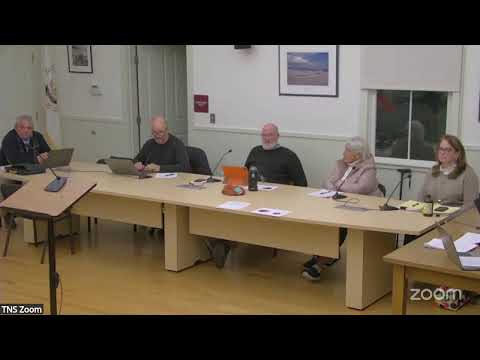
The New Shoreham Town Council spent the bulk of its meeting on Wednesday discussing a proposed 2025 legislative agenda that would seek state action and administrative change on several fronts: a ferry landing fee, greater recognition for host communities before the Public Utilities Commission (PUC), enabling legislation that would allow refined local property-tax tools, a school‑funding minimum, expanded housing funding for small communities, and more aggressive engagement with state agencies on DOT infrastructure and sea-level rise grants.
Councilor Keith (councilor) opened the agenda discussion by proposing three ferry-related priorities: (1) exempting year‑round residents from a landing fee or making the fee seasonal; (2) increasing the landing fee so it is a meaningful user fee (a $5-per-ticket increase was suggested multiple times by speakers and Harbor Committee members); and (3) commissioning a neutral study of whether a port authority would benefit the town, funded by state, federal or private grants. Patrick Evans (Harbors Committee) later confirmed the committee—s support for a $5 landing-fee increase in testimony to the council.
Several council members said host communities — notably New Shoreham and Narragansett — should have greater standing with the PUC because they shoulder both costs and benefits from ferry operations. Staff described existing PUC practice as giving notice to host communities but representing statewide interests; some council members said statutory clarification could strengthen local input on schedules, routes and operations.
On property taxes, the council discussed pursuing enabling legislation to allow a municipal mix of tools: (a) commercial/residential differentials; (b) tax incentives or refined exemptions for year‑round rentals that provide long‑term housing; and (c) a local tool addressing accessory dwelling units (referred to in the meeting as —5‑13s—). Amy (town staff) said two of those changes can be enabled by pending bills other towns are filing and the council could "piggyback"; the accessory‑unit tool would likely require town‑specific language.
Education funding also drew sustained comment. Councilors noted New Shoreham received only modest state aid for its school (figures discussed ranged from about $60,000 in a recent year to roughly $84,000 in earlier comments), and several members recommended seeking a floor in the school‑funding formula so the town—s small student population and high per‑capita needs are not left at the bottom of the distribution.
Housing and funding were recurring themes. Cindy (Block Island Housing Board) and Chris Forfel said the housing board needs more revenue to meet local affordable‑housing goals; Cindy noted the board has statutory authority to issue up to $2 million in bonds but that debt service would strain current annual receipts. The housing board recommended that short‑term rental licensing fees be considered as a dedicated housing revenue source; the board estimated licensing could generate roughly $80,000–$100,000 annually and urged the council to include that funding approach in budget and legislative planning.
Councilors called for a more aggressive posture with the Rhode Island Department of Transportation (DOT) and Department of Environmental Management (DEM) on local roads, culverts and waterfront infrastructure. Amy said the town is preparing a TIPs (transportation improvement program) application that will prioritize the five town facilities in worst condition for state consideration.
Other items raised during the legislative-agenda discussion included sea‑level rise planning and grant funding to hire professional planners/engineers, and wildlife control: one councilor urged more active measures to reduce the deer herd because of ecological damage and vehicle collisions. Several councilors said they would refine the list and invite the town—s state senator and representative to a future meeting for input.
The council voted to place the landing-fee update on the town—s legislative agenda (motion seconded and approved during the meeting); specific fee amounts and collection mechanisms will be discussed with legislators and stakeholders in coming meetings.