Get Full Government Meeting Transcripts, Videos, & Alerts Forever!
Get email alerts on the Lodging Taxes topic
No spam. Unsubscribe anytime.
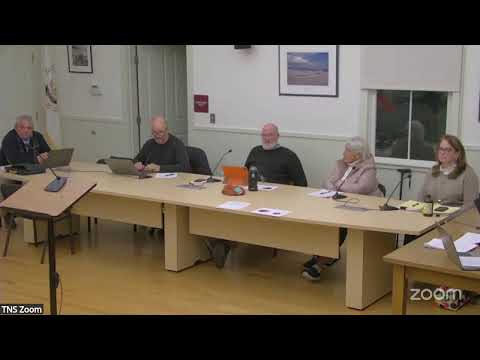
New Shoreham council hears refresher on lodging taxes, cottage fee and housing-board collections
Summary
Town staff reviewed how hotel and short-term rental taxes are split among state and local recipients, explained the housing board—s 1% fee is a tax (not voluntary), and described new compliance steps tied to short-term rental licensing.
Town staff walked the New Shoreham Town Council through the mechanics of the island—s lodging taxes on Wednesday, clarifying how the tax on hotel rooms and whole-house rentals is collected and distributed and describing how the Block Island Housing Board—s 1% fee is enforced.
Amy (town staff) told the council a typical hotel room on Block Island carries a 13% total tax: 7% state sales tax, a 5% state hotel tax that is split among four recipients, and a 1% local hotel tax remitted to the town. She said the 5% hotel tax is divided as follows: 25% to the host town, 5% to the convention center/visitors bureau, 45% to the tourism council and 25% to commerce (state-level disbursements). Amy also explained that whole-house rentals (cottage rentals) remain subject to the 7% state sales tax plus a separate 1% town tax (commonly referred to locally as the cottage tax) and an additional 1% housing-board fee in some cases.
The housing-board fee and enforcement were the focus of several questions. Cindy (Block Island Housing Board) said the 1% housing-board charge is a tax authorized by state enabling legislation and is not voluntary. Cindy and other speakers said the town and housing board can track who has paid, but until now officials had not aggressively pursued noncompliance; the council was told proof of payment will be required for short-term rental license renewal beginning next year.
Chris Forfel (housing board member and resident) and other residents urged the council to direct lodging-related funds toward housing needs if the legislature changes the distribution of the state—s hotel tax. Gustave Willie of the Block Island Tourism Council and a local business owner described the sums involved and warned that raising the local effective tax on whole-house rentals to parity with hotel rooms would significantly affect rental business and customers.
Amy referenced a Division of Taxation report showing aggregate local lodging receipts rose from about $575,000 in 2020 to roughly $812,000 in 2024. She and other staff noted the monthly totals can show spikes or corrections and that division-level reporting sometimes lacks the underlying transaction detail the town would need for deeper auditing.
Council members and public speakers discussed collection mechanics: real-estate firms and online platforms often collect and remit the 7% sales tax, while the housing-board 1% is generally remitted by property owners or local agents to the housing board. Amy said the town will strengthen collection by tying proof of payment to short-term rental license renewal.
The presentation underscored that Block Island is among the larger contributors statewide to lodging-tax receipts and that proposed state-level changes to hotel tax distribution could materially affect the town—s revenues and local housing funding options.
The council did not take a formal vote on any lodging-tax changes during the meeting.