Get Full Government Meeting Transcripts, Videos, & Alerts Forever!
Get email alerts on the Land Use Tents Containers topic
No spam. Unsubscribe anytime.
New Shoreham delays vote on ordinance to regulate tents, trailers and shipping containers; public hearing continued to March 19
Summary
Town council and land-use attorney debated a draft zoning amendment that defines tents, trailers and shipping containers, carves out exemptions and sets an eight‑day rule; planning board work praised but council asked for clarifications and a second hearing.
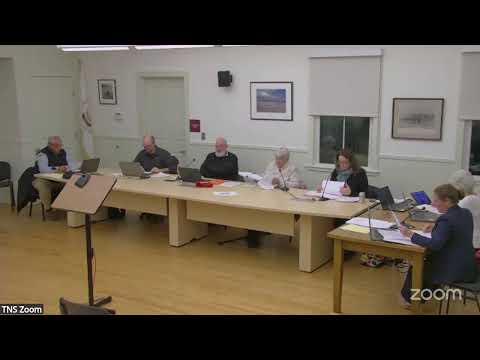
The New Shoreham Town Council continued its review of a proposed zoning amendment on tents, trailers and shipping containers and set a follow-up public hearing for March 19 after council members and the town’s land-use attorney flagged items that need clarification.
The ordinance, drafted by the planning board, adds definitions for “tent,” “trailer” and “shipping container,” narrows an earlier, broader draft and creates a regulatory section (draft §5‑19) that permits certain temporary uses while setting limits such as a cap of more than eight days in a month for reuse or commercial activity. It also lists exemptions including catering operations, weddings, beach and outdoor recreational activities, sporting events, church events and farmers markets.
Karen (land use attorney) told the council the planning board “gave it a lot of thought” and produced a slimmer, “pretty straightforward” ordinance. She described the new regulatory approach as, in effect, carving out circumstances when tents may be allowed and then subjecting those to the new regulatory rules in §5‑19: “The section on regulating tents is a little different. It's more saying in certain circumstances, certain types of tents could be allowed,” she said.
Council members pressed staff and counsel on scope and enforcement. Questions included whether the ordinance applies to all town property, if existing uses would be grandfathered, how enforcement of the “more than eight days in a month” rule would be handled, and whether common beach pop‑up canopies would be subject to the draft color and signage rules in §5‑19. Karen said town property would be subject to the ordinance’s text, but noted municipal uses are not commercial or industrial and thus treated differently under the zoning code. She also advised that the eight‑day measure was chosen by the planning board after deliberation and can count consecutive or nonconsecutive days: “What they came up with was used for more than 8 days in a month,” she said.
Council members requested explicit clarity on several points before adopting the amendment: whether beach pop‑up shelters should be exempt from the draft “neutral color” requirement, how library or school events would be treated, and whether outdoor seating attached to restaurants would fall under the catering exemption or the eight‑day limit. Counsel suggested the draft be viewed as a starting point and that additional refinements were appropriate.
After extended discussion the council voted to continue the matter and have staff and planning board return with revised language and clarifications. The council established a follow-up public hearing for March 19 to take further testimony and consider redrafted language.
Why it matters: The ordinance would be the town’s first explicit regulation covering tents and similar temporary structures; it could affect businesses that use seasonal canopies, private events, beachgoers and contractors who use trailers or shipping containers for construction storage. Council members repeatedly emphasized the need to balance residents’ everyday recreational use of the beach with concerns about commercial displays, long‑term placement and visual impacts in downtown areas.
Next steps: Planning staff and counsel will draft clarifications (including a proposed carve‑out for personal beach pop‑ups and clearer language on municipal uses and storage) and bring the item back for the March 19 public hearing.