Get Full Government Meeting Transcripts, Videos, & Alerts Forever!
Get email alerts on the Affordable Housing topic
No spam. Unsubscribe anytime.
Block Island Housing Board asks New Shoreham for $2 million warrant for Ball O'Brien affordable housing
Summary
The Block Island Housing Board presented a plan for 16 modular housing units and asked the New Shoreham Town Council to place a $2,000,000 warrant on the financial town meeting ballot to strengthen applications to Rhode Island Housing and begin site infrastructure work.
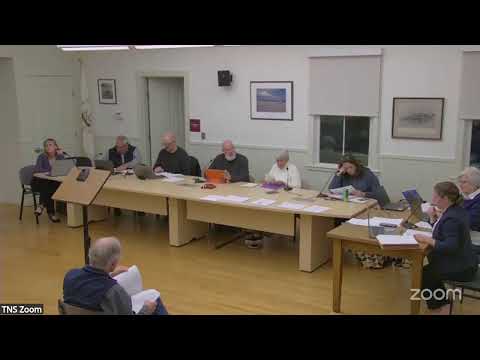
Mark McGuire, chair of the Block Island Housing Board, asked the New Shoreham Town Council on April 3 to put a $2,000,000 warrant on the upcoming financial town meeting ballot to help fund the Ball O'Brien Project, a 16-unit modular housing development on Westside Road.
Nut graf: The housing board says the town contribution would reduce its financing gap, make applications to Rhode Island Housing more competitive and allow limited infrastructure work to begin. Public comments at the council meeting emphasized local workforce and year-round resident needs.
The project site is Plat 18, Lot 2-3, about 2 acres adjacent to the East Searls Ball development on Westside Road. The design presented to the council calls for eight two‑story buildings with two two‑bedroom units each (16 units total). Two of the buildings would include one accessible unit each, and the board intends modular construction with on‑site finishing.
“We have approximately $1,500,000 on hand,” Mark McGuire told the council, citing grant money already raised. He said the housing board has done preliminary bidding: bids incorporating infrastructure and finishing ranged “from 6.4 to 7.5,” with infrastructure estimated at about “1.1 to 1.2.” McGuire said the board is updating those bids because costs have risen since the original request for proposals about 18 months ago.
McGuire described funding already secured or sought: the Russo Foundation provided a multi‑year grant described in the presentation as “300 ks,” the Rhode Island Infrastructure Bank granted “2.50 ks” to begin infrastructure work, and a “solar initiative” contributed “400 ks” toward solar installation. The housing board said it would use its bond authority and rental income to repay town‑backed debt if the warrant passes.
McGuire and other board members said the development would strengthen pending applications to Rhode Island Housing. He said the board’s applications in 2023 and 2024 were rejected because, Rhode Island Housing told them in a phone briefing, “the development is too small … and the cost of construction per unit is too high.” McGuire said the board will apply again in the fall and believes showing a town commitment would improve its prospects.
Public comment at the meeting included several residents describing how lack of year‑round housing affects municipal services and local businesses. USPS worker Jessica Rosado told the council she will be displaced from island housing in June and called affordable year‑round rental opportunities essential to retaining municipal employees and other workers. “I would have to move back in with my mother out of state again,” she said, adding that commuting to her job would be unaffordable.
Housing board member Chris Warfield said the board has prepared dynamic pro formas modeling mixed rental and for‑sale scenarios and that offering some units for sale could help finance the remaining rental units if grants fall short.
Council members and staff asked detailed questions about applicant eligibility, the interplay between federal and state funding rules (discussed with respect to the East Searls Ball federal project), whether accessory dwelling units count toward state definitions of affordable housing, and how the development’s rent would be calculated. Cindy (housing board member) and other presenters said rents would likely be set using adjusted median income guidelines and that tenants would be re‑qualified annually.
Council members also pressed housing board presenters on the applicant waiting list, which the board said currently shows about 87 active names after recent updates; the board said one volunteer was making more phone calls to verify and reduce the list to current, viable applicants.
Ending: The council did not vote on the warrant at the April 3 meeting; members treated the session as an informational presentation and invited the board to the town warrant process. The council later convened a public hearing (recorded separately) on the budget and warrant items. The housing board said it will apply again to Rhode Island Housing in the fall and emphasized a town commitment would strengthen that submission.