Get Full Government Meeting Transcripts, Videos, & Alerts Forever!
Get email alerts on the Land Use And Watershed topic
No spam. Unsubscribe anytime.
Residents press council to block Pine Hill subdivision and seek action on salt-barn contamination
Summary
Multiple residents urged the council to oppose a proposed Pine Hill Estates development in the town watershed and pressed the council and state agencies to address salt-barn chloride contamination affecting private wells in Clayville/North Scituate.
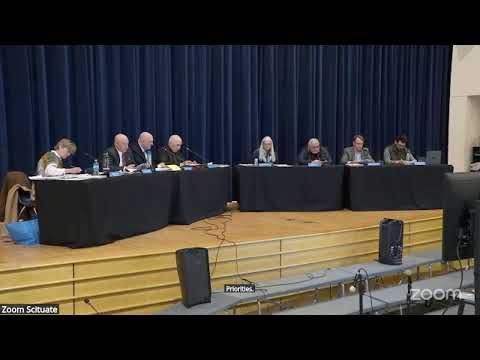
Several residents used the March 3 public-comment period to press the Scituate Town Council on two water-related concerns: a proposed Pine Hill Estates subdivision planned near the town reservoir watershed, and ongoing chloride contamination residents attribute to a state Department of Transportation (DOT) salt-storage site on Route 102.
Multiple speakers said the Pine Hill pre-application threatens the Scituate watershed and homeowners' wells. Speakers noted the town's comprehensive plan designates large portions of Scituate as restricted due to the reservoir, and they quoted the Low and Moderate Income (LMI) Housing Act changes at the state level that they say weaken local land-use protections. "We can't afford the density of development mandated by the LMI act," said a public commenter, and others asked the council to coordinate with the Providence Water Supply Board and DEM to explore statutory protections and legal avenues.
Residents also urged the council to take a more proactive advocacy role at the Statehouse and with the League of Cities and Towns. Council members replied that the League and their town planner are reviewing the legislative package; one council member said he had discussed the bills with Randy Rossi of the League and that the council would pursue the issue through the League.
Separately, neighbors from the Clayville area requested council support and town assistance regarding salt contamination they say affected private wells after prolonged storage and handling of road salt. Residents said some private reverse-osmosis systems have failed and that older or vulnerable residents have experienced health impacts. They asked the council to request public records from DOT and DEM, to seek ARPA funds for testing or remediation, and to press state agencies for accountability. One resident described measured sodium/chloride levels above baseline and urged the town to demand remediation; another said DOT had previously tested some houses but that communication had been inconsistent.
Council members and staff said they had followed up with DOT staff and would coordinate further. Councilor(s) offered to collect water samples for confirmatory testing, and staff indicated they would work to get results and pursue state-level remediation if testing showed levels above regulatory or health thresholds.
The council did not take formal action at the meeting, but multiple members urged residents and volunteer groups to gather test results and documentation and to return to the council with a concise package for the council and solicitor to review and act on at a subsequent meeting.