
Sheriff and emergency services request raises, staffing and equipment increases; animal shelter seeks extra part‑time help
Get AI-powered insights, summaries, and transcripts
Subscribe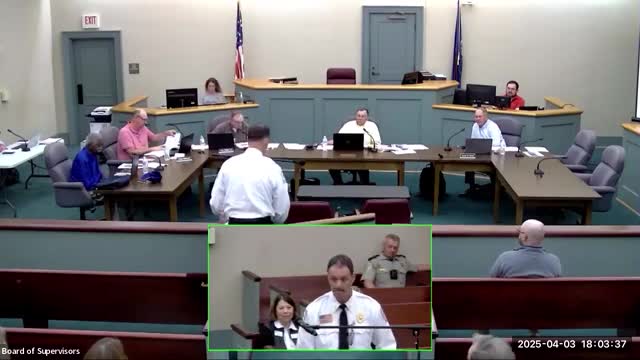
Summary
Public‑safety leaders briefed the Board of Supervisors on staffing, overtime and equipment requests: the sheriff sought a 3% across‑the‑board increase plus overtime and a security camera system; emergency services highlighted new software and training costs; the animal shelter requested an additional 720‑hour part‑time position.
Sheriff’s Office and Emergency Services leaders told the Northumberland County Board of Supervisors that rising overtime, staffing gaps, aging vehicles and new software requirements require higher appropriations or budget adjustments for FY‑26.
Sheriff Beecham summarized several funding needs and personnel pressures. He requested a 3% across‑the‑board increase for county‑funded positions, noted a request for an additional $35,000 to cover overtime driven by vacancies, and said vehicle‑repair and replacement costs have risen. The sheriff described a $61,500 estimate to replace the department’s aging security camera system and identified Verkada as the vendor in the quoted proposal; he said the system would allow remote access aligned with school cameras. He also described a $5,000 annual subscription for a citizen‑facing sheriff app, and said the office requested four replacement patrol vehicles plus one additional vehicle tied to a proposed new deputy position.
Beecham explained dispatch staffing is down and that training and certification requirements mean new hires often require paired shifts with experienced dispatchers. He said total department personnel number about 41 and that dispatch staffing fluctuates with training and scheduling; the sheriff detailed a retention and recruitment challenge for certified dispatchers and patrol deputies.
Chief Paulson of Emergency Services presented the department’s FY‑26 operating proposal and highlighted line items that rose or required attention. Paulson told the board that software and medical‑tracking changes will move previously state‑funded EPCR (electronic patient care reporting) costs to the county, and that the department has added a phone/tablet‑based medication accountability application to meet DEA tracking expectations. He described a tuition‑reimbursement program that helped send personnel through EMT‑to‑paramedic training (employees sign agreements requiring multi‑year service or pro‑rated repayment if they leave) and requested continued funding for that program. Paulson also asked to convert shift‑lead stipends into base salary to ensure those amounts count toward retirement, proposed a defined shift‑lead pay scale, and requested collateral‑duty stipends for employees who perform extra duties such as equipment maintenance and fleet oversight.
The animal shelter manager asked for one additional part‑time position limited to roughly 720 hours per year (the manager estimated approximately $11,000 in salary cost) to reduce reliance on overtime for two full‑time shelter staff and to cover daily operations. Sheriff Beecham also addressed shelter coverage and volunteer/community service participation and observed that younger volunteers present insurance and logistics questions.
Board members asked detailed follow‑ups on fleet miles and vehicle replacement counts, security camera capabilities, app redundancy with county CodeRed emergency notifications, dispatch certification pathways and program specifics for training repayment agreements. Presenters agreed to provide additional cost breakdowns and implementation timelines for items such as Verkada camera replacement, EPCR contractor costs, and vehicle upfitting.
Why it matters: staffing and equipment decisions in public safety affect response times, recordkeeping, compliance with state and federal regulations, and long‑term personnel retention. Large one‑time purchases — camera systems and vehicle fleets — also affect capital budgets and maintenance plans.
What’s next: departments will provide follow‑up cost detail and proposed contract/vendor terms; the board will consider those figures as part of ongoing FY‑26 budget deliberations.