Get Full Government Meeting Transcripts, Videos, & Alerts Forever!
Get email alerts on the Wastewater topic
No spam. Unsubscribe anytime.
Warren council raises sewer fee after wastewater plant runs a $530,000 shortfall
Summary
Councilors approved a 34% increase in the town's sewer use fee after hearing plant operating costs jumped because of higher electricity and chemical bills; the vote also re-set wastewater revenues and expenditures for the coming year.
Warren ' The Town Council voted to raise the municipal sewer use fee to $4.52 per equivalent dwelling unit and to adjust wastewater revenues and expenditures after hearing that plant operating costs have outpaced recent budgets.
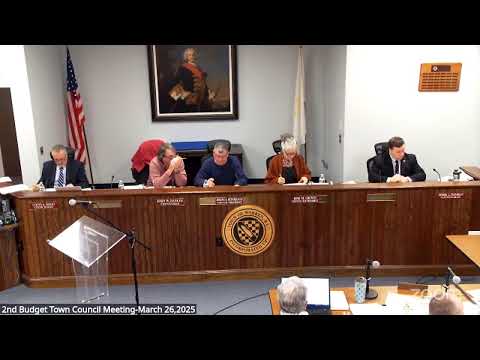
Councilors approved the change during the town's budget meeting after the town's wastewater presenter said plant operations are projecting an overrun of about $260,000 this fiscal year and the department expects a roughly $530,000 shortfall that must be covered this year.
The increase matters because the town's wastewater plant is largely funded by user fees rather than general property taxes. According to the budget discussion, the largest drivers of rising costs at the plant were sharply higher electricity costs and increased chemical expenses for treatment. Councilor Sullivan presented a five-year expenditure history showing wide swings in actuals: several recent years where electricity and other costs pushed plant operations far above the line-item budgets.
The council voted to adopt total wastewater management expenditures of $2,037,636 for the coming fiscal year. To match that figure and to begin replenishing the fund balance the council approved increasing projected sewer-use revenue from its prior level to $2,234,236 (the $4.52 fee multiplied across the town's 4,943 equivalent dwelling units). The council then approved the wastewater revenue total of $2,453,436 after other revenue adjustments were made.
Council members emphasized the move was corrective: the fee had not kept pace with rising operating costs in prior years and the town had relied on its general fund to absorb operating shortfalls. Several councilors said the increase would be painful for residents but that failing to make the change would worsen the system's long-term stability and harm the town's ability to pursue grant-funded capital repairs.
Councilor Trombley asked for clarification about whether electricity spikes were the main driver; Sullivan and staff confirmed power and chemical costs were principal contributors. Town staff and the council discussed two fee options during the meeting: raising the fee to $3.99 would cover projected operating costs next year; the council chose $4.52, which councilors said both covers projected operating needs and begins to restore the fund balance that will be used to correct the current-year shortfall.
Chief financial staff and the town manager told the council that the administration would return with more detailed projections and with plans to develop a multi-year capital and revenue policy to avoid similar gaps in future years.
The council set a follow-up schedule: the council agreed to finalize related bookkeeping and to review the wastewater capital requests and the multi-year funding strategy during upcoming meetings.
The vote resets the town's wastewater budget and revenue plan for the coming fiscal year and starts a process to rebuild reserves strained by recent unanticipated operating costs.