
District reports declines in repeat disciplinary referrals and outlines MLSS, Revive program and recovery‑high school grant planning
Get AI-powered insights, summaries, and transcripts
Subscribe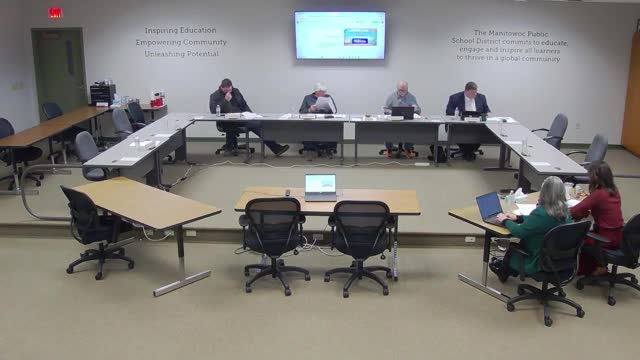
Summary
District staff told the committee the district is seeing fewer repeat disciplinary referrals and outlined a strategy that includes MLSS, a strengthened Revive program and a recovery‑high‑school grant in planning.
District staff presented the Curriculum & Instruction Committee with a district behavior report showing progress on several measures and outlining additional interventions to reduce exclusionary discipline.
Staff said the state’s current “pulse” data shows about 5.5 percent of the district student population has experienced an exclusionary disciplinary removal (in‑school or out‑of‑school suspension) so far this school year; staff used a rough district population figure of about 4,000 students to illustrate that this pulse equates to roughly 200 students affected. Staff also reported a difference between the district’s internal referral entries and state reporting: the district’s internal system (Infinite Campus) recorded about 4,133 referral entries to date, while state‑reported incident totals use only incidents that resulted in ISS/OSS removals. Staff said the district is on pace for roughly 424 state‑reported incidents this year compared with 922 incidents reported for the prior full year, though they cautioned the year is not yet complete.
Staff said the number of students with three or more disciplinary incidents fell from 105 last year to 32 so far this year, which they called a significant change. Presenters attributed the improvement to targeted supports, improved documentation and a focus on teaching social‑emotional skills. One staff presenter summarized the district’s direction: teams are focusing interventions and supports on transitional grade levels (notably sixth grade and the middle‑school years) and on groups disproportionately affected by exclusionary discipline.
The report acknowledged federal and state notification that the district is over‑excluding some subgroups — specifically students who are Black, Hispanic or multiracial. Staff said those three subgroups currently account for about 43 percent of disciplinary incidents; the notification requires the district to meet with the Wisconsin Department of Public Instruction (DPI) and to develop an action plan. Staff clarified that the state’s reporting flags rates by subgroup and requires analysis; it does not remove the district’s obligation to apply discipline when incidents occur. Committee members asked whether incident documentation captures motivation or context (for example whether an incident was caused by bullying or lack of support); staff explained that incident reports document the infraction (for example a physical altercation) and follow‑up supports and plans are recorded separately.
Staff described several ongoing or planned interventions: continued rollout of a universal social‑emotional learning curriculum at the elementary level (staff referenced “Getting Along Together” and similar tools), expansion and regularization of the district’s MLSS (Multi‑Level System of Supports) teams, an improved coaching model to support classroom management, and more consistent data documentation across buildings. The district also described Revive, an off‑site program for students who struggle in a traditional school setting; Revive provides small‑group instruction, social‑skills programming and independent coursework supports. Finally, staff announced a newly won recovery‑high‑school planning grant that will fund planning work immediately; operational funds will follow after the state approves the district plan, and staff said they expect to present the plan to the full board during the May curriculum meeting.
Committee members praised the staff for articulating interventions and recommended that staff present apples‑to‑apples year‑end comparisons and a behavior dashboard so the board and public can track progress in real time.
Ending: Staff will return with end‑of‑year totals, continued dashboard development and a planning timeline for the recovery‑high‑school grant and Revive program enhancements.