
State obligates roughly $36 million for municipal energy resilience projects; BGS reports 531 audits, 246 project awards
Get AI-powered insights, summaries, and transcripts
Subscribe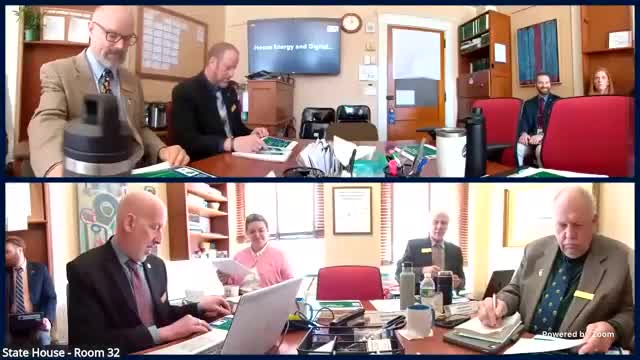
Summary
Buildings and General Services officials told the Energy and Digital Infrastructure Committee on April 4 that the Municipal Energy Resilience Program has completed 531 building assessments and that about $36 million of the $45 million grant fund has been obligated to implementation projects covering 246 municipal buildings across Vermont.
Buildings and General Services (BGS) officials told the Legislature’s Energy and Digital Infrastructure Committee on April 4, 2025, that they have obligated nearly $36 million of a $45 million Municipal Energy Resilience Program to implement energy-efficiency and resilience measures at 246 municipal buildings across Vermont.
The program, established by Act 172 in 2022 and funded primarily from the American Rescue Plan Act State Fiscal Recovery Fund, funded assessments of municipal infrastructure and awarded implementation grants after the audits identified measures such as insulation, air sealing, electrification and resilience systems including solar and battery backup. "We were required to obligate all of the dollars ... and we obligated every penny," said Brian Sewell, state energy program manager with the Department of Buildings and General Services.
BGS said the program delivered audits on a large scale: officials reported 237 municipal applications that covered 665 municipal buildings, of which 531 assessments were awarded and completed. The assessments were split into 330 Level 2 commercial-grade audits and 201 Level 1 assessments; officials said Level 1 assessments do not require historic utility bills and therefore do not support later loan eligibility because there is no baseline to calculate payback.
Program design and partners
BGS officials described a four-part funding approach under the $45 million grant allocation: a $2.4 million distribution to regional planning commissions for local engagement; a noncompetitive mini-grant pool (just over $1 million) that allowed towns to apply for up to $4,000 each; an assessment phase to determine needed measures; and the implementation tranche of roughly $36 million for construction and equipment. The program also includes a separately funded loan program authorized in the law; BGS said the federal Department of Energy award for that loan pool was smaller than anticipated and the amount they are standing up for lending is about $1.2 million, down from an earlier $2.8 million allocation in the statute.
Officials said BGS contracted initially with four audit vendors, later adding two more to meet demand, and that paying vendors directly rather than reimbursing towns lowered the administrative burden and helped drive high participation. Efficiency Vermont, the Vermont League of Cities and Towns, regional planning commissions and the Vermont Energy and Climate Action Network provided technical support, outreach and education.
Scope and results
Of the municipalities awarded implementation funds, BGS reported 26 awardees covering 246 buildings. The average award to a municipality was reported as just under $285,000; officials said that equates to roughly $146,000 per building on average. About 80% of awarded buildings were under 10,000 square feet. Project measures included insulation and air sealing, heating-system upgrades and electrification (heat pumps), solar arrays, 56 battery backup systems, charging stations and several geothermal installations. BGS said town garages posed particular technical challenges for some diagnostic tests.
Data, tracking and reporting
BGS told the committee it is entering municipal building data into the GRITS (Green Revolving Investment Tracking System) platform and uses ENERGY STAR Portfolio Manager to compute building energy-use intensity. Access to the GRITS database currently is limited to BGS, though staff said assessment reports are owned by the towns and BGS can share individual reports with a town’s permission. Grant agreements require recipients to provide at least one year of post-installation energy-use data for each facility so the state can evaluate outcomes.
Timing, risks and next steps
BGS said the program was required to obligate ARPA-funded dollars by December 2024 and to spend the funds out under ARPA timetables by December 2026. Officials said they have been told the funds were designated as revenue-loss replacement, which changes how federal restrictions apply and, to date, reduces the risk of federal clawback. The committee asked BGS to provide a list of awarded towns and grant amounts; staff said they will send the requested project list and the program’s January annual report.
BGS said many projects are in the historic-review or bidding stage and that scope amendments are being handled case-by-case as towns encounter site-specific issues. Standing up the smaller loan program and continuing implementation oversight are the next immediate priorities, staff said.
Committee reaction
Committee members praised the scale of the work and asked for greater access to consolidated data and lessons learned. Emily Kasicky, deputy commissioner for Buildings and General Services, said she was "impressed with all of their work" in delivering the program and noted BGS remains engaged as projects move into construction and commissioning.
Outlook
Program officials described the Municipal Energy Resilience Program as intended not only to cut municipal operating costs through efficiency and electrification but also to increase community resilience by ensuring essential public buildings can support residents during future weather or public-health emergencies. BGS said it will continue interagency coordination — including with the Department of Health on cooling- and shelter-site planning — and will monitor projects to meet ARPA deadlines.