Get Full Government Meeting Transcripts, Videos, & Alerts Forever!
Get email alerts on the School Consolidation topic
No spam. Unsubscribe anytime.
Antigo board approves Option A for interim grade configuration to bridge move to new elementary
Summary
The Unified School District of Antigo Board of Education voted to approve grade-level structuring Option A for the 2025–26 school year after a presentation on transitional-phase options for the new elementary school and public comment.
The Unified School District of Antigo Board of Education voted to approve grade-level structuring Option A for the 2025–26 school year after a presentation on transitional-phase options for the new elementary school and public comment.
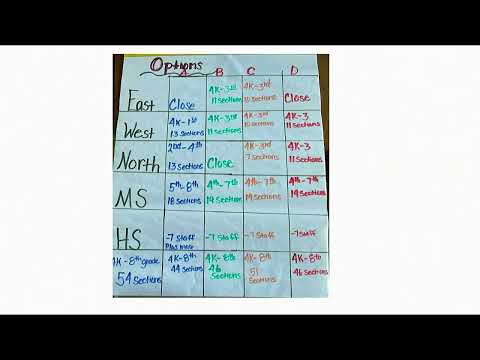
Administrators presented four primary transitional models and said Option A would allow fourth grade to remain in elementary buildings and eighth grade to return to the middle school while the new elementary is finished. The presentation noted the plan would reduce the district's elementary sections from 54 to 44 and yield one-time savings the administration described as roughly $1.2 million.
The plan matters because it aims to reduce student transitions and equalize class sizes across the district while giving the district short-term budget relief. In a prepared presentation, the administrator presenting the proposal said the plan would "ensure supportive transitions for students, families, and staff" and allow staff to prepare for a possible midyear move into the new building if construction finishes earlier than expected.
Officials described specific operational elements. Option A would: keep 4K and kindergarten together in one building with roughly 21 students per class and four sections; set first grade at about 22 students across four sections; second grade about 22 across five sections; third grade about 24 across five sections; and fourth grade about 24 across four sections. The administration also proposed a short-term transfer bus to move older siblings from a 4K–1 building to the second elementary building, reducing parents' required stops.
Public commenters endorsed different views during the meeting's public comment period. Tessa Lauer, a teacher in the district, said she supported the administration and asked the community to "end the narrative on social media that they are insensitive and unempathetic to staff and families," praising the leadership's attention to staff needs. Donna Smith, a longtime district resident and former elementary principal, questioned the timing and pace of district communication and raised concerns about program reductions, special education staffing and supports, and the impact on vulnerable students. Heidi Lucas, a kindergarten teacher of 32 years, said frequent moves would be emotionally and logistically difficult for her students and staff: "they just need to be where they are," she said. Megan Murphy, a special-education director and former district school psychologist, urged minimizing transitions for students and said the board should prioritize students over cost reductions. April Kolpak, a third-grade teacher at West Elementary, asked the board to keep all three elementary schools open until the new building is complete if possible.
Board members debated tradeoffs between fiscal savings and student continuity. Dr. David Barto, who moved the Option A motion, framed the decision in operational and educational terms: "Our product is students," he said, urging the board to consider equitable class sizes and daily teacher collaboration that would result from grouping grade-level teachers together. Other board members noted Option A is the only configuration that enables fourth grade to remain in the elementary program given current space, and that moving only one school cohort would reduce midyear disruption if the district needed to shift schedules for a brief winter-break move.
The board discussed alternatives during the meeting. Option B (and its mirror Option D) would close a different building and yield fewer savings while not allowing fourth grade to remain in elementary schools. Option C would limit disruptions for staff but would require some midyear moves for fourth- and eighth-grade students and save less than Option A. An "Option E" (no change) would preserve current buildings but increase a projected budget shortfall.
After debate and a failed amendment proposing Option C, the board voted to adopt Option A as presented for 2025–26. The presiding officer announced the motion carried.
The board said next steps include specifying which two elementary buildings will host the 4K–1 and 2–4 configurations, finalizing staffing placements (the administration said reductions would be managed largely through attrition), and planning logistics for library moves and material transfers ahead of any midyear transfer. Administrators also flagged that some instructional resources purchases will be timed to the selected option so that materials align with the number of teachers and classrooms in place.
Board members and staff said they would continue to solicit staff and family feedback and to communicate placement and boundary details before assignments are finalized.