Get Full Government Meeting Transcripts, Videos, & Alerts Forever!
Get email alerts on the Tribal Transportation Representation topic
No spam. Unsubscribe anytime.
Bill would add tribal representation and coordinators in state transportation planning and safety work
Summary
Substitute Senate Bill 5,374 would require local governments to coordinate with affected tribal governments when preparing transportation elements and county transportation programs, add a tribal government representative to the Cooper Jones Active Transportation Safety Council, and authorize a tribal traffic safety coordinator program at the Traffic Safety Commission subject to appropriation.
Substitute Senate Bill 5,374 would change how transportation planning and safety work engages tribal governments. Under the version briefed to the committee, local governments preparing the transportation element of comprehensive plans or counties adopting comprehensive transportation programs must coordinate with affected tribal governments and assess impacts on tribal areas. The Cooper Jones Active Transportation Safety Council would include a tribal government representative. The Traffic Safety Commission would be directed, subject to amounts appropriated, to establish a tribal traffic safety coordinator program and to award grants and provide programmatic support to tribes for traffic safety activities.
Michelle Rusk, staff to the House Local Government Committee, described the bill's scope and the striking amendment adopted earlier in the process. "Under the growth management act, certain cities and counties must include a transportation element in their comprehensive plan," Rusk said; the amended bill requires coordination with affected tribal governments and makes counties eligible for technical assistance under the Growth Management Act.
On fiscal effects, committee staff said the Traffic Safety Commission estimates a known ongoing fiscal impact of about $181,000 biannually in state funds to convert a 0.4 FTE federally funded tribal liaison to a full‑time position to provide program support. Staff described other costs as indeterminate because grants to tribes would depend on appropriations; the fiscal briefing gave a minimum cost example of about $252,000 biannually for one FTE at a tribe plus an estimated $10,000 in goods and services per tribe per biennium. A scaled example in the briefing estimated roughly $1,250,000 additional biennial funding to support multiple positions at several tribes.
Senator Claudia Kaufman, the bill's sponsor, said the changes are intended to respond to long‑standing disparities in traffic fatalities. "American Indians have the highest fatality rates in the state when it comes to traffic transportation, nearly 4 times higher," Kaufman said, adding that pedestrian fatality rates for American Indians and Alaska Natives are "almost 6 times higher than anyone else." She told the committee she has worked with counties and tribes to identify initial steps and described the bill as creating positions and funding for tribe‑tailored traffic safety work and for improved coordination on roads that cross tribal lands.
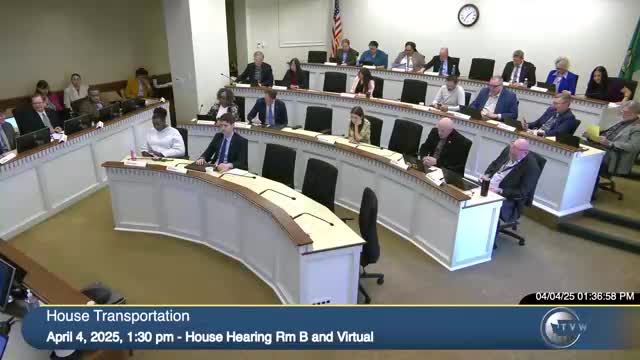
Committee members asked about causes and solutions. A representative asked whether infrastructure or other factors contribute to higher tribal fatality rates; Kaufman cited infrastructure (for example, high‑speed roads through reservations), gaps in data collection and reporting, and the need for locally tailored safety programs and data practices. The committee closed the public hearing on the bill; no committee vote occurred at this meeting.
The bill would be subject to appropriation for the tribal traffic safety coordinator program and to future input from the Traffic Safety Commission when the program's scope and grant levels are set.