Get Full Government Meeting Transcripts, Videos, & Alerts Forever!
Get email alerts on the Workforce Training Tax Credit topic
No spam. Unsubscribe anytime.
Committee hears support for extending B&O tax credit for customized training program
Summary
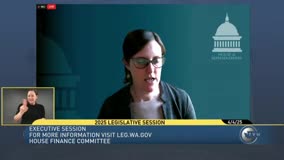
The House Finance Committee received a staff briefing and public testimony on Senate Bill 5682, which would extend a business-and-occupation tax credit tied to the Washington Customized Employment Workforce Training Program through July 1, 2031.
The House Finance Committee received a staff briefing and public testimony on Senate Bill 5682, which would extend a business-and-occupation tax credit tied to the Washington Customized Employment Workforce Training Program through July 1, 2031.
The program, administered by the State Board for Community and Technical Colleges, pays upfront costs for employer-specific training delivered by community and technical colleges. "The Washington Customized Employment Workforce Training Program provides interest free training allowances or loans to businesses that have entered into customized training agreements with the community and technical colleges in the state," said Christina King, staff to the committee.
Supporters said the program helps small employers and local colleges adapt to technological change. "It's a small tool, but an important tool to help businesses keep and grow good jobs in Washington and adapt to technological changes," Carolyn McKinnon, staff to the SBCTC, told the committee. Don Sysnowski, executive director of corporate education at Clover Park Technical College, said his department used the program to support 19 organizations and distribute roughly $650,000 in funding over 10 years. Mike Nelson, executive director for corporate and continuing education at Seattle Colleges, said the program is particularly helpful to employers with 50 or fewer employees and that the 50% tax credit often determines whether small businesses can participate.
Under current program rules explained to the committee, businesses repay 25% of the training cost after training is complete and pay the remaining 75% over 18 months into the employment training finance account; as each payment is made, a B&O tax credit equal to half of the payment is available, making the total tax credit equal to 50% of the full training cost. Colleges must make good-faith efforts to use trainers preferred by participating businesses, and preference is given to employers with fewer than 50 employees and to training that leads to transferable skills. Businesses are not eligible to receive allowances that exceed $500,000 in a calendar year.
Christina King summarized the fiscal estimates included in the bill materials: the Department of Revenue's fiscal estimate projects a revenue decrease of roughly $66,000 in fiscal year 2027 (11 months of impacted collections) and a $140,000 decrease for the 2027–29 biennium. The staff fiscal note also estimated one-time programming and testing costs of approximately $35,000 in fiscal 2026, $25,000 in fiscal 2027 for taxpayer assistance and account review, and an ongoing biannual cost of about $50,000 for maintenance and reporting support.
The bill would require the SBCTC to submit an expanded report by Dec. 31, 2028, including the distribution of credit eligibility and of qualifying training institutions by county, and efforts to encourage use of the credit across a broader set of industries and training providers. The bill retains the existing tax preference performance statement and a JLARC review trigger: if a review finds that 75% of participating businesses complete training and repay the program loan, the legislature intends to extend the preference.
Public testimony at the committee included SBCTC and college representatives who urged committee members to advance the bill so that small employers maintain access to affordable, employer-specific training.
No committee vote on SB 5682 was recorded during this meeting; the committee closed the public hearing on the bill and moved to the next item on the agenda.