
Board hears Title IX overview; parent recounts long complaint timeline
Get AI-powered insights, summaries, and transcripts
Subscribe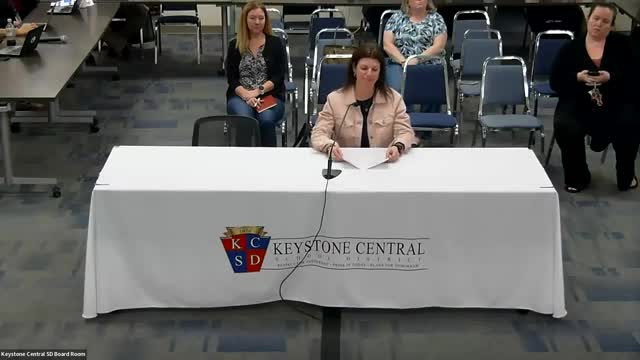
Summary
District Title IX coordinator explained the complaint, investigation and supportive-measures process; during public comment a parent described an extended timeline and ongoing concerns in a student sexual-misconduct case.
Keystone Central’s Title IX coordinator briefed the board on April 3 about how the district receives and processes reports of sex-based harassment and assault, and a parent told the board during public comment that she believes the district’s handling of her daughter’s complaint was too slow and left the student unsafe.
Christine Manning (identified in the transcript as the presenter) reviewed definitions, supportive measures, and the school’s two-track approach: informal resolution when allegations do not meet the Title IX threshold and formal complaints when they do. She said the district uses a discrimination/harassment form attached to policy 103, provides nonpunitive supportive measures to complainants and respondents, and that formal complaints trigger a documented investigative path with a 30-day target for investigation and a 10-day period for parties to respond to investigator reports. Manning emphasized that formal complaints must be handled by investigators trained in the Title IX process and that decision-makers — who cannot be the investigator — apply a preponderance-of-evidence standard.
During public comment, Jennifer Marshall described a case involving her daughter and said informal reports began in September and a formal complaint was filed on Oct. 29. She said investigation documents were first provided to her family on Dec. 11 and that a final investigative report was delivered in early January, with a decision communicated Jan. 27 and consequences determined Jan. 29. Marshall said she was told she was not entitled to details of the consequences because the respondent is not her child and that, as of the meeting, she still did not know whether ordered consequences were being enforced. Marshall said the timeline and communication left her daughter anxious, in counseling, and considering a school change.
Manning and board members clarified several procedural points in response: supportive measures are available immediately and can be adjusted during a case; a formal complaint creates notification and documentation requirements that can lengthen the timeline; consequences for disciplinary code violations follow the student code of conduct and can include suspension or referral to AEDY when applicable. Manning said the district had received relatively few formal Title IX matters and that only one recent case had met the Title IX harassment threshold.
Board members suggested the topic could be appropriate for a deeper training session in a retreat or dedicated board training.