Get Full Government Meeting Transcripts, Videos, & Alerts Forever!
Get email alerts on the Financial Aid Communication topic
No spam. Unsubscribe anytime.
New task force proposed to standardize college admission and aid award letters; sponsor and advocates say it will help students compare offers
Summary
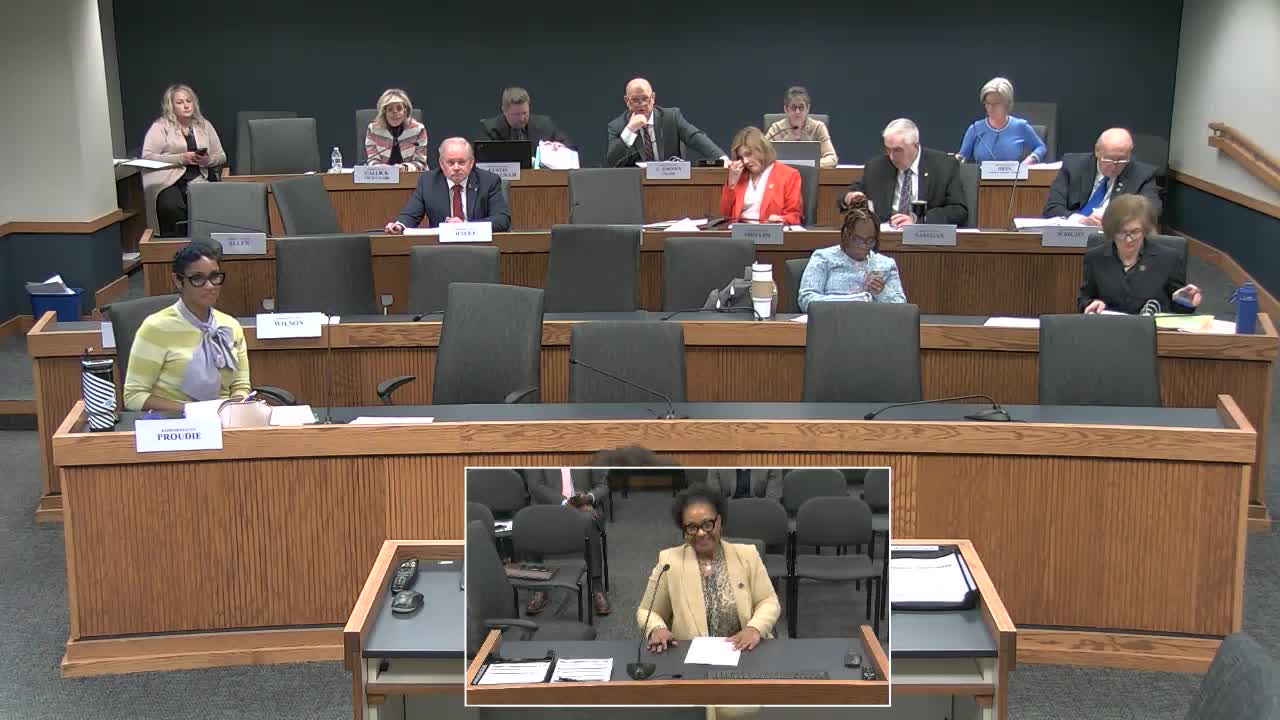
House Bill 442 would create a College Admission and Financial Aid Consistency Task Force to develop standardized admission and financial-aid award letters; sponsor Marla Smith and witnesses including the NAACP St. Louis County and Missouri NEA testified in support, while committee members raised questions about task force size and implementation.
Representative Marla Smith introduced House Bill 442 to create the College Admission and Financial Aid Consistency Task Force. The task force would develop standardized forms or letters for public colleges and universities to use for admissions and student-aid award communications so families can more easily compare offers.
Smith described the proposal as a venue for practitioners, parents and students to recommend standardized admission and award letters; she said the bill carries no direct fiscal impact based on the committee legislative research fiscal note cited in testimony. Committee members generally praised the concept as a commonsense step to help students and families understand comparative costs, though several members cautioned about implementation details.
Representative Prouty, Representative Hein and others suggested the proposed 15‑member task force is large and urged careful selection of members to ensure statewide representation and eventual implementation. Hein and other members noted that allowing virtual attendance and keeping a realistic timeline could help the task force meet goals. Supportive testimony came from John Bowman, president of NAACP St. Louis County, and representatives of Missouri NEA, who emphasized the challenge families face interpreting varied financial‑aid letters and the potential long-term impacts of incomplete information.
No witnesses were recorded in formal opposition during the hearing portion of the transcript. Committee members encouraged follow-up on membership balance, virtual meeting options and implementation pathways so the task force’s recommendations can be practical for institutions and students.