Get Full Government Meeting Transcripts, Videos, & Alerts Forever!
Get email alerts on the Alpha Gal Reporting topic
No spam. Unsubscribe anytime.
Representative Overcast urges alpha-gal reporting after family's delayed diagnosis; parents and public health experts testify
Summary
Representative Overcast introduced House Bill 986 to make alpha-gal syndrome and Lyme disease reportable to the Missouri Department of Health and Senior Services; patients, clinicians and epidemiologists urged mandatory reporting and provider education at a lengthy public hearing.
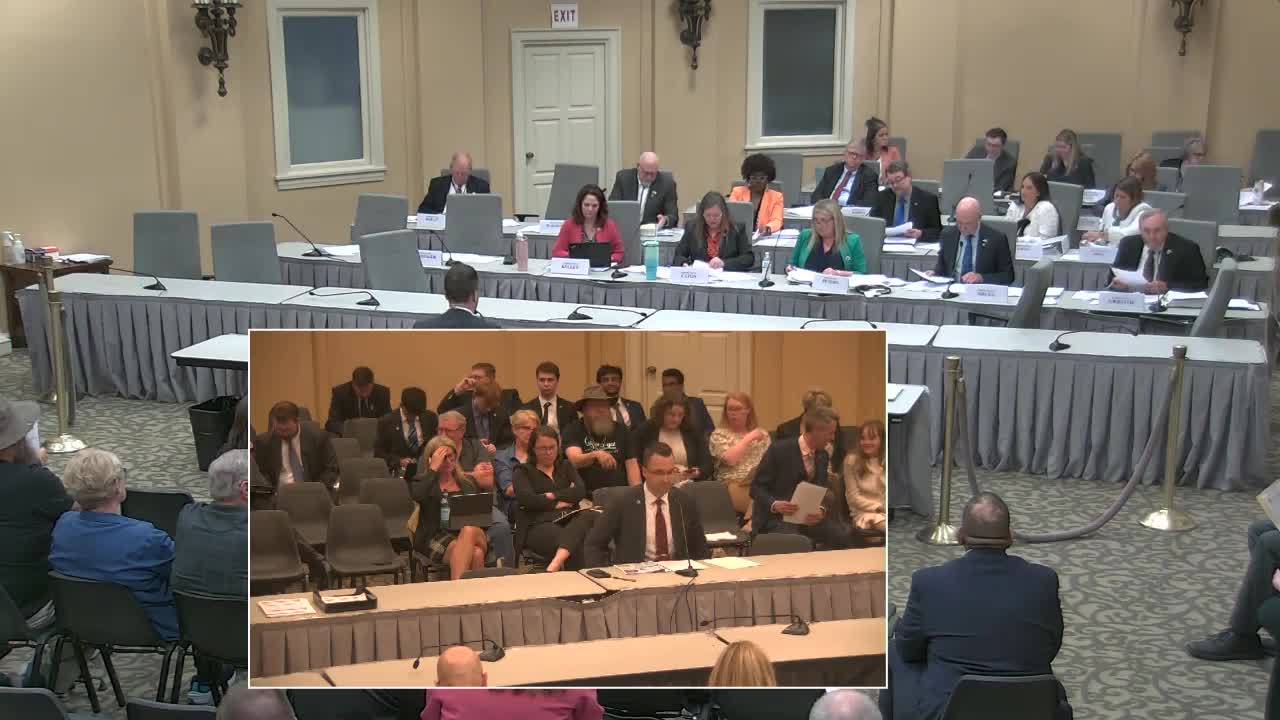
Representative Overcast, sponsor of House Bill 986, told the committee the bill “requires the state ... Department of Health and Senior Services [to receive] cases, diagnosed cases of alpha gal.” He said the intention is to document prevalence and hotspots, improve clinician education and guide resource allocation.
Overcast described his family's experience: his daughter spent more than a year undergoing tests before a clinician suggested testing for alpha-gal syndrome; after diagnosis she stopped reacting when the diet was changed. He told the committee that he has since learned of multiple local families with diagnoses and said reporting would allow policymakers to “document the presence of alpha-gal … monitor the trends in the pattern and spread.”
His daughter, Lila Overcast, testified in support and described fatigue, migraines, nausea and rashes that took weeks to resolve prior to diagnosis. An epidemiologist who testified, Genevieve Leisman, said national data suggest alpha-gal is under-recognized and that recent studies and CDC materials point to a substantial burden: she cited an MMWR-derived estimate of tens of thousands of suspected U.S. cases and research indicating Missouri as a hotspot, including a 2024 NIH study that flagged Fort Leonard Wood for high rates of newly detected alpha-gal IgE sensitization among recruits.
Several witnesses urged mandatory reporting and better clinician education. Ron Hicks, a former legislator, and other patient witnesses described years of misdiagnosis and severe reactions; Jennifer Keller, who described multiple anaphylactic episodes, said access to alpha-gal–safe compounded medications and clarity for emergency treatment are urgent problems. Witnesses noted testing sensitivity and specificity issues and urged using a clinical case definition (such as CDC guidance) rather than raw seropositivity from population screens.
Committee members raised technical questions about testing accuracy and how cases would be reported. Representative Hayden noted the risk of false positives and false negatives; epidemiologist witnesses and others responded that case definitions and symptom-based criteria can reduce overcounting. Representative Voss and others discussed how the data could help secure federal resources and guide prevention programs. Several witnesses recommended complementary policies such as clearer labeling of mammalian-derived ingredients and provider education grants.
Why it matters: Witnesses said alpha-gal syndrome can cause severe reactions, complicate medication choice, and is likely undercounted. Sponsors argued that mandatory reporting and surveillance would allow Missouri public health officials and legislators to identify hotspots, educate clinicians, and target prevention and resource strategies.
What’s next: The public hearing concluded after many witnesses spoke; committee members asked for follow-up information on testing accuracy and on whether CDC tools and voluntary reporting channels already capture the burden. No committee vote on HB 986 is recorded in the transcript.