Get Full Government Meeting Transcripts, Videos, & Alerts Forever!
Get email alerts on the Homeschool Sports topic
No spam. Unsubscribe anytime.
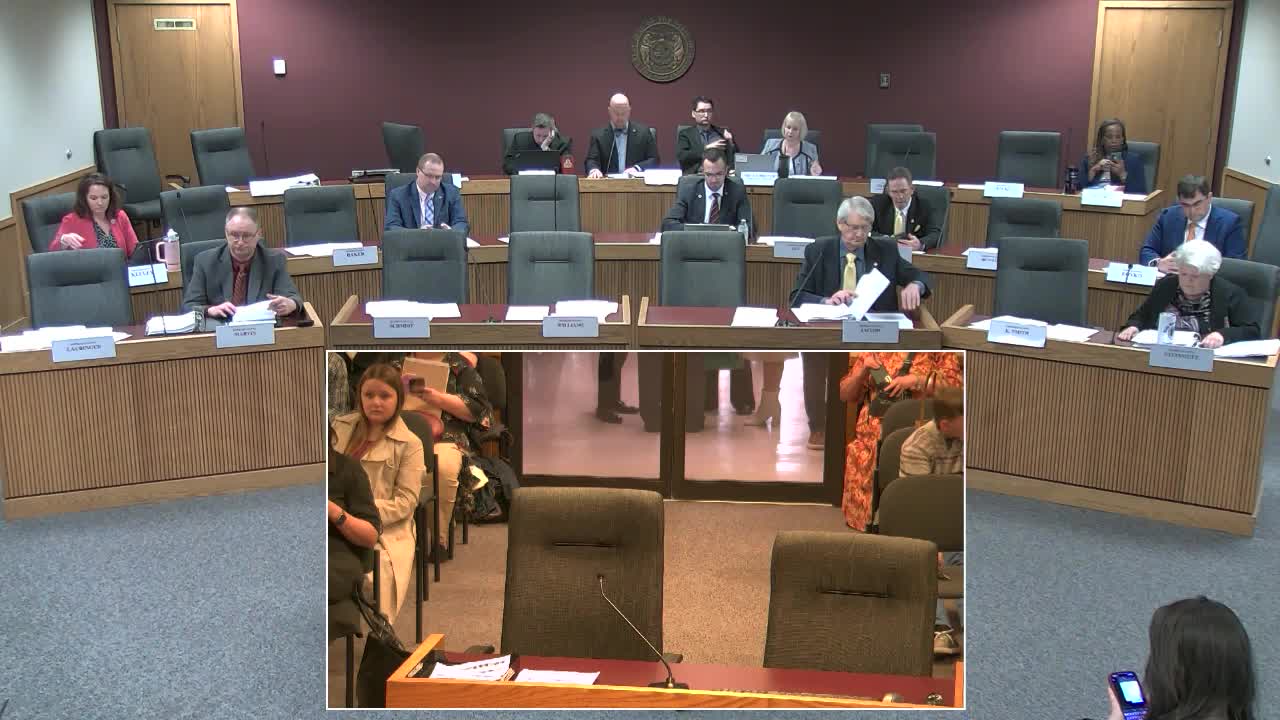
Missouri committee hears Senate Bill 63 to let homeschooled students join school sports and activities
Summary
Sen. Ben Brown told the House Elementary and Secondary Education Committee that Senate Bill 63 would require districts to allow homeschooled and full‑time virtual students to participate in school athletics and extracurriculars while keeping school disciplinary and activity‑specific attendance rules in place.
Sen. Ben Brown, who identified himself on the record as a state senator and the bill presenter, told the House Committee on Elementary and Secondary Education that Senate Bill 63 would require school districts not to prohibit a homeschool or full‑time virtual student from participating in athletic or extracurricular programs funded in part by taxes the student’s family pays. “It provides to the school district that it shall not prohibit a home school or full time virtual school student from participating in the athletic or extra curricular programs that are funded in part by their parents tax dollars,” Brown said.
The senator framed the measure as restoring access for students who are educated at home and are currently blocked from school activities by inconsistent local policies. Brown told the committee that school disciplinary policies and attendance requirements tied directly to a specific activity would remain in force under the bill. “While it provides access to these programs, it also states that school disciplinary policies would still apply,” Brown said.
Members questioned how the bill would interact with existing Missouri School Activities (MSHA) rules and district policies. Representative Greg asked whether transfer and recruitment protections and the one‑year transfer waiting period would change; Brown said the state law that bars recruitment and imposes transfer waiting periods would remain in effect: “So that that still remains in effect. That changes nothing about that.” Representative Steinhoff and others pressed on whether the bill would cover band and performing arts and whether attendance requirements should be tied directly to the activity rather than through an arbitrary district rule. Brown said the draft ties attendance requirements to the activity (for example, a band class) rather than a blanket hourly requirement.
The committee then heard nearly two hours of public testimony from families, students and homeschool advocates. Students and parents from Branson, Hartville and other rural districts described travel burdens, the absence of affordable club alternatives, and medical or special‑education circumstances that make full‑time public enrollment impractical. Twelve‑year‑old Hunter Arnold, who said he is homeschooled because of autism and related diagnoses, told the committee he and his parents chose homeschooling for his needs and that local district rules requiring multiple seated classes prevented him from joining the high school team where many of his peers play. “Why should homeschool students be banned from something that their parents helped pay for?” Hunter asked.
Other witnesses described district practices that exceed the MSHA guideline. Multiple parents said their districts require several classroom seatings (one parent said Branson requires six) to qualify for extracurriculars; witnesses called that barrier effectively equivalent to full‑time enrollment. Several testifiers urged the committee to pass SB 63 as a single, narrowly drawn bill and not merge the concept with other policy changes that could impose reporting or funding rules on homeschool families.
David Clarich, who identified himself as a longtime homeschool advocate representing a statewide nonprofit, urged caution and asked for legal language changes to avoid unintended governmental oversight of home education. He said much of the conflict arises from disputes with local boards and recommended technical clarifications to preserve homeschool autonomy.
No committee vote on SB 63 was recorded in the transcript. The committee chair recessed the hearing after public testimony and indicated the panel would continue deliberations; the chair asked senators and members to follow up with staff on questions raised in the hearing. The committee also held votes on several other bills that appear later in the transcript (see “Votes at a glance”).
Why it matters: Proponents said SB 63 would reduce disparities between districts and give medically fragile, rural and low‑income homeschooled children opportunities to join teams and activities funded by local taxes. Opponents and some committee members said the bill needs clearer drafting where it intersects with existing transfer rules, MSHA policies, and recently created classifications such as FPE students.
What’s next: Committee members asked staff and the bill sponsor for follow‑up clarifications about MSHA coverage of nonathletic activities (band, drama), the interplay with FPE/student funding statutes, and whether specific attendance requirements should be spelled out. The transcript shows a longer conversation and public testimony but no final committee action on SB 63 in this hearing.