Get Full Government Meeting Transcripts, Videos, & Alerts Forever!
Get email alerts on the Criminal Justice topic
No spam. Unsubscribe anytime.
House approves tougher fentanyl trafficking penalties amid debate over sentence grading
Summary
The House passed legislation stiffening penalties for possession or trafficking of fentanyl and carfentanyl. Supporters cited the drug’s lethality; critics warned the new thresholds could produce life sentences for small amounts and create collateral harms.
The Missouri House on April 2 passed House Bill 49, which raises the criminal grading for certain small quantities of fentanyl and carfentanyl. Sponsors said the measure aims to reduce distribution and deaths; opponents cautioned that the quantity thresholds and grading increases could create severe consequences for defendants and may have unintended public‑safety effects.
Why it matters: Fentanyl is highly potent; sponsors argued that even trace quantities are lethal and the law must provide stricter penalties for distribution. Critics said class‑A grading for quantities that may be small (and sometimes mixed with other drugs) risks life sentences, prosecutorial leverage and collateral consequences — notably deportation or disproportionate plea pressure.
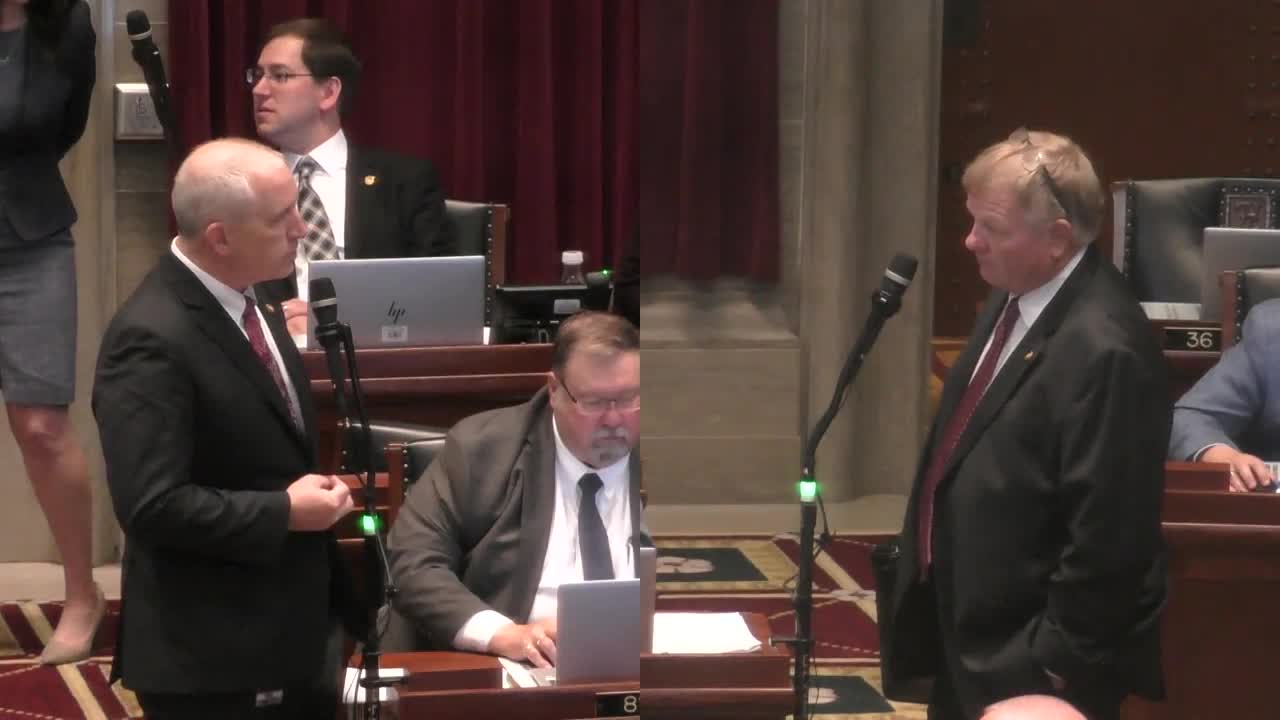
Debate highlights: - Sponsor (Gentleman from Morgan): Promoted the bill as part of the response to an epidemic of fentanyl distribution and deaths; said the measure received bipartisan support in committee.
- Concerns from Representative from Boone: Warned that grading enhancements to class A for very low milligram thresholds would increase leverage for prosecutors, potentially discouraging legitimate motions to suppress evidence and pushing defendants toward plea deals that could carry decades in prison. Boone said collateral consequences and possible changes in offender behavior (e.g., making violence more likely) merited caution.
- Questions from Representative from Saint Louis County: Asked about the practical size of the specified milligram amounts and whether small inadvertent contamination or mixing with other drugs could produce a trafficking charge; sponsors responded the bill targets distribution amounts and that courts will look at context and history.
Vote: The House recorded a floor vote with the clerk’s tally recorded as yeas 32, nays 8, and 10 present in the roll-call noted at the time of passage. (Transcript records the floor tally associated with passage as 32–8–10.)
What the bill does (as described on the floor): The bill lowers the milligram threshold at which trafficking is classified at the highest grade and establishes criminal penalties calibrated for fentanyl and carafentanyl. Sponsors argued the measure targets dealers and distributors rather than casual users; opponents pointed to cases where mixtures and tiny quantities are weighed as part of a packet and said that practice could result in higher-grade charges.
Ending: The measure passed on the House floor and will proceed to the Senate. Floor debate showed division over the right balance between stricter penalties and the risk of severe collateral consequences for defendants.