Get Full Government Meeting Transcripts, Videos, & Alerts Forever!
Get email alerts on the Child Welfare Reform topic
No spam. Unsubscribe anytime.
Broad child-welfare bill (SB 43) draws strong support and cautious opposition over cost and scope
Summary
Senate Bill 43, substantially amended in the Senate, would create a right to counsel for certain children, address placements for children with severe behavioral needs, void NDAs in childhood-abuse cases and add other child-welfare changes; witnesses urged funding and raised fiscal and operational concerns.
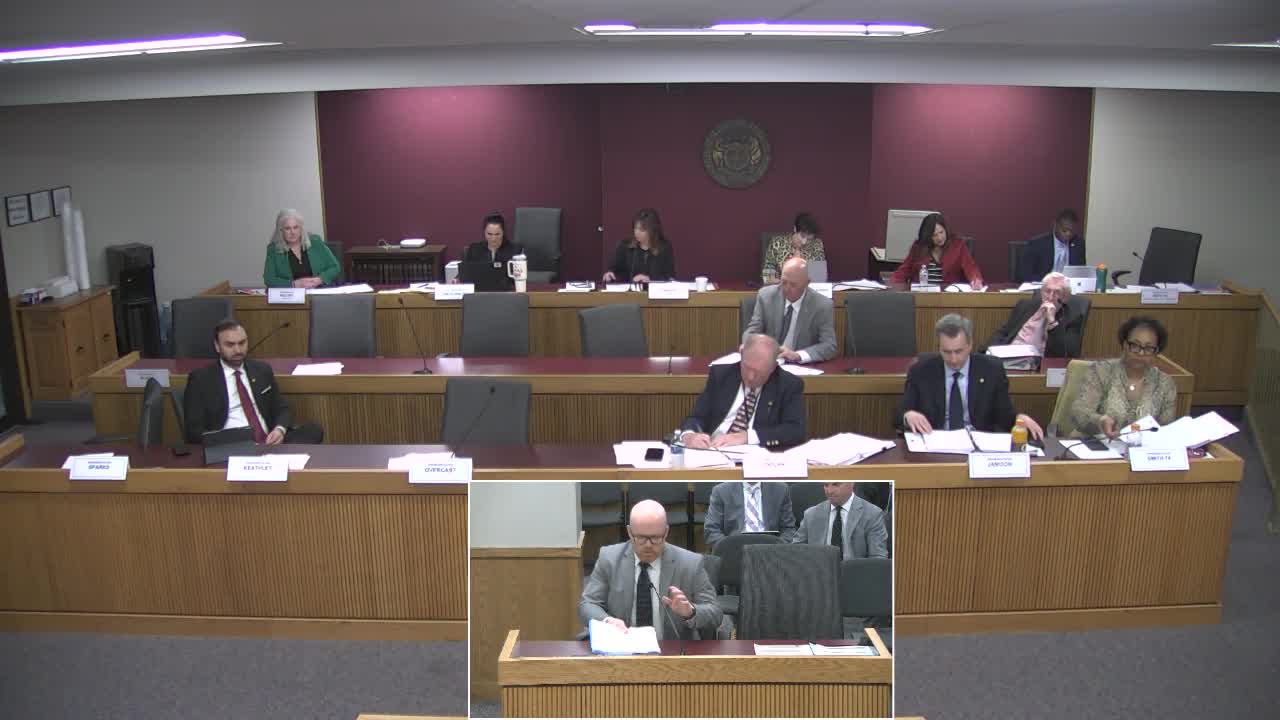
Senate Bill 43, presented to the House Judiciary Committee by Senator Fitzwater, was discussed at length in a public hearing that featured multiple amendments added in the Senate and extensive testimony in favor and opposition.
Sponsor Fitzwater said the bill started as a foster-care measure and was expanded on the Senate floor to address several juvenile- and child-welfare issues: a right to counsel for children (particularly those 14 and older), a specialized program and liability protections to increase placements for children with severe behavioral needs (including use of existing, underused residential facilities), and amendments on non-disclosure agreements in childhood sexual-abuse cases and other provisions added by senators during floor amendment negotiations.
Supporters included children’s-advocacy groups, foster and adoptive parents and health providers. David Wynn (representing multiple clients including Children's Permanency Partnership and health systems) urged the committee to adopt the residential-placement provisions, saying the bill creates a single responsible agency and tools to place children locally rather than sending them out of state. Jamie Skinner (a foster and adoptive parent) and Bill Atherton (CEO of Coyote Hill Foster Care Ministries) described personal experience that, they said, supports a right-to-counsel and better placement tools. Liza Weiss of Missouri Appleseed highlighted the proposed attorney-for-child provisions and cited national examples and research showing improved outcomes where families have robust representation.
Opposition testimony, principally from Arnie C. (State Public Advocate), urged caution. He said the bill has expanded substantially and that the fiscal note projects multi‑million-dollar impacts: “it's gonna cost a minimum of another 10 to $13,000,000 over the next 3 fiscal years per fiscal year,” he said, and he questioned whether Guardian ad Litem roles were being appropriately considered or replaced. He also raised operational concerns about law-enforcement involvement in custody disputes and argued the bill was not yet ready for “prime time.”
Department of Social Services staff indicated they would verify certain cabinet/fiscal concerns and, if needed, update fiscal notes. Committee members probed differences between guardian ad litem roles and an “expressed interest” lawyer or appointed counsel for children, funding sources (including federal 4(e) funds and prior pilot funding), and implementation timing (the bill’s child-counsel provisions do not go into effect until 2028 in the version presented to the committee). Several speakers urged an appropriation or dedicated funding mechanism, and Senator Fitzwater said he had secured a $750,000 pilot appropriation previously and that other federal and state avenues could be pursued.
The public hearing concluded in the transcript excerpt; no committee vote is recorded in the provided segment.