Get Full Government Meeting Transcripts, Videos, & Alerts Forever!
Get email alerts on the Mental Health Courts topic
No spam. Unsubscribe anytime.
Senate bill would add mental health courts to treatment-court framework; supporters urge funding
Summary
Senate Bill 218 would explicitly authorize mental health courts as a treatment-court division eligible for funding and standards; sponsors and witnesses described evidence of benefits and asked for state funding and access to the treatment-court resource fund.
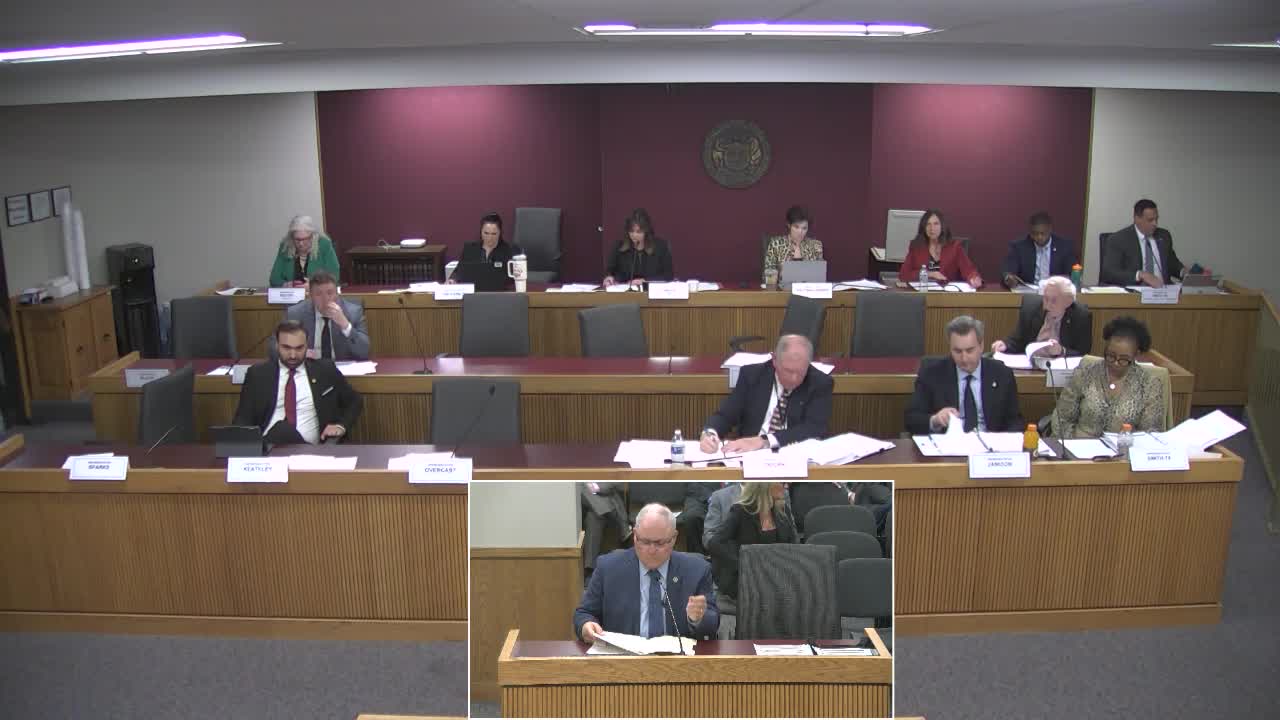
Senator Rusty Black (Senate District 12) presented Senate Bill 218 to the House Judiciary Committee, saying the bill would include mental health courts within Missouri’s authorized treatment-court divisions and allow them to apply to the Treatment Court Coordinating Commission for funds from the Treatment Court Resource Fund.
Black said treatment courts (for example, adult treatment, DWI, family and veterans courts) use comprehensive supervision, drug and alcohol testing and treatment services and that mental health courts would focus on defendants whose offenses stem from mental-health disorders or co-occurring disorders. He said treatment courts reduce incarceration and recidivism and help keep families intact.
Eric Jennings, Government Relations Counsel at the Supreme Court, testified that the bill’s language mirrors prior House bills and would permit existing mental health courts to apply for resources and be subject to the same commission standards as other treatment divisions. Multiple witnesses, including the State Public Advocate (Arnie C. ACDINOFF), and representatives of health and foster-care organizations testified in favor, urging voluntary local adoption and state funds to support operations.
Supporters emphasized cost-effectiveness and improved outcomes; several speakers recommended state appropriations to ensure circuits can operate such courts when they choose to establish them. No committee vote is recorded in the transcript segment.