Get Full Government Meeting Transcripts, Videos, & Alerts Forever!
Get email alerts on the Behavioral Health Capital Requests topic
No spam. Unsubscribe anytime.
Providers urge Legislature to include behavioral-health capital projects in House Bill 19
Summary
Community health centers and behavioral-health providers told the House committee they need state capital matches in House Bill 19 to expand substance-use and youth mental-health capacity across Missouri, listing specific project costs, matching commitments and expected increases in service capacity.
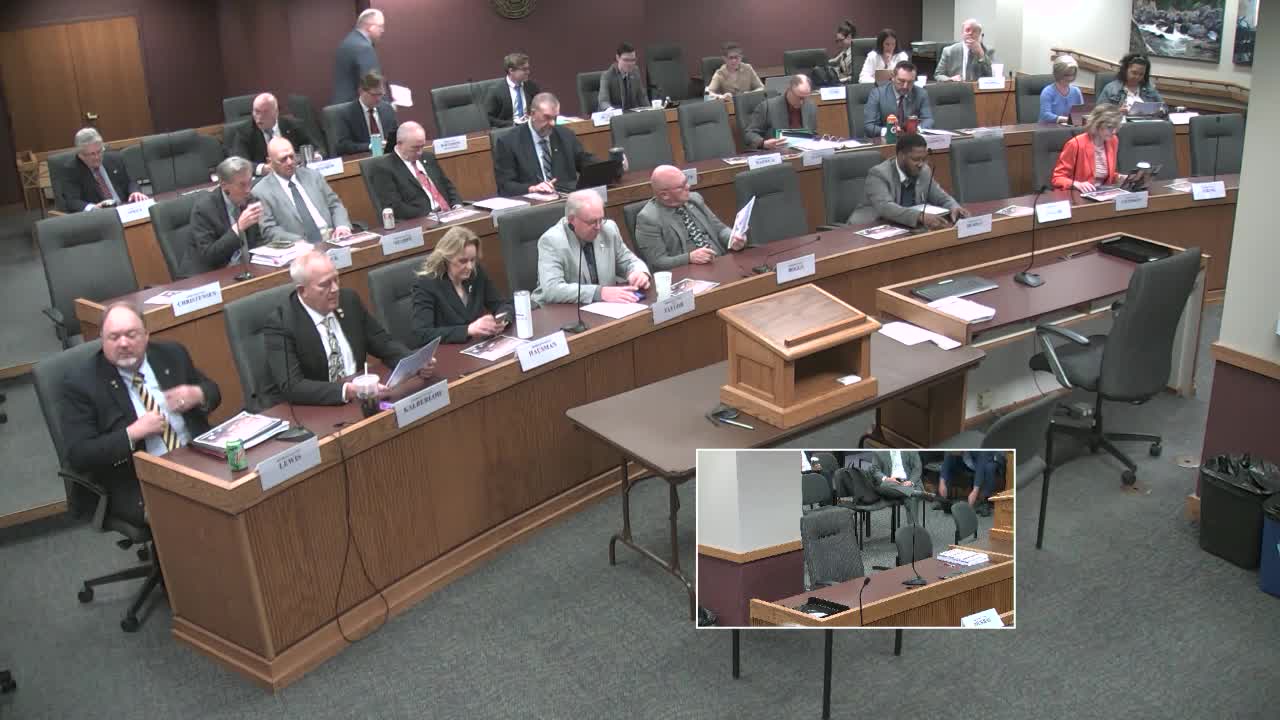
Community health centers and nonprofit behavioral-health providers asked the Missouri House Appropriations Committee on Oct. 12 to include capital funding in House Bill 19 to expand substance-use and mental-health treatment across the state.
The requests came from four providers that outlined projects, matching commitments and expected service increases. Dr. Matthew Stinson, president and CEO of Jordan Valley Community Health Center in Springfield, said his federally qualified health center is delivering walk-in substance-use treatment and has outgrown its space. "We will treat them that day," Stinson told the committee, describing same-day clinical assessment and treatment for people who walk in seeking help. He asked the committee to consider a $7,000,000 project, split 50–50 between Jordan Valley and state funds — $3,500,000 from each party — to expand capacity in Southwest Missouri.
The request matters because providers said many programs already operate at or above capacity and serve residents from broad regions. Julie Pratt, president of the Kansas City region for Preferred Family Healthcare, told the committee her organization was approved by the Department of Mental Health to open a residential program in service area 6 (Clay and Ray counties) and is seeking $3,500,000 in capital funding to secure and upgrade a location. "We anticipate that this program would serve approximately 375 individuals through residential services and outpatient substance use treatment on an annual basis," Pratt said, and said Preferred Family will provide matching funds.
KVC Missouri asked for capital support for renovations and service expansion across its network. Michelle Lawrence, president of the KVC foundation, asked for $5,800,000 (50 percent of a total $11,700,000 project) for upgrades at two psychiatric residential treatment facilities (PRTFs), a qualified residential treatment program (QRTP) and to open intensive outpatient (IOP) and partial hospitalization (PHP) services in Springfield and Kansas City. KVC said the renovations would increase daily residential census by 77 across campuses and add more than 900 additional youth served annually; Lawrence said, "We simply can't do it without your help."
Places for People, which serves St. Louis City and County, requested $1,000,000 from the state, matched by $1,000,000 in private funds, to convert an owned administrative building into a low‑barrier outpatient clinic in the Central West End. CEO Tony Helken said the site would expand psychiatric and therapy capacity and serve an estimated 1,500 additional clients, focusing on high‑need populations including people experiencing homelessness.
Committee members pressed for additional details on capacity, wait lists and project specifics. For example, Lawrence said there are about 217 Missouri children on a wait list for residential behavioral-health services; committee members asked KVC to follow up with current daily census and how the requested funding would change utilization rates. Lawmakers also inquired about matching sources and whether providers have received or expect opioid settlement funds; Dr. Stinson said Jordan Valley does not receive county opioid-settlement money.
None of the presentations included a formal committee vote; witnesses were invited to submit follow-up materials for the committee record. Several members said they would review written materials and contact providers offline for more granular budgets, operations numbers and evidence of matching funds.
Providers asked that their projects be considered for inclusion in House Bill 19 or in companion appropriations, and offered to supply additional documentation to the committee's distribution staff. The testimony outlined capital request totals, local matches and the stated public‑access benefits of expanded behavioral‑health capacity across multiple Missouri regions.
Several witnesses also described discrete non-capital needs: KVC said a pump station at its St. James campus is a deferred maintenance item estimated at roughly $1.6 million and tied to its ability to expand residential capacity there; committee members asked to discuss that item offline.
The committee closed the HB 19 testimony period and invited additional written materials for the record; no formal appropriation decisions were made during the hearing.