Get Full Government Meeting Transcripts, Videos, & Alerts Forever!
Get email alerts on the Critical Infrastructure Protection topic
No spam. Unsubscribe anytime.
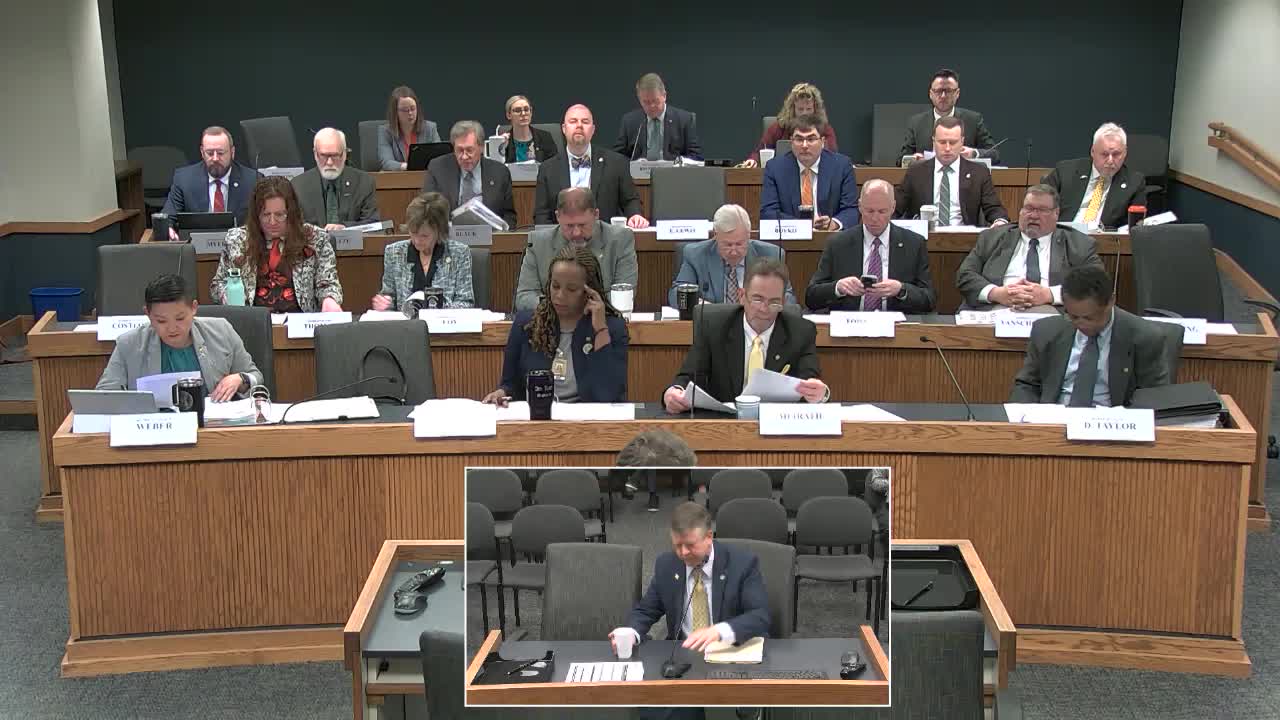
House hearing probes bill to bar technology tied to foreign adversaries from Missouri critical infrastructure
Summary
Representative John Simmons introduced House Bill 1231, the "Critical Infrastructure Protection Act," proposing state limits on equipment and services linked to foreign adversaries; utilities, business groups and lawmakers raised questions about state capacity, supply‑chain impacts and duplicative reporting.
Representative John Simmons (R), District 109, introduced House Bill 1231 — labeled the Critical Infrastructure Protection Act — at a House Committee on Utilities hearing, laying out a proposal to identify and avoid products linked to foreign adversaries and to remove such equipment from state critical infrastructure.
Simmons opened by reading excerpts from testimony by a former director of cybersecurity at the National Security Agency, saying that state actors "preposition malware within our power grids, pipelines, water treatment plants, and other critical infrastructure." Simmons described the bill as a way to "help Missouri better" insulate telecommunications, utility systems, emergency services, transportation systems and cloud providers from attacks by foreign adversaries. "It will also require the removal of Chinese equipment from state infrastructure, prevent future procurement of technology linked to adversaries, and require background checks for individuals with access to critical infrastructure," Simmons said.
Committee members pressed Simmons on implementation. Representative Woods asked whether the Department of Public Safety and its Homeland Security Division — the sponsor's proposed home for the program — would have the expertise and capacity to carry out the work, and whether the state could implement measures that would be effective given interstate and federal grid interconnections. Simmons said federal coordination is important and described the state role as a layering of protections, noting the bill's fiscal note anticipates hiring full‑time staff to implement the program.
Members raised questions about the potential economic effects and the breadth of the bill's procurement limits. Representative Taylor asked which other states had adopted similar measures; Simmons and witnesses noted pieces of comparable policy have appeared in Florida (executive action), Nebraska, Arkansas and proposed legislation in Arizona. Several lawmakers warned about unintended effects on procurement, supply chains and the cost and timing of utility projects.
Witnesses offered mixed reactions. Kate Tremaine of the Missouri Chamber of Commerce and Industry testified in opposition, saying, "The current language in the bill is overly broad, and it could have drastic negative effects for the U.S. business climate," and urged the sponsor to work with business stakeholders on narrower language. James Harris, representing State Armour Action, testified in support and pointed to actions in other states and federal guidance from CISA and the FBI as reasons states should act.
Mike Sutherland, vice president of the Association of Missouri Electric Cooperatives, said the state's electric cooperatives share the bill's goals but urged lawmakers to leverage existing federal programs and cooperative initiatives rather than impose duplicative state reporting. "Mandating a separate state reporting system and restrictions risk displacing what's already been coordinated and already in place," Sutherland said, and he described cooperative programs such as Cyberdome and the National Rural Electric Cooperative Association's threat‑analysis center.
Connie Ford, representing the Missouri Association of Municipal Utilities, testified for informational purposes and urged lawmakers to avoid duplicative reporting. She cited existing federal and industry frameworks already applied to utilities, including NERC critical infrastructure protection standards, FERC orders and the America’s Water Infrastructure Act, and noted a state statute (section 640.142) requiring water utilities to maintain security plans.
Simmons and several committee members described the hearing as an initial, informational discussion. No vote occurred. The sponsor said the bill is intended to start a conversation, that multiple stakeholders and state universities will likely be involved in future drafting, and that interim study or subcommittee work is a probable next step.