Get Full Government Meeting Transcripts, Videos, & Alerts Forever!
Get email alerts on the Sb10 Sunset Omnibus topic
No spam. Unsubscribe anytime.
Missouri House committee hears wide-ranging bill to remove sunsets from scores of programs, sparking sharp debate over process and two contentious provisions
Summary
Lawmakers and witnesses at a House committee hearing on Senate Bill 10 debated removing expiration dates from multiple tax credits, provider taxes and policy sections. Supporters said sunsets are unnecessary; opponents raised process, fiscal and public-health concerns — especially over provisions affecting transgender youth and trans athletes.
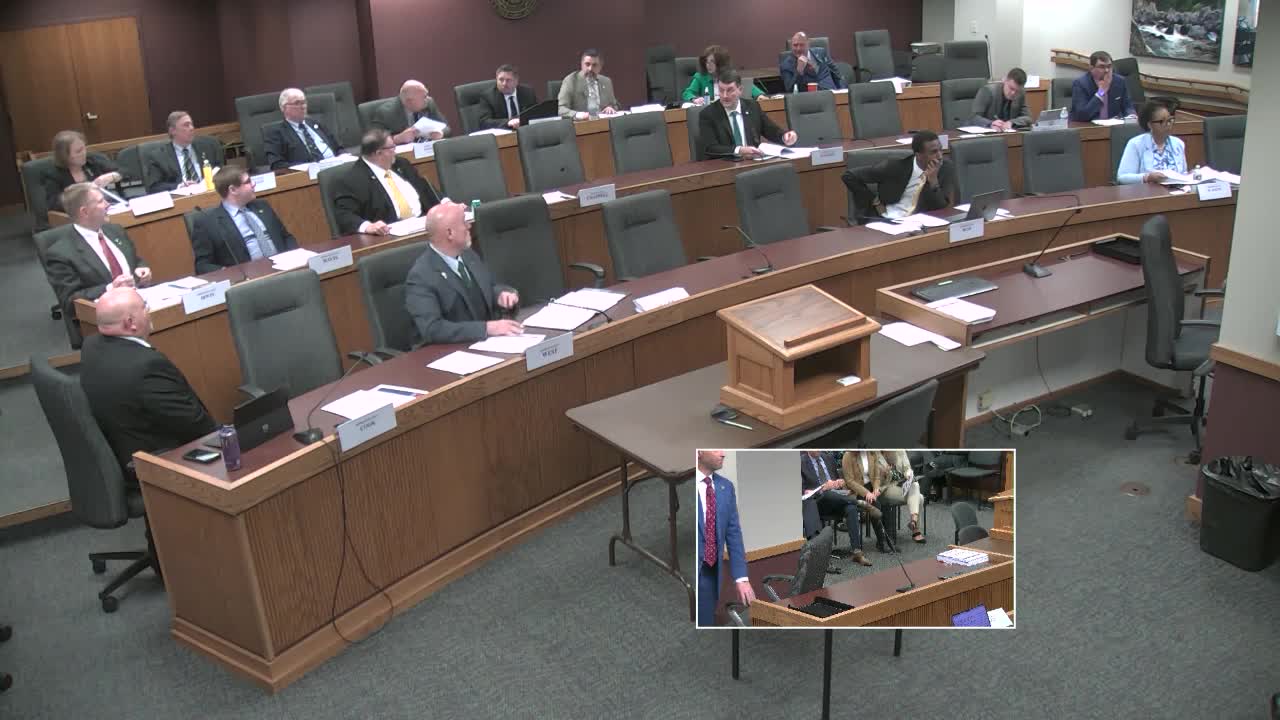
The Missouri House committee reviewed Senate substitute No. 2 for Senate Bill 10, an omnibus measure that would remove sunset provisions from a broad set of statutes and programs, during a hearing that stretched more than five hours.
Senator Lincoln Huff, who presented the measure to the committee, said the bill began as "a sunset removal on the ... design build legislation" and expanded to cover tax credits and other programs that have previously contained sunsets. "What we tried to do was really just keep this to programs that had been passed and authorized by the legislature that had sunsets on them that ... individuals in our chamber obviously wanted to see those sunsets removed and those programs continue," Huff said.
Why it matters: The package touches a wide range of state policy and budget lines, including federal reimbursement allowance (FRA) taxes that help fund MoHealthNet, provider-related FRAs for hospitals, nursing homes and ambulances, a set of agricultural and ethanol-related credits, the Show Me film incentive, a diaper-bank tax credit, the rolling-stock credit used by rail repair yards, and procurement authority for "design build" and construction-manager-at-risk projects. Two sections drew the most public attention: the Missouri Save Adolescents from Experimentation Act (language affecting gender-affirming care for minors) and the Save Women's Sports/athletics participation provisions.
Committee debate focused less on the merits of each underlying program than on process and precedent. Several representatives said sunsets serve as a legislative check — a chance to review programs and tax credits later if they prove ineffective or underused. Representative Murphy said he "hate[s] everything about this" and flagged the bill's fiscal note: "$61,000,000 fiscal note. I don't know how I'd even get it through fiscal review." Representative Mayhew and others pressed that sunsets can be useful accountability tools. Senator Huff responded that the legislature can always repeal laws later and that many members prefer removing artificial expirations: "I just don't agree with the sentiment that I need an artificial or we need an artificial sunset for something to go away."
Public testimony reflected the bill's split character. Supporters from agriculture, film and construction sectors argued the underlying programs drive jobs and investment. Jason Zamkes of the Missouri Corn Growers Association and Missouri Renewable Fuels Association told the committee he supported repeal of sunsets on agricultural incentives and noted the ethanol industry's reliance on those credits. Susan Henderson Moore of JE Dunn Construction testified the design-build and construction-manager-at-risk procurement methods are "working and that communities still want to continue to use these methods for construction delivery." Witnesses for the Missouri Healthcare Association, ambulance districts and nursing-home interests urged removing sunsets on the FRAs that help draw federal matching funds for Medicaid and provider reimbursements; Nikki Strong testified that the FRA "began in 1992" and that, in her view, it has become "an important and integral part of the funding of our Medicaid program." She warned of the risk multiple speakers cited: running out of time in a disrupted session can imperil those reimbursements.
Opponents concentrated on two types of objections: procedural and policy. Procedural objections were raised repeatedly by committee members who said many provisions in SB 10 had not had House committee hearings and that assembling so many disparate sunsets into a single bill short-circuited deliberation. Representative Burton said, "I have a problem with that process ... over half of them have not gone through a House hearing." Several members urged breaking the package into narrower bills so each policy area could be inspected on its merits.
Policy opposition focused particularly on the permanent removal of sunsets for statutes affecting transgender youth and sports participation. Multiple witnesses, including a parent who provided written testimony read by Chris Barrett and representatives of the Missouri Equity Education Partnership and the ACLU of Missouri, urged keeping the sunsets so the legislature could study medical evidence and impacts on LGBTQ youth. Chris Barrett read a parent's statement that said, "I have asked my friend Chris to read my testimony in support of SB 10 to make the SAFE Act permanent ... I cannot speak publicly about my family's experience, but I can also no longer remain silent." Shira Berkowitz of Promo testified the medical consensus supports gender-affirming care and opposed removing the expiration dates.
Fiscal concerns were raised by opponents and some witnesses. Arnie C. AC Dinos, describing himself as a state public advocate, called the bill "corporate and business welfare at its best with no accountability anymore," and cited "the fiscal note of over $62,000,000." The bill's supporters said many programs in the package are modest or longstanding and that standing policy review and appropriations processes already allow the legislature to rescind credits or funding if needed.
No formal committee vote on the bill was recorded in the transcript. The committee concluded the hearing after public testimony from dozens of witnesses representing industry groups (agriculture, film, construction, utilities, ambulance districts), provider associations, civil-rights organizations and individual citizens.
What comes next: Committee members repeatedly asked for more information and said they would follow up. Representative Mayhew requested return-on-investment data for particular tax credits; Jason Zamkes and other industry witnesses agreed to provide supporting ROI materials. Several members said they prefer either narrowing the bill to the original procurement sunset removal or separating controversial social-policy provisions from the economic and FRA items.
The hearing transcript shows broad consensus among proponents that many sunsets could be removed without creating new programs; opponents insisted sunsets remain to safeguard future legislative review and to protect vulnerable Missourians. The committee adjourned after hearing testimony from supporters and opponents; no final action on Senate Bill 10 was recorded in the transcript.