Get Full Government Meeting Transcripts, Videos, & Alerts Forever!
Get email alerts on the License Bureaus Fees topic
No spam. Unsubscribe anytime.
Committee hears SB 3 to raise fees for contract license bureaus, add trailer charges and new post‑employment restriction
Summary
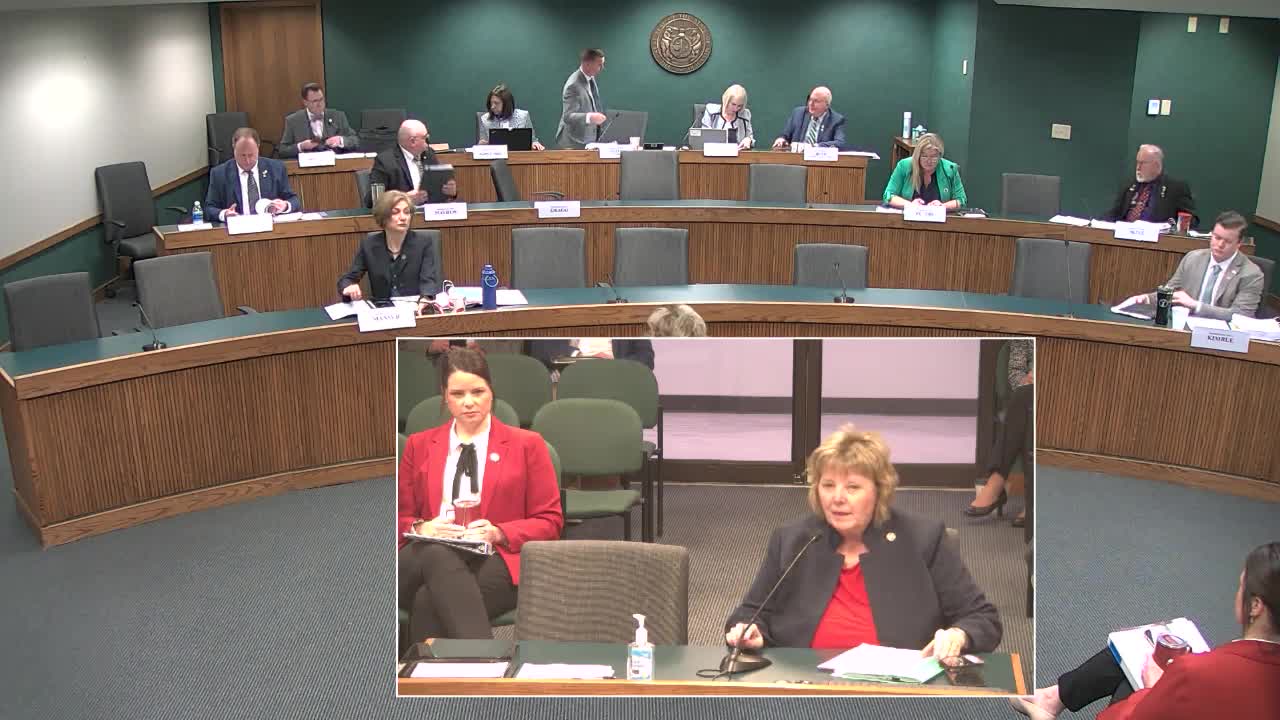
Senator Sandy Crawford, R‑District 28, told the Missouri House Commerce Committee on a public hearing that Senate Bill 3 would raise fees for privately operated contract license offices and add new requirements for trailer registrations and post‑employment restrictions.
Senator Sandy Crawford, R‑District 28, told the Missouri House Commerce Committee on a public hearing that Senate Bill 3 would raise fees for privately operated contract license offices and add new requirements for trailer registrations and post‑employment restrictions.
The bill would raise the annual registration fee from $6 to $9 and the two‑year registration from $12 to $18; it would also add a $9 annual trailer fee, $27 for a three‑year trailer registration and $45 for a permanent trailer registration. Crawford said the measure would also prohibit current or former Department of Revenue employees from owning or serving on the board of a fee office for one year after leaving the department, though those employees could continue to work in the offices. "If somebody was has worked for the Department of Revenue, they cannot serve on the board of a fee office or own one for one year after they leave the department," Crawford said.
Why it matters: supporters told the committee that many privately contracted license bureaus operate on thin margins, struggle to retain staff and risk closure in rural areas if revenues do not keep pace with operating costs. Crawford cited the long interval since the last fee increase: "This is just the second time since 1999 that we've raised these fees," and noted rising wages and operating expenses as context for the requested increase.
Committee members sought detail on how additional revenue would be used and on oversight of independent contractors. Representative Sites questioned whether the increase would translate into higher wages or other benefits for employees and called a fee a "three‑letter word" that can feel like a tax in uncertain economic times. Crawford responded, "That will depend on and I have a fee office person behind me that can answer probably any question on how it really works. But yes, it's gonna go back to the ones who run it."
Ryan Williams, a current fee agent and legislative chair of the Missouri Association of License Bureaus, testified in favor of SB 3 and described staffing and retention pressures. "Our starting wage now is $19 an hour and we can't even get people to come to work for us. We can't retain people," Williams said, adding that some small rural offices have closed or will close without changes. He also described the Department of Revenue's GO report, a quarterly audit tool that the department uses to evaluate customer service, inventory and other measures and—he said—remove poor‑performing agents.
Several committee members said they support the concept of raising fees to keep offices open but pressed for stronger oversight and clearer guarantees that any fee increases would improve customer service. Representative Peters asked whether the rate increase could be tied to service metrics; Representative Miller said the contract model makes it easier to remove a poor performer than converting contract offices into state employees.
Senator Crawford also told the committee the bill would allow the Department of Revenue to extend contracts for up to five years one time if an operator is performing well. Crawford framed the change as a matter of rural access and convenience: she said some residents would prefer to pay more rather than drive 45 minutes or take half a day to reach a license office.
The committee did not take a final vote on SB 3 during the public hearing portion and moved on after testimony and committee questions. The record includes proponents from multiple licensed office operators and association representatives; no formal opposition testified during the hearing.
Looking ahead: the committee will decide whether to report the bill out with a recommendation after further consideration and any staff work the committee directs.