Get Full Government Meeting Transcripts, Videos, & Alerts Forever!
Get email alerts on the Hazing Good Samaritan topic
No spam. Unsubscribe anytime.
Senate substitute for SB 167 would add narrow Good Samaritan protection to Missouri hazing law, sponsors say
Summary
Sen. Curtis Gregory and supporters told the House General Laws committee a Senate substitute for SB 167 would add a narrow Good Samaritan exception to Missouri's hazing statute to encourage bystanders to summon help in hazing-related medical emergencies.
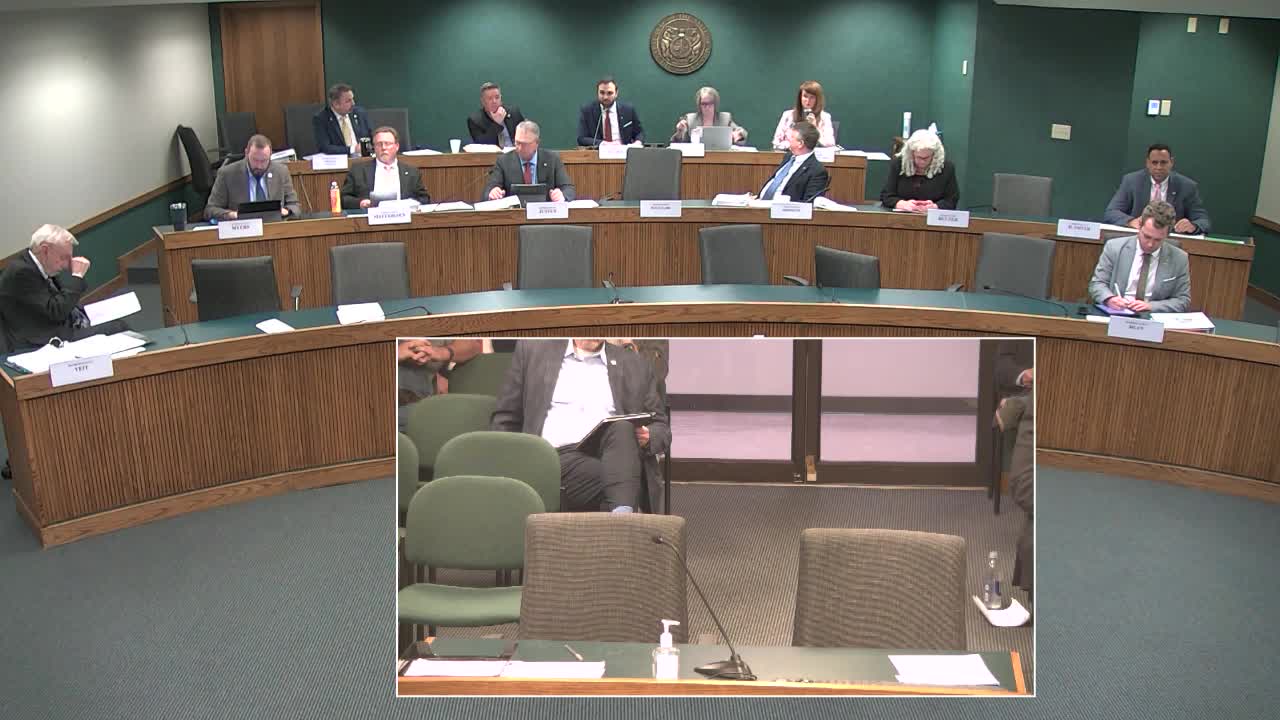
Sen. Curtis Gregory, sponsor of the Senate substitute for Senate Bill 167, told the Missouri House Committee on General Laws that the measure would add a narrow Good Samaritan provision to the state's hazing law to encourage people to call for medical help during hazing incidents.
"What this does is it adds a Good Samaritan provision to Missouri's hazing law," Gregory said at the committee hearing. He said the change would ensure that a person who calls 911, renders aid or otherwise helps someone in medical distress would not be prosecuted under the hazing statute for that rescue-related conduct. "It doesn't say that some other statute might not apply to them, just the hazing statute," he said.
Bob Selser, president of the Mizzou Greek Alliance, testified in favor of the substitute and described the proposal as modeled on Florida's "Andrew's Law." Selser recounted the case of Danny Santulli, a University of Missouri freshman who was seriously injured in a hazing-related drinking incident, and said the proposed change is narrowly tailored. "It doesn't grant immunity for someone who supplied alcohol to a minor or controlled substance. It doesn't immunize anyone from an assault charge. It doesn't immunize anyone from civil liability. It's limited just to prosecution under the hazing statute," Selser said. "We think it will literally save lives in the long term."
Committee members asked no substantive questions of the sponsor during the hearing; no witnesses testified in opposition and no informational witnesses were listed. The committee record shows the public hearing concluded without recorded amendments or committee direction for further work on the bill.
The committee limited sponsor presentations and public testimony according to the chair's ground rules for the day.