
City manager proposes folding appointive committees under Citizens Advisory Committee as subcommittees
Get AI-powered insights, summaries, and transcripts
Subscribe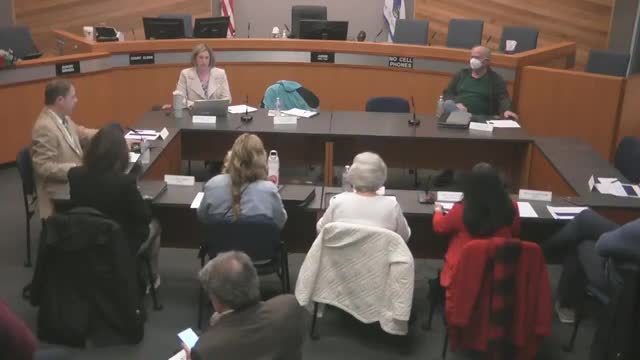
Summary
At a Citizens Advisory Committee meeting, City Manager Catherine outlined a proposal to reorganize several appointive committees into subcommittees under the Citizens Advisory Committee to address uneven workloads and staff shortages; members broadly supported liaison and autonomy models and asked staff to return with details.
Catherine, the Des Moines City manager, told the Citizens Advisory Committee on Wednesday that the city is proposing to reorganize several appointive committees into subcommittees under the Citizens Advisory Committee so those smaller groups can retain their specialties while reducing staff overhead.
Catherine said the change would address two problems the city has encountered: committees that are “very active for two or three months and then nothing for the rest of the year,” and the recent loss of staff who supported multiple committees. “This is just an idea, don't take it as a mandate,” she said, asking the committee for feedback before taking any final steps to the City Council.
The suggestion grew from a March 6 council discussion. Catherine told the committee there are nine appointive committees in total after the council recently authorized a Planning Commission and an Airport Committee; she said the city is not proposing changes to committees required by state code or those that appear to be working well, specifically naming the civil service board, the lodging tax board and the police advisory board.
Under the draft approach, niche groups such as the Arts Commission, Human Services and Senior Services could continue to meet and operate with a degree of independence but report to the Citizens Advisory Committee (CAC) through liaisons or a small number of representatives. The city manager said some members told staff they were open to becoming subcommittees, while others were hesitant.
Members at the meeting generally supported keeping subcommittees operationally autonomous while adding a liaison arrangement that would bring reports into the CAC. “I think this is a brilliant idea as long as the subcommittees retain some form of autonomy,” said Bettina Jerry, Marina District representative. Several members recommended that one or two representatives from each subcommittee report to the CAC rather than having the CAC micromanage day-to-day operations.
Jean, a member familiar with Human Services, described the subcommittee's current workload: an annual grant-review process that collects applications, verifies prior performance and ranks requests against roughly 1% of the city budget that has been targeted for human services in the past. Members stressed that the Human Services reviewers have social-service expertise and that the committee’s work is “incredibly intensive.”
Committee members also raised logistics and equity questions. Victoria Andrews, serving as scribe, and others urged outreach to neighborhood- and interest-based volunteers so subcommittees reflect the community’s diversity. Several members suggested holding meetings in different neighborhoods and maintaining primary/alternate representation so districts remain represented when members are absent.
Catherine said staff capacity drives much of the proposal: three staff who previously supported committees have left, and the city cannot realistically staff nine committees with current resources. She recommended making many of the niche groups informal subcommittees that operate without routine staff support and report into a regularly scheduled CAC meeting.
Next steps: Catherine said she will finish meeting with the remaining committee members, consolidate feedback and return to the City Council with a refined proposal. If the council agrees to a structural change, staff will revise bylaws and bring formal updates back to the CAC for review and implementation.
Votes and formal actions at the meeting were limited to procedural items; the committee expressed consensus on exploring the subcommittee model and on outreach to former members and neighborhoods as part of the next steps.