
Ashwaubenon approves three‑lot certified survey map for West Point Center
Get AI-powered insights, summaries, and transcripts
Subscribe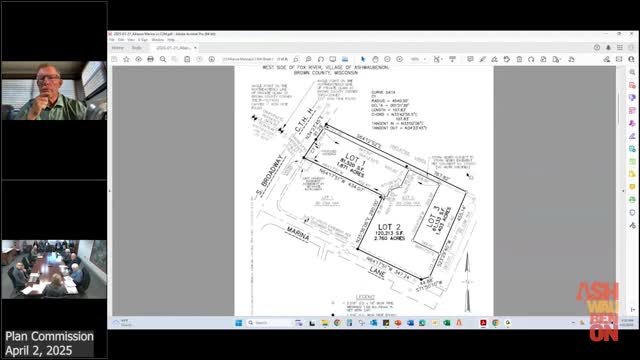
Summary
The Village approved a three‑lot certified survey map (CSM) for the West Point Center development, clearing the way for separate apartment, townhome and CBRF phases subject to conditions and Brown County review.
The Village of Ashwaubenon approved a three‑lot certified survey map for the West Point Center development and adopted staff conditions tying final approval to several technical clarifications and outside reviews.
The CSM splits the previously approved planned unit development into three parcels for the apartment building, townhomes and a community‑based residential facility (CBRF). The board approved staff conditions including removal of an Ashwaubenon shoreland permit note, a PUD amendment to allow reduced frontage on Lot 3, and confirmation that a refuse enclosure will be located inside one of the lots rather than on a property line. The applicant must also obtain approval from the Brown County Planning Commission and coordinate driveway access with county staff.
The CSM was presented during the meeting with a screen showing the three proposed lots. The presenter said the PUD amendment will be filed as site planning and detailed engineering proceed and that Lot 3’s narrow public frontage is being preserved on paper to meet the village subdivision ordinance even though the frontage will not be usable for driveway access. The presenter noted staff will address frontage via the PUD amendment.
Developer representative Ted Hunt, managing member of Baymar Holdings, told the board the project is in an opportunity zone and the commercial portions are planned as long‑term holdings. “There is no intent to sell the operator form for the CBRF,” Hunt said, adding that the operator has an option to purchase and the expectation is to hold the commercial parcels for at least 10 years.
Board members asked whether the parcels could be sold individually; staff and the developer confirmed that the lots may be sold separately and that the developer expects a long‑term hold for the CBRF and apartment. After discussion, the board moved, seconded and voted in favor; the chair announced the motion carried.
The CSM approval requires the PUD amendment and Brown County Planning Commission signoff before final lot layout and any driveway connections to adjacent rights‑of‑way can proceed.