Get Full Government Meeting Transcripts, Videos, & Alerts Forever!
Get email alerts on the Food Access Arpa topic
No spam. Unsubscribe anytime.
Will County MAP collaborative directs $7.1 million ARPA award to local food partners, funds community kitchens and pantry expansion
Summary
The Will County MAP (Mobilizing for Action through Planning and Partnerships) collaborative, represented by Caitlin Daley of the Will County Health Department, reported a $7,099,806 ARPA award directed to local partners for food access, community kitchens, vans and storage; funds were distributed among several local nonprofits and churches to
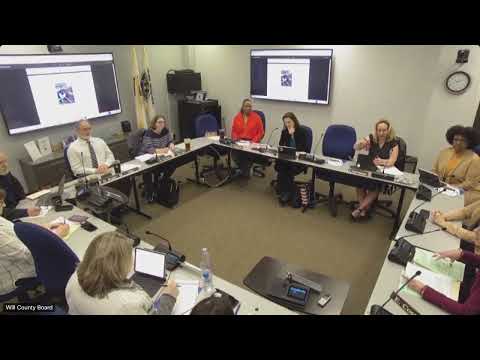
Caitlin Daley, program manager of the Will County MAP collaborative, told a county committee that the MAP program received an ARPA allocation of $7,099,806 and used the funding to award grants to four local partners to expand food access, community kitchens and related services.
Daley said MAP’s collaborative approach avoids duplicated hospital/community assessments and allows partners to jointly address priorities such as access to food, behavioral health and the built environment. The MAP food team worked with local partners to direct funds where they could expand service quickly rather than operate a single county-run program.
Daley identified four grant partners and summarized their planned uses: the National Hookup of Black Women (to replace a delivery van), Holston Human Capital Development/Riverwalk Homes (community kitchen and permitting work), the Salvation Army (increased food supply and pantry operations), and New Hope Christian Community Church in Monee (parking-lot expansion, a commercial kitchen, storage and senior programming). Daley said New Hope received the largest portion of the award and had approximately $40,000 remaining to invest in expanding its garden space.
Daley described the community kitchen projects as public, permitted kitchen spaces tied to pantry services and nutrition classes; she said partners plan to use the kitchens for consumer education, nutrition classes and to support small entrepreneurial food activities once environmental-health permits are in place. Daley also described outreach conducted through focus groups and forums to include residents with disabilities, people with experience of homelessness, people involved with the justice system, rural residents and women of color.
Daley said partners were nearing the end of their spending and that, as of the report, approximately $611,000 of MAP’s ARPA grant remained to be spent. She announced a MAP forum for partners and the public to review assessment results and help set priorities; Daley gave the event time as 10 a.m. to 2:30 p.m. at Saint Joseph Hospital and said the forum would include presentations and a strategic-planning session for the next three-year cycle.