Get Full Government Meeting Transcripts, Videos, & Alerts Forever!
Get email alerts on the Esl Multilingual topic
No spam. Unsubscribe anytime.
Multilingual department outlines growth in services, 57 languages and surge in Seal of Biliteracy candidates
Summary
Waterbury’s multilingual department told the Board of Education the district now serves about 4,040–4,060 multilingual students across 57 languages, has expanded dual-language and bilingual programs, and expects a sharp rise in the number of students earning the Seal of Biliteracy.
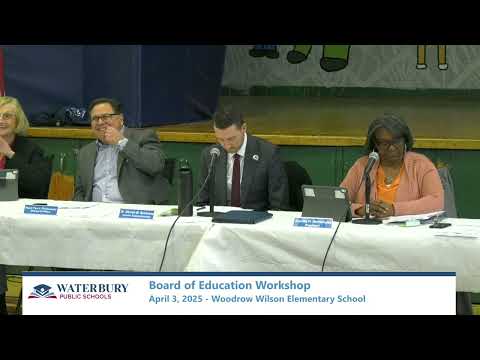
The district’s Multilingual Department director presented a needs assessment and program overview to the Waterbury Board of Education on April 3, saying multilingual enrollments have roughly doubled over the past decade and currently range near 4,040–4,060 students.
The presentation covered program types (bilingual classrooms at several elementary schools, ESL services across schools, and a dual-language program at the International School), state exit criteria for multilingual services, and a district goal to expand biliteracy options in the long term. The director said Spanish remains the most common home language, followed by Portuguese and Albanian; the district now counts 57 languages spoken by students and 47 languages among English language learners.
The director highlighted the Seal of Biliteracy, a State of Connecticut recognition awarded to students who demonstrate proficiency in English plus another language. She said the district has grown Seal participation sharply: 93 students earned the seal in 2023, that number dipped to 78 in a later year, and the department now expects more than 225 students to receive the award in 2025 (final totals subject to assessment completion and state reporting).
The department director described curriculum frameworks in use: Benchmark (and Benchmark Adelante) in bilingual and dual-language programs; Benchmark Express for K–5 ESL; and alternative curricula for secondary ESL settings. She said the district administers annual language assessments and follows state criteria before exiting students from multilingual services.
On planning, the director said the department is reviewing identification and placement protocols, working with a State Department of Education consultant to align local systems with state requirements, examining grants and funding use, and seeking partnerships to recruit bilingual teachers. She noted a state pilot program with another district is pending results before broader state approval of certain partnership models.
Board members asked about parent outreach and assessment protocols. The director confirmed assessors at welcome centers conduct language screening when students enter kindergarten or later grades; the state does not require routine multilingual assessments for preschool. Vice President Brown asked whether assessors explain program options to families; the director said that is part of the assessors’ role and that the department is working to ensure assessors are well-informed.
The director closed by noting long-term goals include exploring ways to convert bilingual transitional programs into biliteracy-focused programs, but she emphasized that such a transition would require multi-year planning and research.
No board vote was recorded on the presentation; it was informational.