Get Full Government Meeting Transcripts, Videos, & Alerts Forever!
Get email alerts on the Health Insurance topic
No spam. Unsubscribe anytime.
Kewaunee County hears consultant say Centivo shift cut health plan costs but produced service “noise”
Summary
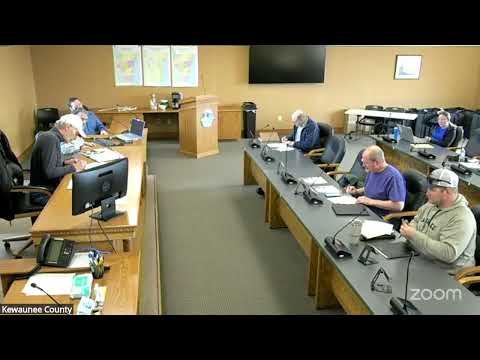
Kewaunee County finance staff and benefits consultants presented an analysis of the county health plan on April (discussion recorded during the Finance Committee meeting), saying the county’s 2023 switch from Humana to Centivo has reduced modeled costs but produced some ongoing member service problems.
Kewaunee County finance staff and benefits consultants presented an analysis of the county health plan on April (discussion recorded during the Finance Committee meeting), saying the county’s 2023 switch from Humana to Centivo has reduced modeled costs but produced some ongoing member service problems.
Dan (Horton benefits consultant) and Sam Magovan (Horton lead contact) told the Finance Committee the county’s transition to Centivo and a move toward buying stop‑loss and pharmacy benefits separately produced lower per‑employee per‑year costs and an estimated $1.2 million difference in 2023–24 compared with a Humana trend projection. Horton estimated 2025 costs with Centivo at about $2.878 million versus a $3.6 million projection under Humana, a roughly $722,000 differential for the year.
The presentation condensed several points the committee flagged as important: Centivo’s model uses a value‑based, primary‑care‑focused network that Horton said steers members toward lower‑cost, higher‑quality providers; the county’s self‑funding and ability to shop stop‑loss and pharmacy benefit managers were cited as drivers of improved rates; and the recent medical‑trend environment — commonly referenced in industry materials as 6–10% annually — makes the county’s outturn unusually favorable.
Horton also acknowledged operational issues. Dan said Centivo has caused “some billing issues and some claim issues and some customer service issues” that Horton and county staff have worked on weekly for about two years. Committee members described the problems as a minority of members but “lingering” and likely related to Centivo’s smaller market presence compared with incumbents such as UnitedHealthcare or Anthem.
Committee members asked about alternatives and tradeoffs. Horton listed options including returning to a fully insured product, joining a pooled product such as the Wisconsin Counties Association, or contracting with larger administrators (UMR, UnitedHealthcare, Anthem, WPS). Horton’s view was that larger, more familiar vendors might reduce member “noise” but would likely cost more. Horton recommended staying with Centivo for 2026 but said the decision should remain under regular review.
The discussion turned to benefit design levers the county could consider. Horton explained spousal carve‑outs (disallowing or surcharging working spouses who have access to other employer coverage) and nicotine surcharges as risk‑management tools. He said nicotine surcharges are more common and have clearer actuarial correlations (Horton cited industry averages that nicotine users cost materially more), while spousal carve‑outs are more nuanced for a small, self‑funded population because some spouses contribute little or no claims and therefore dilute plan risk.
Committee members asked staff to gather more detailed data. The committee directed Horton and county staff to attempt a deeper analysis of how many covered families include working spouses with access to other employer coverage, and to gather benchmarking and statewide/neighborhood data on the financial impact of spousal surcharges and nicotine surcharges. Horton and county staff agreed to return with written information within a few weeks and to include the topic in late‑summer budget planning ahead of the 2026 renewal cycle.
Retiree coverage and affordability were also discussed. Horton and county staff said only a small number of retirees remain on the county plan (fewer than 10, per the discussion), and retirees who stay pay the full premium rather than receiving a county subsidy; COBRA and Medicare eligibility were noted as common transition points.
The committee did not vote on plan design changes. Members and staff agreed the presentation was for information and that any changes would be discussed during the fall renewal and budget cycle. Horton said it would continue to monitor Centivo performance, present peer benchmarking, and assist the county in any renewal or procurement work.
Ending: Committee members scheduled follow‑up information for late summer to support the 2026 budget cycle and asked Horton and county staff to provide the requested spousal and nicotine surcharge analysis before any formal policy or benefit design changes were proposed.