Get Full Government Meeting Transcripts, Videos, & Alerts Forever!
Get email alerts on the Capital Finance topic
No spam. Unsubscribe anytime.
Dunedin approves $1.29 million lease to buy fire engine and solid‑waste truck
Summary
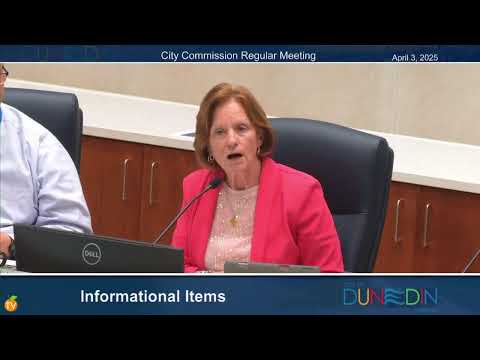
City commission unanimously approved Resolution 25‑14 to borrow $1,291,844 through a Bank of America master lease to finance a new E‑1 pumper and a 40‑cubic‑yard solid waste truck; staff detailed delivery dates, interest rates and fund allocations.
The Dunedin City Commission voted unanimously April 3 to authorize lease‑purchase financing of $1,291,844 for two city vehicles: an E‑1 pumper fire engine and a 40‑cubic‑yard solid‑waste collection truck.
Finance Director Les Tyehrer told the commission the city will use a master equipment lease with Bank of America Public Capital Corp and that the total borrowed amount for the two vehicles is $1,291,844. “The total amount, for both vehicles including interest and financing charges would be $1,487,485,” he said, noting total interest and financing costs of $195,641.
Tyehrer gave delivery timelines and financing terms: the solid‑waste vehicle — a 2024 Mammoth low‑entry truck priced at $391,746 — is expected in April 2025; the E‑1 pumper truck — priced at $909,098 — is expected in December 2025. Bank of America proposed a tax‑exempt rate of 3.84% over five years for the solid‑waste vehicle and 3.99% over seven years for the fire engine. Annual debt service for both vehicles is $237,528, of which $149,923 will be charged to the general fund (fire engine) and $87,605 to the solid‑waste fund.
Commissioners asked about procurement and lifecycle planning. Les said solid‑waste vehicles typically follow a five‑to‑six‑year useful life; the fire engine uses a 10‑year life for depreciation but the city used a 7‑year financing term to reduce interest costs. He confirmed the lease‑purchase structure means the city takes ownership when equipment is delivered. The commission also heard that replaced vehicles will move to reserve status and eventually be sold at auction.
Tyehrer described options for future replacements: continue financing, build pay‑as‑you‑go reserves, or consider funding from a future Penny (local sales‑tax) program if approved. Commissioners praised the staff review and cost comparison between outright purchase and lease financing.
Motion and vote: Commissioner Sandbergen moved, the motion was seconded, and the resolution passed by roll call with all members voting aye.
Why it matters: the vehicles support core services — fire suppression and solid‑waste collection — and the financing decision affects near‑term budget cash flow and future replacement planning.
What’s next: the city will execute Schedule 4 and Schedule 5 to the master lease agreement with Bank of America and proceed with vehicle acceptance upon delivery.