Get Full Government Meeting Transcripts, Videos, & Alerts Forever!
Get email alerts on the Impact Fees topic
No spam. Unsubscribe anytime.
Charlestown staff say law requires needs assessment before town can reliably raise impact fees
Summary
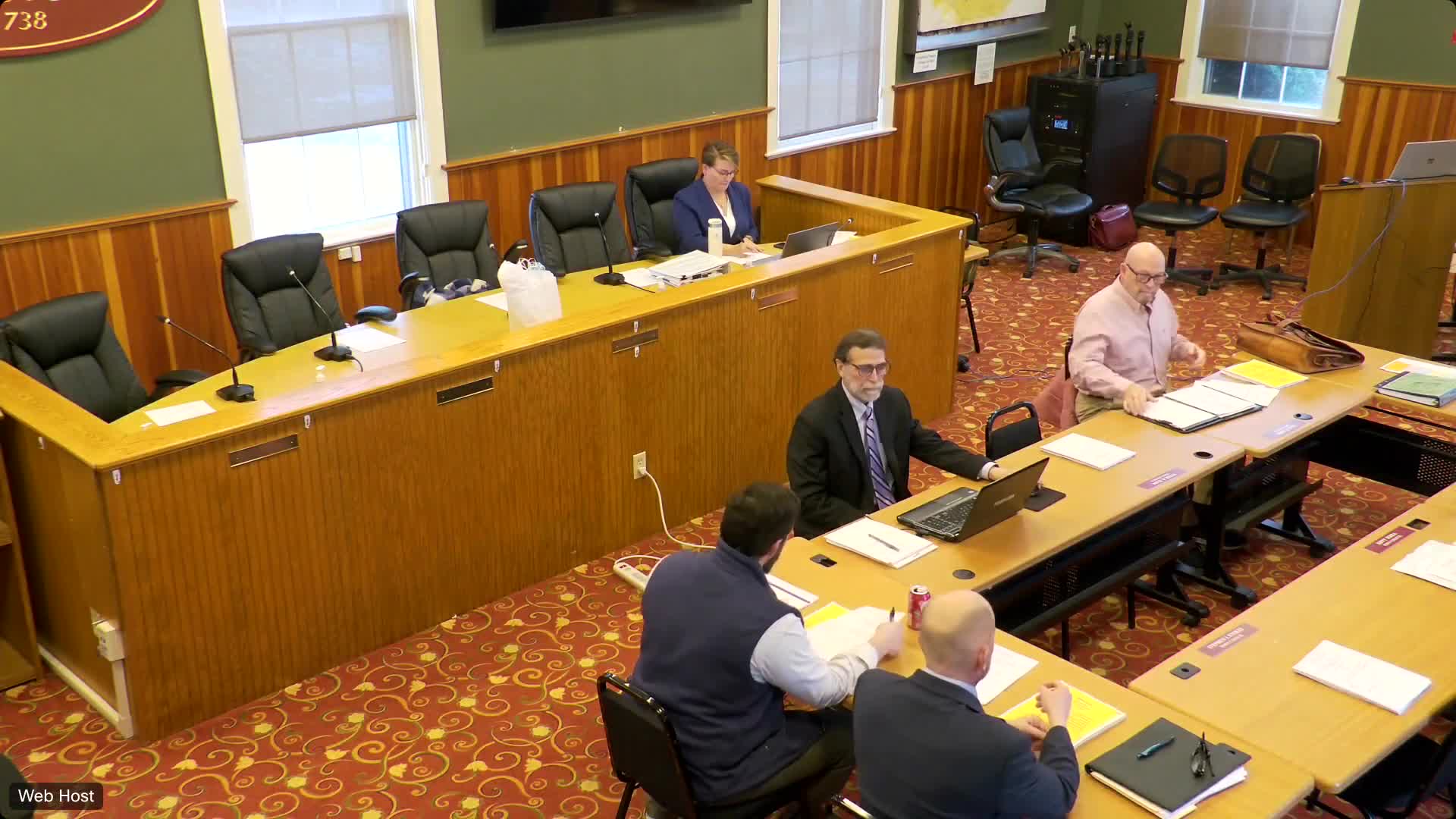
Charlestown tax assessor Ken Swain told the Town Council at a Feb. 24 special workshop that the town’s homeowner impact fee is out of date and that state law requires a formal needs assessment and capital improvement plan before the town can justify or change the fee.
Charlestown tax assessor Ken Swain told the Town Council at a Feb. 24 special workshop that the town’s long‑standing homeowner impact fee is out of date and that state law requires a formal needs assessment and a public facility capital improvement plan before the town can justify or change the fee.
Swain said the town’s current impact fee — $1,427 charged at the time of building permit under the existing ordinance — has not been reviewed in roughly 25 years and “we have yet to find a need,” adding that the workshop was intended to ask the council for direction and input. Attorney Peter Ruggiero warned council members that, without the required studies and documented ties between new development and specific capital costs, the fee may be legally vulnerable if challenged.
The council workshop focused on the statutory requirements and practical constraints that would shape any revised impact fee. State statute sections cited during the meeting include legislative findings requiring impact fees to be based on documented needs and a public facility capital improvement plan; a needs assessment is required every five years and fee revenues must be spent within statutory windows. Swain reviewed how the town’s February growth‑management plan originally based the fee on school capital costs and walked the council through updated arithmetic using current figures: an approximate regional capital budget of $24.5 million, Charlestown’s estimated share at about 23.43 percent (roughly $5.74 million), and a current dwelling‑unit count shown in Swain’s packet as 5,408 — a calculation that would produce an updated per‑unit fee of about $1,061 using the growth‑plan formula.
Staff and councilors discussed several practical points that affect whether an impact fee is useful for Charlestown: developers currently build and pay for subdivision roads, drainage and many on‑site improvements; the town does not operate municipal water or sewer systems; homeowner turnover and the town’s demographic shifts have reduced school enrollments; and the town averages roughly 20 new home permits per year, producing only modest annual revenue from any homeowner fee (Swain estimated roughly $20,000 per year at recent growth levels).
Swain noted other statutory constraints: revenue from an impact fee must be tied to capital improvements that increase public facility service capacity and must be spent within an eight‑year period tied to the fee’s purpose. The statute allows fee‑in‑lieu of land dedication; Charlestown’s subdivision regulations currently set a fee‑in‑lieu formula that Swain said uses $15,000 per acre as the fair‑market baseline in the town’s packet. Swain also highlighted common exemptions that the town’s building official, Joe Warner, wants written into any modern ordinance — for example, in‑kind replacement of an existing dwelling, accessory structures, and affordable housing units.
Several councilors and staff explored how a needs assessment would change the town’s options. Swain and staff proposed two paths: (1) suspend collection of the current fee and undertake the statutorily required needs assessment and a public facility capital improvement plan (internally or with a consultant), or (2) continue collection but accept that the present ordinance lacks the documentary basis the statute requires. Swain and staff estimated outside consulting for a defensible needs assessment and capital improvement plan could cost in the range of $60,000–$100,000; staff noted $50,000 currently exists in the engineering budget and asked whether the council would fund an additional $50,000 to advance the work.
Town solicitor Peter Ruggiero said the current fee structure is out of date and would be difficult to defend if legally challenged, and he described the practical mechanism the council could use to pause collections: either an ordinance amendment (preferred for public visibility) or a resolution to suspend imposition and collection until the needs assessment and CIP are completed. Building official Joe Warner said collecting the fee at the time of building permit is operationally simpler than attempting to collect at certificate of occupancy, and that any adopted fee would need to be itemized and placed into the required special revenue account under accounting standards.
The workshop also examined possible target uses for fees if the town moves forward: parks and recreation infrastructure, improved public‑works facilities, an expanded rescue/ambulance facility, and workforce housing preservation or maintenance. Swain presented a “big picture” example in which the town bonds for a workforce housing project (he used a hypothetical $7 million project), then uses fee revenue to help maintain units; he emphasized that such an approach requires coordinated planning, land and capital decisions, and voter or council choices about bonding and organizational structure.
No ordinance change or formal suspension was adopted at the workshop. Council members signaled skepticism that modest fee revenues would justify the cost of outside studies and noted the town’s low tax rate and the fact that much subdivision infrastructure already is paid by developers. The meeting closed with a motion to adjourn, which passed.
Meeting follow‑up items identified during the workshop include whether the council wants to (a) continue the impact fee as drafted, (b) suspend collection pending a needs assessment and CIP, (c) fund an external consultant and/or reallocate engineering budget funds to complete the required studies, and (d) incorporate explicit exemptions (affordable housing, in‑kind replacements, accessory structures) in any future ordinance.