Get Full Government Meeting Transcripts, Videos, & Alerts Forever!
Get email alerts on the Planning Comprehensive Plan topic
No spam. Unsubscribe anytime.
Batesburg-Leesville begins comprehensive plan update, council debates annexation, growth, recreation and schools
Summary
Central Midlands COG staff opened a town work session on updating the mandatory comprehensive plan under the state's planning enabling act; council and residents discussed annexation, density, traffic, schools, recreation, grocery access and technical review procedures as priorities for the plan.
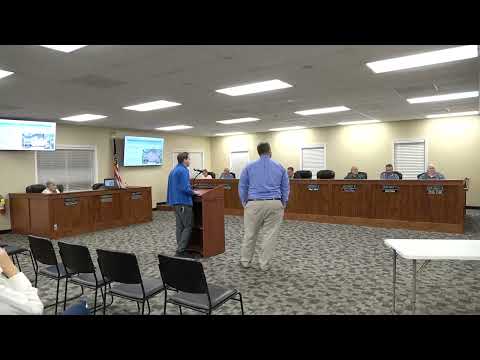
The Batesburg-Leesville Town Council and representatives from the Central Midlands Council of Governments (COG) held a work session on Jan. 27 to begin updating the town's comprehensive plan under the Local Government Comprehensive Planning Enabling Act of 1994.
Gregory Sprouse of the COG said the comprehensive plan provides the town's long-term vision and forms the basis for future zoning and implementation decisions. "This comprehensive plan is that concept. It's that vision," Sprouse told the council, adding that the plan should inventory existing conditions, identify needs and goals, and set implementation strategies and timeframes.
John Hanson, the COG's government services manager, introduced himself and described the COG's outreach role to support the town. Sprouse said the COG expects to collect data during the spring and aims for a draft plan in the fall; he described the plan's 10 required elements, including population, housing, transportation, community facilities, land use, priority investment and resiliency.
Council members and residents raised multiple issues they want the plan to address: annexation and growth management; traffic and infrastructure capacity; coordination with Lexington County school officials and the fire, police and EMS departments; recreation and youth programming; grocery store access and economic development; and urban tree canopy and greenways. Several council members urged that the school district, first responders and other service providers be directly involved in drafting priorities.
Speakers discussed whether the town should adopt interim measures to limit large-scale subdivisions until the plan and related ordinance updates are completed. COG staff and council members explained that the town can adopt a time-limited moratorium by ordinance if it chooses, and also that subdivision review already requires multiple departmental and county reviews; they described a technical review committee model in which water, sewer, police, fire, schools and other departments review development applications before they reach planning commission.
Council members emphasized balancing revenue growth with infrastructure capacity. One council member noted that business-license revenue has grown significantly for the town and said that controlling where and how growth occurs matters for traffic, schools and utility capacity. Residents and council members also urged more focused planning for youth recreation and for strategies to recruit grocery and hospitality businesses.
Sprouse closed by outlining next steps: COG staff will gather data and return to the town with follow-up meetings and a draft plan later in the year. Council members asked staff to include interactive mapping and to convene technical partners early in the process.
Ending: Council directed staff to continue the effort; no formal adoption decisions were made at the meeting.