Get Full Government Meeting Transcripts, Videos, & Alerts Forever!
Get email alerts on the Land Trust Tax Exemption topic
No spam. Unsubscribe anytime.
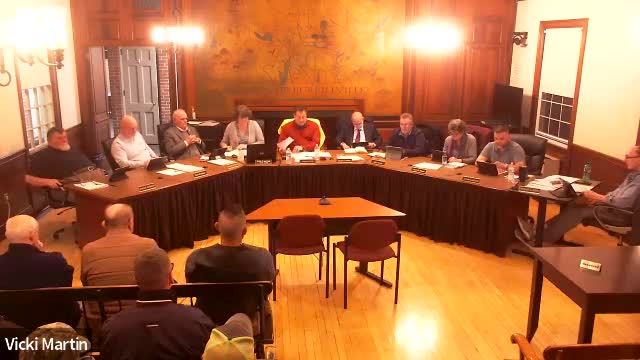
Burrillville council rejects resolution seeking repeal of private land-trust tax exemption after heated public comment
Summary
The Town Council voted down a resolution asking the General Assembly to repeal parts of the 2017 law that exempt some private land-trust property from local tax; the proposal sparked hours of public comment and debate over access, conservation and taxes.
The Burrillville Town Council declined to submit a resolution asking the state legislature to repeal chapters 276 and 299 of the Public Laws of 02/2017, which authorize an aggregate tax-exempt value for certain private land-trust holdings.
The resolution, which the council president read into the record, would have asked the General Assembly to remove the statute that exempts private land-trust property up to a specified aggregate value. Supporters of the resolution said local officials should control land-acquisition and tax policy; opponents raised concerns about public access to conserved land and the practical effect on conservation nonprofits.
The dispute drew a large public turnout. Pia Muller, who identified herself as a resident at 45 Darcy Lane, told the council that the Burrillville Land Trust (BLT) is a volunteer-run private nonprofit and “The BLT has never closed off a property to hunting where the previous owners have allowed hunting.” She urged the council to recognize the different capacities of private land trusts.
Chris Watson, a resident, said the BLT’s tax-exempt status is established in state law and asked the council to explain the reason for seeking repeal. “Why would you want to remove the tax-exempt status from a nonprofit?” he asked.
Other speakers described the land trust’s work and public access to trails. Betty Mancucci, a long-time BLT board member, said the BLT holds 293.14 acres across 14 properties and that several parcels are advertised and signed for public use, including the Bobcat Loop Trail and the Clear River Preserve Trail. “We have trails open to the public on several properties,” Mancucci said.
Some residents said removal of the exemption would shift tax burden to homeowners. Ron Dano, who identified himself as a lifelong resident and taxpayer, said, “Any piece of property that doesn’t pay taxes that is tax exempt affects my tax bill.” He said he supports conservation work but believes equal access should follow if property is tax-exempt.
Town officials provided background on the municipal process and on values. A town official summarized the BLT holdings and tax figures, saying the land trust’s current holdings would have produced about $3,941 in property taxes at the town’s current rate if they were on the rolls and noting that appraised values and assessed values differ across parcels. The resolution itself cited the town’s interest in assuming or coordinating land-acquisition oversight and in avoiding competition with private organizations for grants and state resources.
Council debate included procedural motions. A motion to table the resolution was proposed but failed. Later, a motion to submit the resolution to the legislature was made and seconded; the council recorded three ayes and four nays, and the motion failed.
The council did not adopt any change to local tax policy. Several speakers urged better communication and meetings between council members and local conservation organizations. The land-trust debate concluded without formal action to change the town’s approach to conservation or taxation, but the episode highlighted a persistent tension between conservation efforts and local fiscal concerns.
Council members said the issue would remain in public view and recommended continued dialogue between the town and private conservation groups.
Ending: The council’s vote leaves the statutory exemption intact unless legislators act; residents and BLT leaders urged the council to meet with the trust to resolve misunderstandings and to consider cooperative approaches for future land-protection efforts.