Get Full Government Meeting Transcripts, Videos, & Alerts Forever!
Get email alerts on the Affordable Housing topic
No spam. Unsubscribe anytime.
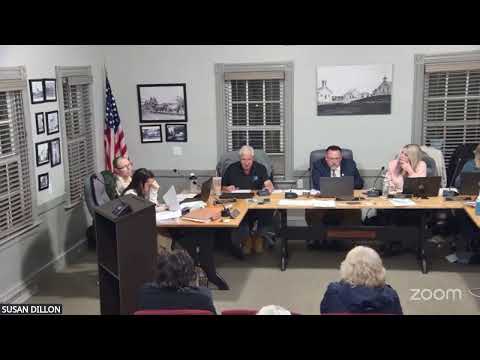
State Rep. Michael Chippendale pitches town-owned affordable housing plan to Foster council
Summary
State Rep. Michael Chippendale presented a town-owned affordable housing proposal to the Foster Town Council, describing financing options, likely unit sizes and timelines and urging the town to act to retain local control as statewide housing mandates change.
State Rep. Michael Chippendale presented a town-owned affordable housing proposal Wednesday to the Foster Town Council, saying the plan would let Foster “take control of how affordable housing is developed in our community.”
Chippendale, who identified himself as a Foster resident and a member of the House Commission to Study Housing Affordability, said recent and pending state legislation is reducing local control over housing and that towns that do not prepare will be subject to development decisions from Providence.
"If we do not take control of it, the state of Rhode Island will and will have 0 input into how it's done," Chippendale told the council. He described the proposal as a menu the council could modify, rewrite or reject.
Why it matters: Chippendale framed the proposal as a local alternative to state-driven development, aimed at preserving Foster's rural character while expanding units that working families, seniors and town employees can afford. He warned that Foster currently has roughly 2 percent of its housing classified as affordable and is therefore a likely target for externally driven projects.
The plan in brief: Chippendale said Foster has about 1,816 housing units, and that 10 percent — roughly 82 units — would satisfy the state affordable-housing threshold. "We only have 36 approved. We need 46 more," he said. He proposed a mixed project that could be town-owned and town-managed, with examples of duplex or four‑unit buildings featuring roughly 650–700 square‑foot units heated by mini‑split systems. He suggested a small development — for example about 30 units — could be built without major change to town character.
Financing and legal structure: Chippendale emphasized revenue bonds and state and federal programs as the primary financing route, arguing that revenue bonds are repaid from project income and do not go against the town’s tax base in the same way general‑obligation bonds would. He listed potential funding sources discussed in his slides: HUD programs, Community Development Block Grants, Low Income Housing Tax Credits, USDA rural development loans/grants, Rhode Island Housing programs, the Rhode Island Infrastructure Bank, and the Clean Water State Revolving Fund for septic and well infrastructure.
Eligibility, deed restrictions and preferences: Chippendale described the state’s affordability rules as including income thresholds tied to area‑median income (AMI), deed restrictions for 30 years and a government subsidy for building or rehabilitation. He said the town could legally adopt percentage‑based local preferences — for example residents, people with familial ties, or downsizing seniors — provided fair‑housing compliance is maintained. "Fair housing compliance is always going to be in effect," he said.
Timetable and scale: Chippendale outlined a three‑phase timeline: an initial planning and community survey stage (about 6–18 months), a funding and development stage (12–24 months), and construction/occupancy (two to three years). He said a well‑designed 30‑unit project could be feasible on town‑owned property and that town control would reduce developer risk related to septic, wells and ledge encountered on private sites.
Questions and council response: Council members asked about operation and maintenance, potential staffing, and how grants would be used. Chippendale said operational and maintenance costs would be built into the revenue bond underwriting and that the project could hire a property manager if necessary. He also advised the council a town plan and demonstrated progress would encourage state assistance.
What Chippendale said about local impacts: He argued the project could free up larger, rundown houses for sale and renovation, increase property values, and provide housing for teachers, first responders and other workers. "One of the most consistent things... I was born here, **** it, and I'm gonna die here," he said, describing residents who want to age in place.
Next steps noted at the meeting: Councilors said they would publicize the proposal and hold town halls. Chippendale asked that the written proposal be posted for public review and offered to remain available for follow‑up questions. The council did not vote on the proposal; Chippendale left the matter for council consideration and potential follow‑up action.
Ending: Council members asked staff and the planning fellow to help organize future public forums and to provide technical assistance as the council considers whether to pursue the packet of ideas Chippendale presented.