Get Full Government Meeting Transcripts, Videos, & Alerts Forever!
Get email alerts on the Crop Donation Tax Credit topic
No spam. Unsubscribe anytime.
Committee Hears Bill to Raise Oregon Crop Donation Tax Credit to 25%
Summary
A public hearing on House Bill 2,732 focused on increasing Oregon's crop donation tax credit from 15% to 25% beginning in tax year 2025 and extending the credit's sunset. Supporters said the change would boost donations to food banks as hunger and food-bank demand rise.
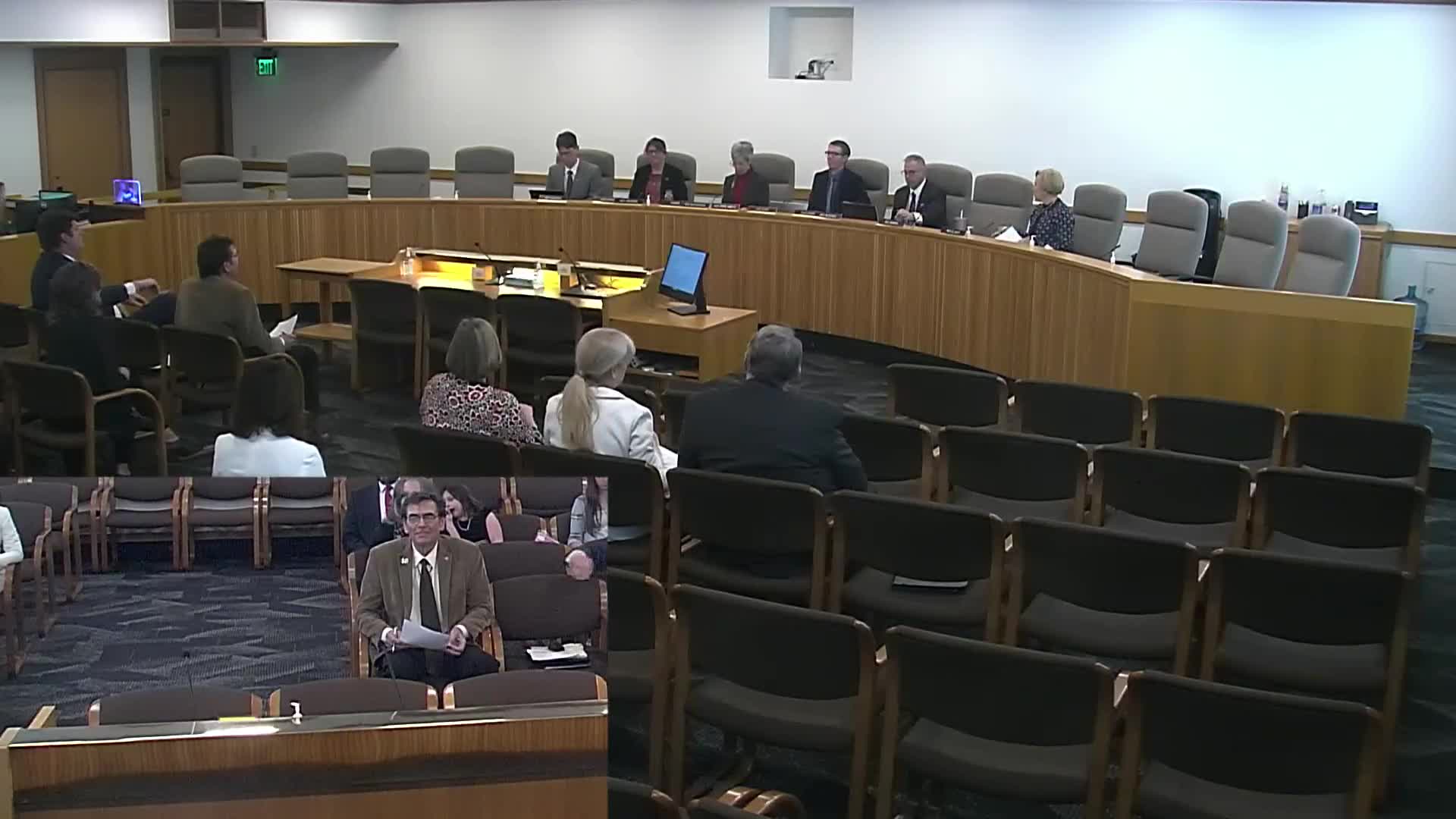
The Oregon House Committee on Revenue opened a public hearing April 3 on House Bill 2,732, which would extend the crop-donation income tax credit and raise the credit from 15% to 25% of the wholesale value of crops donated by growers, effective for tax year 2025.
Proponents told the committee the increase would encourage farmers, ranchers and other food producers to donate more fresh produce to local food banks and help address rising food insecurity across the state. Representative Court Boyce (R-District 1) said inflation and higher operating costs have strained families and local food providers, and that raising the credit would offset packaging and transportation expenses tied to donations. "Increasing the crop donation tax credit will increase donations to food banks across Oregon and reduce food insecurity," Boyce said.
Hugh 80, with Statecraft and representing Defend Workers, said the change would provide direct support to low-income Oregonians who rely on food assistance. He told the committee that six other states (California, Iowa, Nebraska, New York, Virginia and West Virginia) offer crop-donation credits ranging from 15% to 50%, and that a 25% credit would put Oregon near the national average. He cited the statute that reinstated the credit in 2014 (Senate Bill 1541) and said that after that increase farmers donated an additional two million pounds of produce within a year and a half.
Hannah Walters, senior developer for network and government relations at Oregon Food Bank, said the network distributed the equivalent of roughly 110 million pounds of food and recorded about 2.5 million visits to more than 1,200 local food-assistance sites last year, a 31% increase from the prior year. Walters estimated that the current 15% credit translates to about seven pounds of donated produce per $1 of tax credit and that a 25% credit could raise that to about 10.75 pounds per $1 (based on an assumed wholesale value used in the Oregon Food Bank projection).
Supporters also offered local examples. Boyce cited the Port Orford food distribution center in Curry County as an operation that would benefit from more crop donations. Several witnesses asked the committee to view the measure as an affordable, targeted incentive: testimony characterized the state revenue effect as small relative to the overall budget while saying the benefit to families and food banks would be substantial.
The committee confirmed there had been prior discussion of related legislation (House Bill 2,097) and that the Legislative Revenue Office had presented earlier in the session. The public hearing for House Bill 2,732 was closed after committee members heard the signed list of witnesses and comments.
Ending: The hearing record for HB 2,732 will remain open for the committee’s next steps; no formal vote or amendment was recorded during the April 3 public hearing.