Get Full Government Meeting Transcripts, Videos, & Alerts Forever!
Get email alerts on the Early Childhood Education topic
No spam. Unsubscribe anytime.
St. Bernard School Board reviews 2025–26 Head Start application, details federal funding and enrollment
Summary
School staff presented the district’s 2025–26 Head Start baseline application, reporting a $1,119,212 federal contribution to continue services for 112 children and outlining goals, budget priorities and eligibility rules. Board members questioned federal funding stability and potential state budget shifts.
St. Bernard Parish School Board members heard a presentation on March 11 on the district’s 2025–26 Head Start baseline application and were asked to approve submission to the federal program.
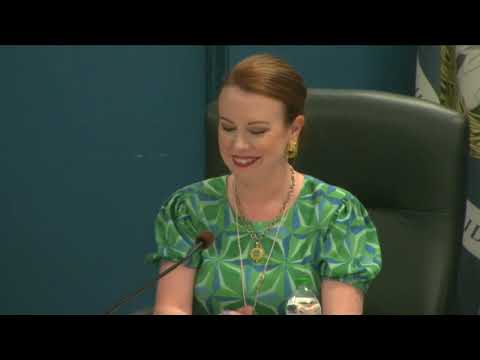
Miss Scallinger, presenting the application on behalf of the Head Start program, said, “I am here to present and seek your approval for the 2025–2026 school year Head Start application.” She told the board the federal contribution in the baseline application is $1,119,212 — about a $25,000 increase from the prior year — and said the program will continue to serve 112 students.
The application, Scallinger said, allocates the bulk of funds “to salaries and benefits for our staff” including teachers, paraprofessionals, the preschool nurse, family service worker and support staff. She also listed other eligible expenses covered by the grant: school and classroom supplies, transportation and admission for field trips, child liability insurance, staff travel for conferences and webinars, and staff training such as CPR and first aid.
Scallinger described program goals and service delivery plans: the baseline application reiterates goals on student health (ensuring families have medical and dental access and up‑to‑date immunizations), math and literacy emphasis, using literacy programs in partnership with district literacy coaches, stronger use of data and small‑group instruction, increased family participation, and strengthened instructional support and mental‑health awareness for staff. She said Head Start will run seven classrooms across five elementary campuses and described Head Start eligibility priorities that include children who are homeless, in foster care, on SNAP benefits or below the federal poverty line; the program may enroll up to 30% of children above the poverty guideline and aims to serve a minimum 10% of children with disabilities.
Asked whether the district already had received the federal contribution, Scallinger replied, “I’m applying for it now. I showed it to policy council, and then, once I get approval from policy council and the school board, it’s actually due April 1 to Head Start.” Board members pressed about the stability of federal funds after public discussion about eliminating the U.S. Department of Education; Scallinger said the program had previously received notice that Head Start funding would continue but that she had not yet received any new assurances in the current round of discussion.
Board member Lee Voci placed the Head Start program within the district’s broader pre‑K and three‑year‑old offerings, explaining that seven Head Start classes are funded by federal Head Start dollars while other four‑year‑old and three‑year‑old classes are paid from a mix of Title I, LA 4, Educational Excellence funding and general fund dollars. Voci warned that a March 29 ballot question in Louisiana (constitutional amendment number 2) could eliminate two local funding sources the district uses, requiring the district to find local money to sustain two pre‑K sections that currently rely on those funds. She described a complex interaction with the state teacher retirement system’s unfunded accrued liability (UAL) and said any reduction in the employer contribution rate could be redirected locally to support teacher pay increases — but would not automatically replace the two lost early‑childhood funding sources.
Board members praised the Head Start team’s preparation; Miss Millie Harris said the policy council met earlier the same day and reviewed the packet. The transcript records a motion to approve the Head Start application moved from the floor and seconded, but the transcript does not record a roll‑call or voice tally for that motion.
Why it matters: Head Start federal grants fund classroom slots, staff and supports that serve low‑income families and children with disabilities. Changes to state or federal funding sources, or to retirement‑system employer rates, could shift how the district funds early‑childhood seats and staff compensation.
Votes at the meeting and next steps: The presenter said the application must be submitted to the federal Head Start office by April 1. The policy council and the school board reviewed the baseline application; the transcript shows a motion and second to approve submission but does not include a recorded vote count in the provided excerpt.