Get Full Government Meeting Transcripts, Videos, & Alerts Forever!
Get email alerts on the Committee Votes topic
No spam. Unsubscribe anytime.
Committee work session: votes and motions on transmission, sewer debt, hydro/geothermal study and utility rate mechanisms
Summary
The Energy, Utilities and Technology Committee took final committee actions on several bills at its April 3 work session, tabling a high‑impact transmission item, recommending rejection of an emergency debt‑relief request for a sanitary district, and approving studies of hydro/geothermal options and PUC performance‑metric authority with clarifying amendments.
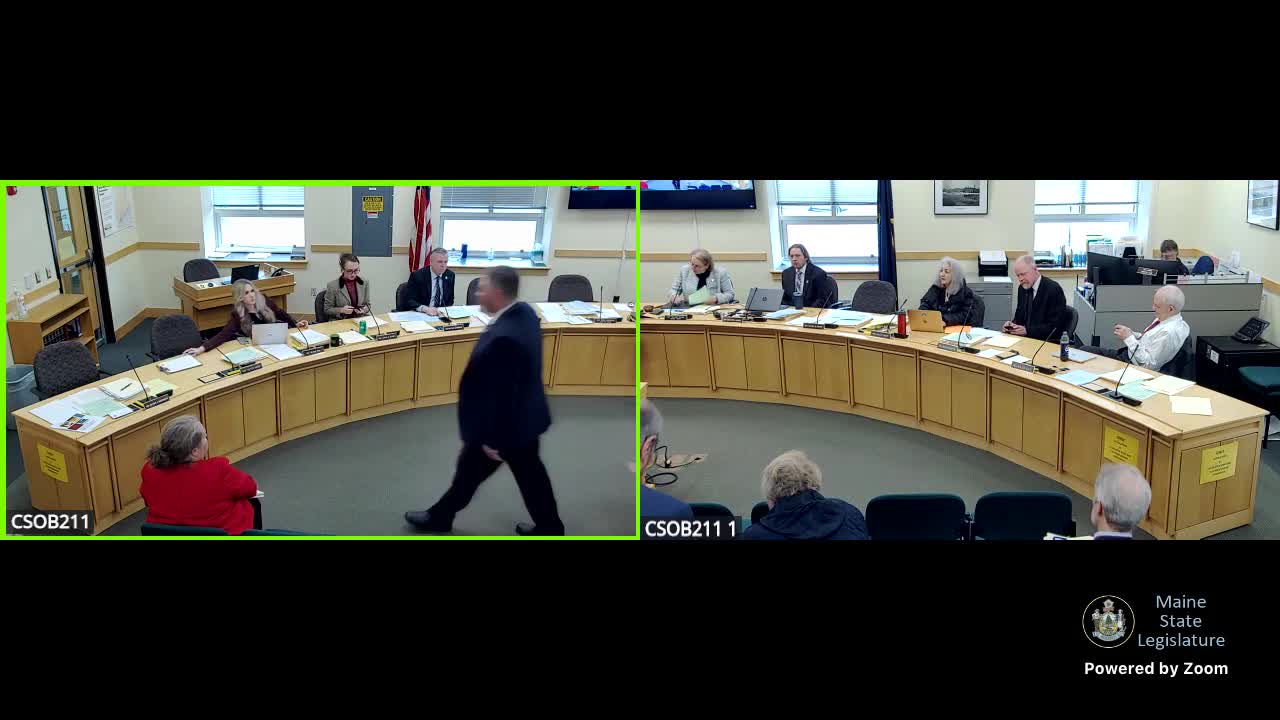
The Joint Standing Committee on Energy, Utilities and Technology conducted work‑session votes on multiple bills during its April 3 meeting. The committee issued final committee recommendations or tabled items as follows (committee votes are those recorded in the work session transcript).
Votes at a glance
- LD 8 10 (Northern Maine transmission / legislative approval): Motion to table (sponsor/lead motion by Senator Lawrence). Committee action: the motion to table passed; the transcript records unanimous support for tabling (recorded as 9‑0 on the floor). The item was held for further process review and to coordinate with Attorney General and PUC materials.
- LD 8 32 (an act to provide funds to reduce the debt of the Vassalboro Sanitary District): Motion on committee floor was "ought not to pass." Committee recommendation: Ought Not To Pass; recorded vote 8 in favor, 3 opposed. Committee discussion included concerns about precedent for one‑off appropriations; a minority plan to develop a competitive grant program for sanitary or wastewater districts was discussed but not adopted.
- LD 300 (Resolve directing the PUC to study expanding hydroelectric use and developing geothermal): Motion on the floor was Ought To Pass As Amended (sponsor’s amendment with GEO‑requested clarifications). Committee recommendation: Ought To Pass As Amended; recorded vote 10 in favor, 0 opposed. The amendment clarifies scope for opportunity‑level study, differentiates heat/thermal geothermal and electricity generation, and limits site‑specific economic assessments; the GEO offered to lead the study with PUC/DEP input.
- LD 301 (allowing PUC to establish performance‑based metrics and rate adjustment mechanisms): Motion on floor was Ought To Pass As Amended (PUC draft amendment, March 12). Committee recommendation: Ought To Pass As Amended (PUC language); recorded vote 8 in favor, 2 opposed. The committee rejected an alternate amendment (April 3) that would have capped a "positive financial incentive" component at no more than 100 basis points above an approved return on equity. The PUC said it preferred the March 12 language because it preserves flexibility in adjudicatory proceedings.
- LD 186 (notice/reporting and consideration of time‑of‑use rates): Motion on floor was Ought Not To Pass. Committee recommendation: Ought Not To Pass; recorded vote 5 in favor, 4 opposed. The sponsor and some members sought additional notice and consumer protections for vulnerable residential customers; the committee recorded an intention to include those concerns in potential minority or subsequent work but did not report the bill out favorably.
What the votes mean
Several votes reflected the committee’s tension between enabling agency flexibility and protecting ratepayers or local communities from perceived risks. Examples:
- The unanimous tabling of LD 8 10 followed receipt of legal analysis from the Attorney General’s office and PUC materials; members asked the chairs for a clearer flowchart of statutory approvals and implementation steps before acting further.
- The committee’s "ought not to pass" recommendation on LD 8 32 acknowledged acute local hardship in Vassalboro but expressed concern about the fiscal precedent of one‑off legislative debt relief. Some members asked staff to draft a competitive emergency grant vehicle for wastewater/sewer districts that could be applied to many communities; that approach will be explored in a minority drafting effort.
- The committee approved the sponsored LD 300 study unanimously after the GEO and sponsor agreed clarifying language that keeps the study at an opportunity/evaluation level rather than a detailed site‑by‑site engineering and permitting exercise.
- On LD 301, members split over whether to include a legislative cap on so‑called "positive incentives" in performance‑based rate mechanisms. The PUC urged open authority and warned that statutory caps could create unintended legal and regulatory conflicts; others sought explicit limits to avoid the appearance of rewarding utilities with extra return central to past political debates.
Next steps
Several items were either tabled or deferred for additional work: staff was asked to draft language for a possible sanitary/wastewater grant program, and the committee asked the PUC and AGO materials to be assembled so legislative approval and eminent domain concerns around high‑impact transmission lines can be reviewed together. LD 300 and LD 301 will move forward on the committee report as recommended.