Get Full Government Meeting Transcripts, Videos, & Alerts Forever!
Get email alerts on the Aspire Tanf topic
No spam. Unsubscribe anytime.
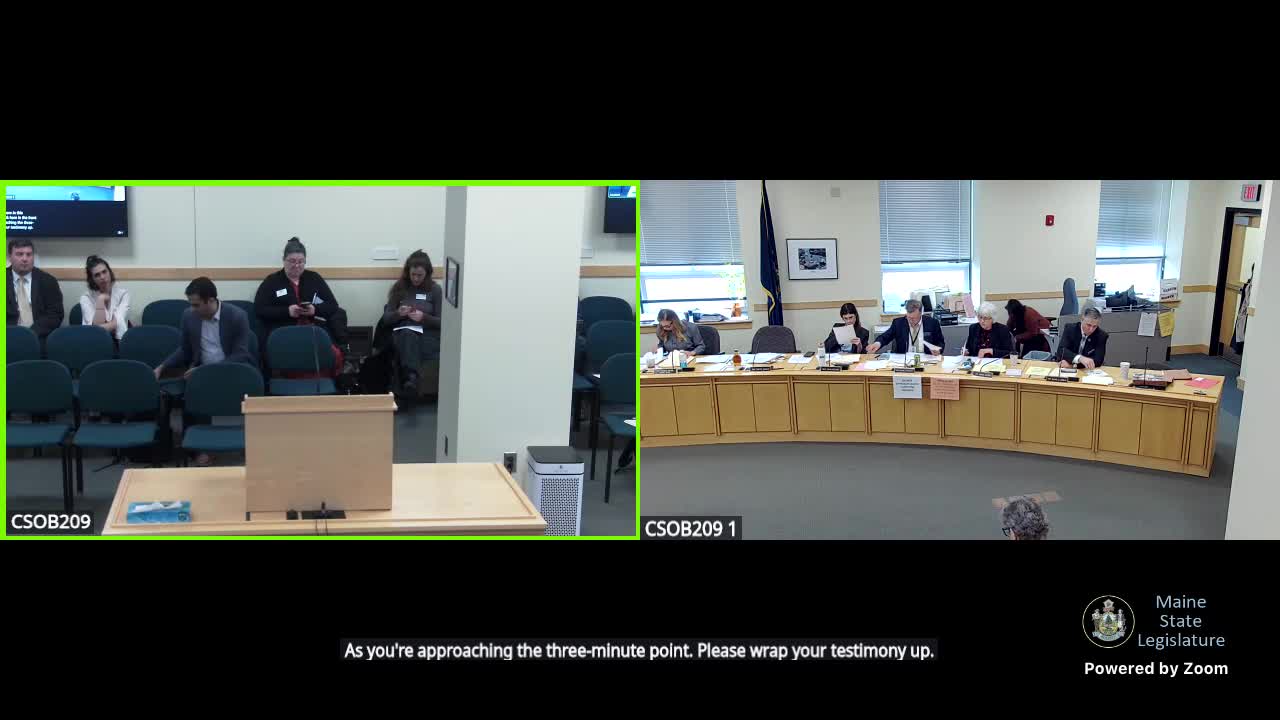
Lawmakers hear hours of testimony on ASPIRE TANF contract; sponsors push to return program to state, contractors and participants disagree
Summary
Representative Tiff Archer and dozens of witnesses urged the committee to move ASPIRE TANF administration back to state employees, citing low work participation rates and participant complaints about Fedcap. DHHS said program metrics have begun to improve and warned a premature shift would disrupt services.
Representative Tiff Archer (District 129) opened public testimony on LD 943, which would require ASPIRE, Maine’s Temporary Assistance for Needy Families (TANF) employment and training program, to be administered by state employees rather than an out‑of‑state nonprofit contractor.
Archer said she was urging the transfer because the current contractor’s performance fell short of expectations and because outcomes such as the work participation rate (WPR) have been “catastrophic” at times. “These fit numbers are not just disappointing, they represent catastrophic failure,” Archer said in summary of participant reports and contract data presented to the committee.
Supporters: dozens of current and former ASPIRE participants, legal aid advocates and labor unions testified in favor of the bill. Common themes in testimony included long delays for support services (tuition, car repairs, childcare), high staff turnover at the contractor, and poor communication that advocates said caused participants to lose housing, school registrations or employment opportunities. A number of witnesses gave first‑hand accounts of denied or delayed support that they said jeopardized education and employment.
- Legal aid and policy advocates: Orianna Farnham and Anne Danforth of Maine Equal Justice told the committee their organization had helped hundreds of families with problems involving ASPIRE administration and urged a transfer to state control. Farnham said many participants need attorney intervention to secure services they are eligible for. - Former and current contractor‑staff and clients: multiple witnesses, including Rachel Phipps (licensed clinical social worker, former Fedcap employee) and Kelly Austin (participant) described a “toxic” work environment and long delays for basic supports; Phipps said working at the contractor "was like catching a falling knife." Other contractor employees testified in defense of the work they do and said local offices and preceptor relationships support participants in their communities.
DHHS and contractor testimony DHHS Office for Family Independence director Ian Yaffe opposed the bill, warning that an immediate transfer would be disruptive and costly and that the department had begun to see measurable improvements after a 2023 contract redesign. Yaffe told the committee that first quarter contract outcomes in 2025 showed most jobs secured had employer‑provided benefits and that retention at 1, 3 and 6 months was meeting the department’s targets. He also said an independent participant survey—required by statute and conducted by an outside vendor—had so far produced encouraging results from current participants and that a final LIFT report would be available to the committee before a work session.
Contractor and labor perspectives Fedcap employees and local leaders testified that moving administration back to the state would eliminate locally embedded services and relationships. Union leaders and contractor staff urged the committee to consider service continuity and the experience of incumbent staff who deliver services in every county.
Why it matters: LD 943 raises tradeoffs between centralized state control and outsourced delivery. Sponsors and many participants told the committee the contractor’s performance had harmed families; DHHS and local contractor staff said the contractor is improving under stronger contract terms and that an abrupt transfer could cause gaps in service and add expense.
Committee direction: committee members pressed DHHS for performance measures, vacancy and retention data, the number of ASPIRE participants and Parents as Scholars enrollment numbers. DHHS said it would provide updated contract metrics, survey results and vacancy/turnover data at the work session.