Committee recommends against one‑time state appropriation for Vassalboro sanitary district; members propose competitive grant alternative
Loading...
Summary
Lawmakers heard that Vassalboro faces high per‑customer debt service after a required wastewater project. The Energy, Utilities and Technology Committee voted in work session to recommend 'Ought Not to Pass' on an appropriations request; some members proposed a narrowly targeted competitive grant program instead.
Testimony and documents in the committee’s work session described a small sanitary district in Vassalboro carrying substantial long‑term debt after construction of a new wastewater system. The district’s leaders and its Senate sponsor, Sen. Brett Bradstreet, asked the committee for a one‑time state appropriation to reduce debt and ease large annual charges on roughly 200 resident accounts.
Sen. Bradstreet said the district had no viable local alternative and that the town and district had already provided more than $1.7 million in assistance through local and state grant programs. He said lenders would foreclose on district assets in the event of default, and the state is not directly liable for district bond debt.
Department of Environmental Protection materials the committee received showed prior state investment in the project: a 2018 state wastewater bond provided about $600,000 in a grant and the Clean Water State Revolving Fund supplied principal forgiveness and loan support totaling roughly $2.7 million. Committee members pressed whether additional federal or state funds could be applied; DEP staff confirmed the bond account is committed and that current SRF rules fund planning and construction rather than debt relief.
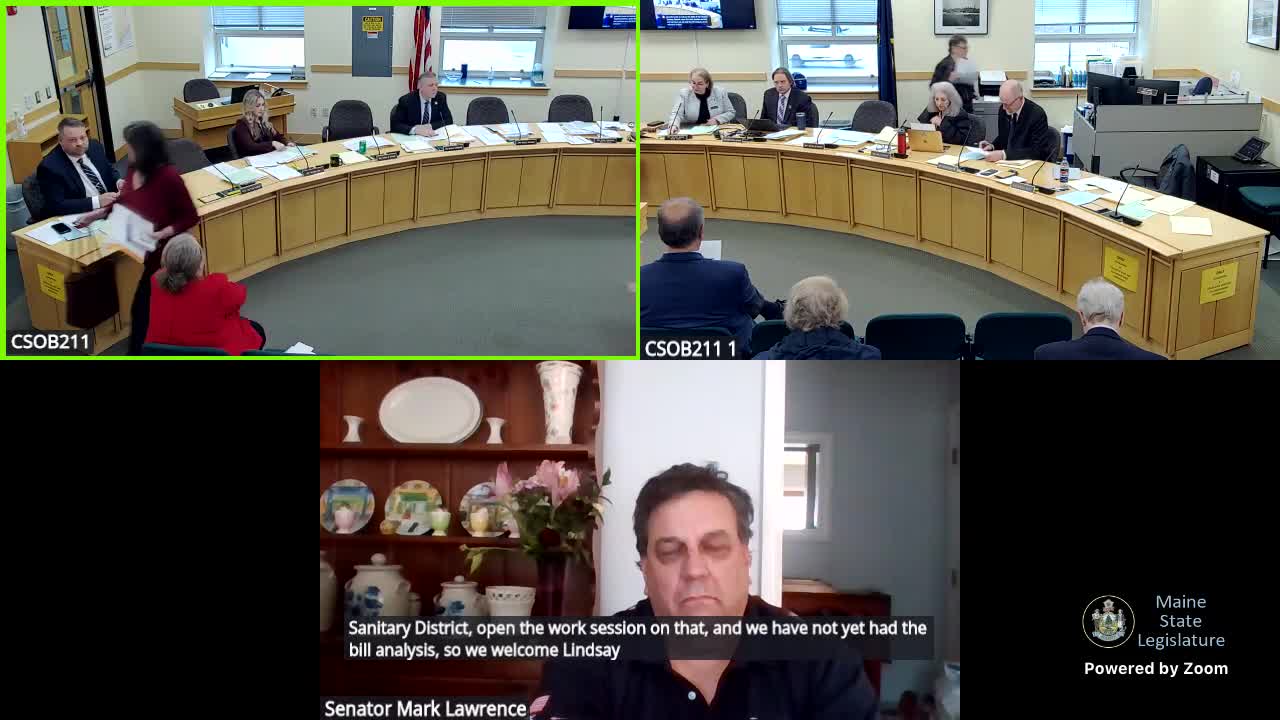
In work session Representative Sacks moved “ought not to pass” on the sponsor’s direct appropriation. The motion carried; the committee recorded an 8–3 vote in favor of Ought Not to Pass. Multiple committee members expressed sympathy for Vassalboro but also concern about precedent: allowing a one‑off appropriation, they warned, could prompt many similar requests from small towns with infrastructure debt. Several members suggested an alternative approach: a targeted, competitive grant program for emergency municipal wastewater or sanitation needs, administered through DEP with clear eligibility and reporting rules.
Sen. Bradstreet said he supports efforts to identify a durable state mechanism to help similar districts but asked the committee to act quickly if it chooses a grant approach. Committee staff and members agreed to develop draft language for a narrowly targeted, one‑time competitive grant program for municipal sanitary districts; proponents said any such program must define allowable uses and include criteria for need and cost‑share.
Ending: The committee rejected the immediate appropriation but instructed staff to work on a proposal for a time‑limited grant program that could be vetted with DEP and budget staff. Sponsor and staff said they would collaborate on draft language to present at a future meeting.