Get Full Government Meeting Transcripts, Videos, & Alerts Forever!
Get email alerts on the Land Bank topic
No spam. Unsubscribe anytime.
Bill would make Maine Redevelopment Land Bank Authority responsible for surplus government land transfers
Summary
Lawmakers heard proponents say LD 1170 would expand the Maine Redevelopment Land Bank Authority(MRLBA) role to handle surplus properties from federal, state and municipal entities and streamline redevelopment; supporters urged an annual inventory from the Bureau of General Services to identify surplus parcels.
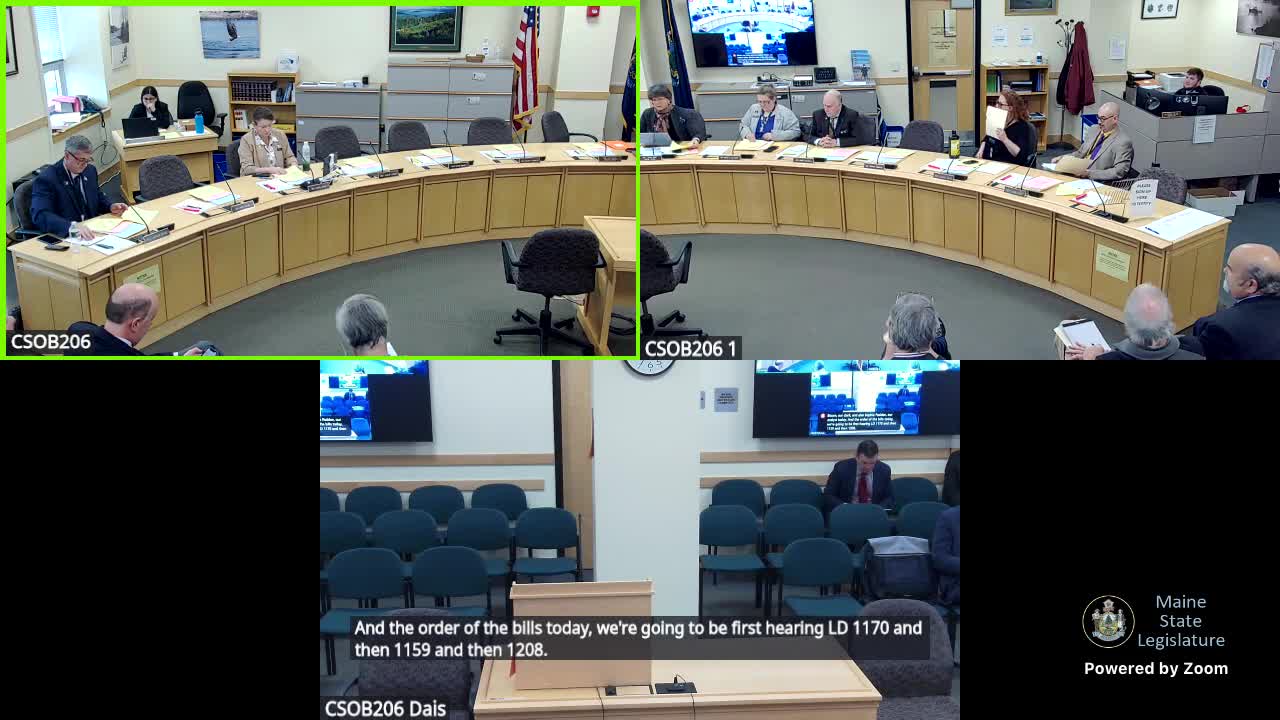
Representative Cassie J. Julia, sponsor of LD 11 70, told the Joint Standing Committee on Housing and Economic Development that the bill would make the Maine Redevelopment Land Bank Authority the agency responsible for transfer and development of surplus land declared by any government body, including federal, state and municipal entities. "This bill prioritizes streamlining the process for redeveloping surplus properties by making the Maine Redevelopment Land Bank Authority the responsible entity for handling surplus land declared by any government body, state, federal, municipal or otherwise," Julia said.
The amendment the sponsor described broadens eligibility beyond state-owned surplus to include federal and municipal properties and clarifies the authority of the MRLBA to act on surplus land when local entities lack capacity to redevelop. Melanie Sachs (Freeport), a co-sponsor, told the committee the bill replaces the Maine State Housing Authority with MRLBA for that role and asked the committee to add a requirement that the Bureau of General Services provide an annual inventory of potential surplus properties to the land bank and committee. "So instead of the vague 'periodically,' we thought annually; municipalities are actually in a different statute asked to send things to the Maine Redevelopment Land Bank Authority as well," Sachs said.
Tuck O'Brien, executive director of the Maine Redevelopment Land Bank Authority, described the statutory definition of surplus property as land functionally obsolete to the owner and gave an example of federal surplus housing in Down East Maine that the land bank is assisting a town to preserve. "The surplus property is essentially functionally obsolete property to the entity that's holding the title in it," O'Brien said. He told lawmakers the land bank can either take title to a parcel, conduct remediation or zoning changes and then issue a request for proposals, or structure transfers and sales to meet state policy goals.
Eric Jorgensen of Maine State Housing said the land bank is better suited than Maine Housing to manage a broad array of surplus property outcomes, noting Maine Housing remains represented on the land bank's board. Patrick Woodcock, president and CEO of the Maine State Chamber of Commerce, said redeploying surplus property for industrial, commercial or housing uses could boost economic outcomes.
Committee members asked whether municipalities would be compelled to participate, how affordability would be protected if housing resulted, and how transfers would be priced. Julia and O'Brien said participation would be voluntary and that the land bank could help towns and agencies that lack capacity; they acknowledged the bill does not itself include mandatory affordability covenants but said affordability questions would be part of future project discussions and that the authority can support policy goals such as housing when appropriate.
The committee held public testimony from additional supporters; no formal vote on LD 11 70 was recorded during the hearing.
The committee moved on to later agenda items after closing the LD 11 70 public hearing.