Get Full Government Meeting Transcripts, Videos, & Alerts Forever!
Get email alerts on the Vehicle Registration Unhoused topic
No spam. Unsubscribe anytime.
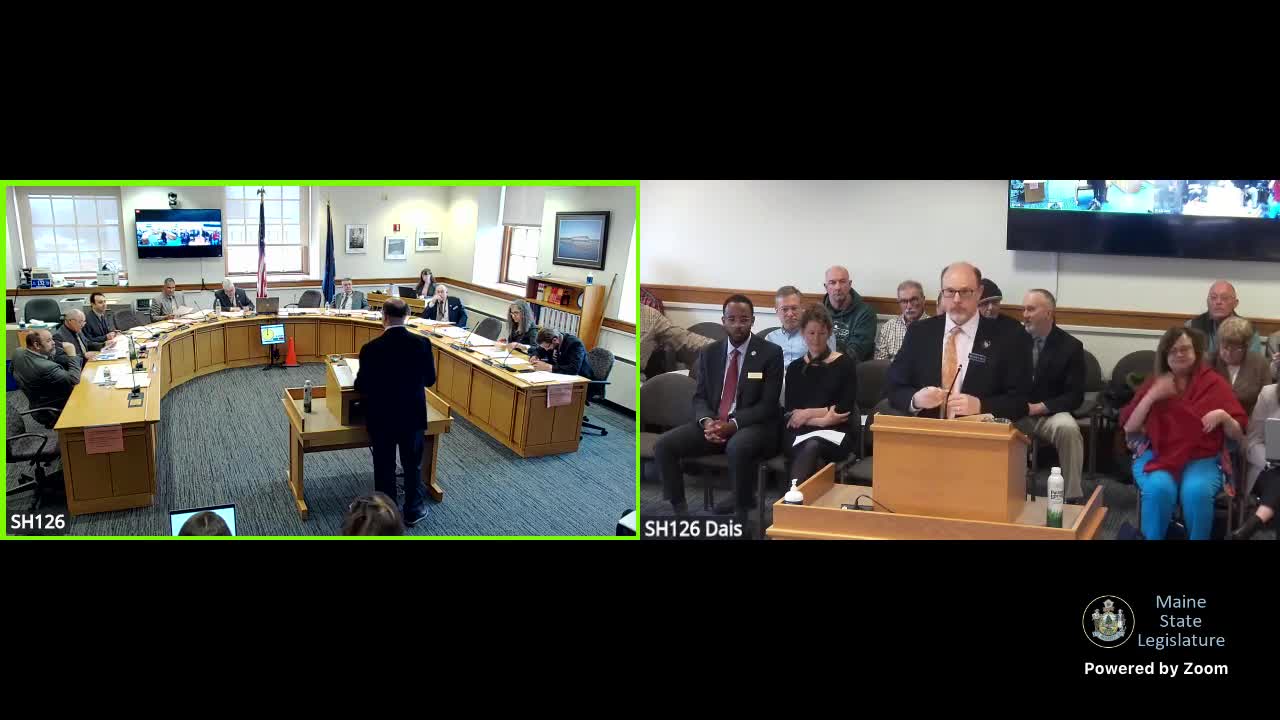
Committee hears bill to let Secretary of State collect excise taxes for unhoused vehicle owners
Summary
LD 611 would let residents without a fixed residing place pay motor vehicle excise taxes directly to the Secretary of State so they can register and legally operate vehicles when a municipality refuses to accept payment; the Bureau of Motor Vehicles supported the change and described limited fiscal and operational impact.
Augusta — Lawmakers heard LD 611 on Thursday, a bill to allow the Secretary of State to accept motor vehicle excise tax payments from Maine residents who have no fixed residing place.
Representative Dan Sayer (House District 135) introduced the bill, saying it would fix situations in which Mainers who live in their vehicles or otherwise have no standard proof of residency have been refused by a municipality when attempting to register and pay excise taxes. "If the individual resident of this state has no residing place, the excise tax may be paid directly to the Secretary of State," Sayer told the committee.
The Bureau of Motor Vehicles (BMV) provided formal support in testimony. Kathy Curtis, Deputy Secretary of State and head of the BMV, told the committee the office has been contacted by an increasing number of individuals who own a vehicle and are unhoused and cannot provide typical proof of residency such as a utility bill or rent receipt. Curtis said the BMV already accepts excise tax for Maine residents in unorganized territories and for participants in the address confidentiality program and that the change would have "very minimal impact" to BMV operations and no fiscal note.
Nut graf: The bill would amend "Title 36, section 1484" (as cited in testimony) to permit excise-tax payment to the Secretary of State when a resident has no residing place. BMV says any tax collected in that circumstance would go to the State—s general fund. The office emphasized the option would be permissive for residents and would not prevent towns from collecting the tax if they choose to do so.
Committee members raised practical questions about verification and possible unintended consequences. Representative Michael Webb asked whether the bill would change residency requirements for a Maine license; Sayer and Curtis replied the bill is limited to excise taxes and registrations for Maine residents who already qualify as state residents. Representative Wayne Perry and others asked whether allowing a payment to the Secretary of State would affect a municipality—s obligations for general assistance; Curtis said some towns had refused to accept payments because of concerns about general assistance eligibility, but she could not confirm town practices.
Curtis also told the committee that many unhoused residents use post office boxes or list where they park their vehicle as a point of contact; the state—s address confidentiality program can also allow use of the Secretary of State—s address while keeping a private address on file. She said the BMV could provide a short report for the work session on how many such cases it has encountered and on registration patterns for out-of-state addresses.
Ending: The committee closed public testimony on LD 611 after BMV support and some clarifying questions. Members asked staff for additional background materials for the work session, including how common out-of-state addresses are in Maine registrations and how many cases the BMV has encountered where towns refused to accept excise payment from people who identify as residents but lack typical proof of residency.