Get Full Government Meeting Transcripts, Videos, & Alerts Forever!
Get email alerts on the Gorham Connector topic
No spam. Unsubscribe anytime.
Legislative hearing draws hundreds as lawmakers consider repealing Gorham Connector authorization
Summary
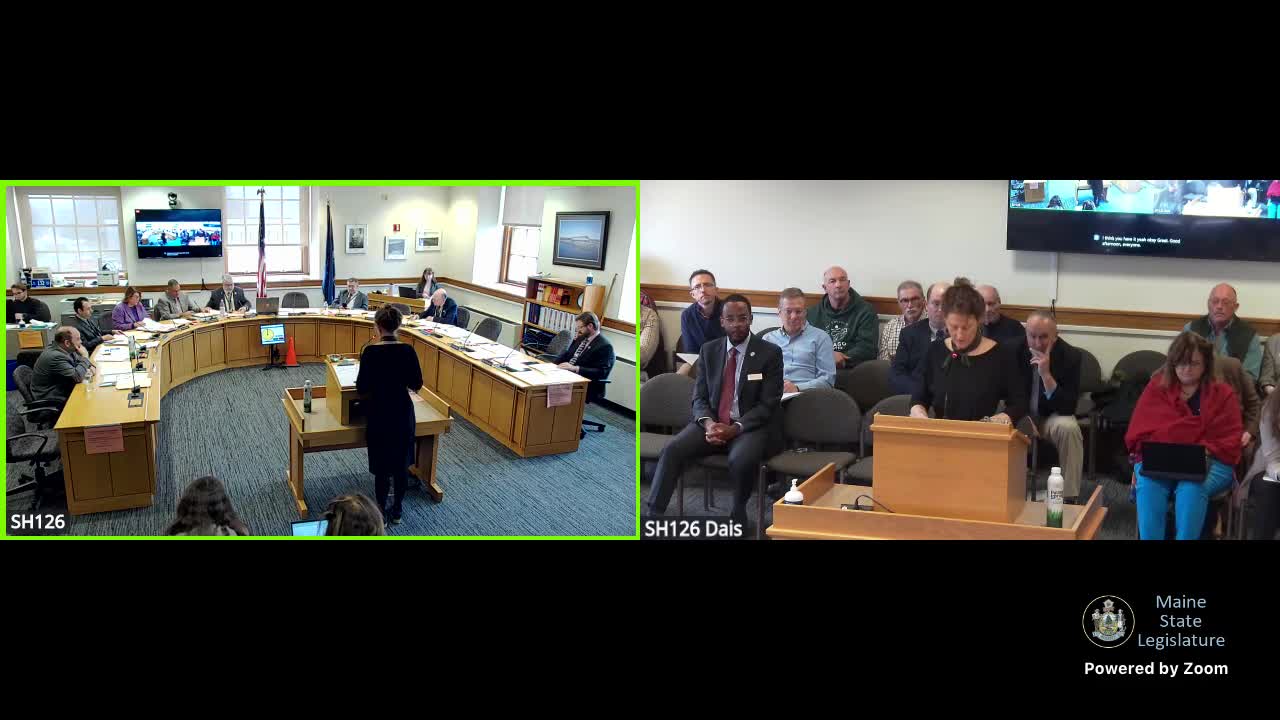
Gorham—s proposed connector to the Maine Turnpike remained the focus of a marathon public hearing Thursday as the Joint Standing Committee on Transportation heard LD 1020, a bill that would repeal the Turnpike Authority—s authorization to build the project and require divestment or resale of land already acquired.
Gorham —s proposed connector to the Maine Turnpike remained the focus of a marathon public hearing Thursday as the Joint Standing Committee on Transportation heard LD 1020, a bill that would repeal the Turnpike Authority—s authorization to build the project and require divestment or resale of land already acquired.
Proponents of repeal framed the issue as a local land‑use and environmental fight. "The proposed Gorham connector is a costly and outdated solution to our region's transportation challenges," Senator Stacy Brenner (Senate District 30) told the committee. "This proposal threatens our environment, increases emissions, and fails to provide an effective long term transportation strategy." The senator cited potential impacts to wetlands and Smiling Hill Farm and urged the committee to allow alternative transportation solutions to be considered.
Nut graf: The committee heard several hours of sharply divided testimony from residents, local officials, conservation groups and the Maine Turnpike Authority. Supporters of LD 1020 — including municipal officials, farmers and conservation groups — said the connector would harm wetlands, farms and village centers and accused the Turnpike Authority of moving the plan forward without adequate local engagement. Opponents, including some municipal leaders, the Turnpike Authority and business groups, said the authorization should remain while the Maine Department of Transportation (MDOT) completes a broader regional study to evaluate all alternatives.
Most urgent for many witnesses was the effect on specific properties and the question of eminent domain. "Eminent domain, the forced governmental seizure of people's homes and property, is an act of violence," Thomas Mui Roberts of North Scarborough told the committee. "It should only ever be considered as a last possible resort." Several speakers described walking the proposed route and finding forested wetlands and brook trout habitat in the Red Brook watershed.
Municipal officials—s testimony was mixed but centered on process and options. Lou Sims, a member of the Gorham Town Council, told the committee that Gorham residents feel the Turnpike's proposal has dominated planning in the region and has chilled local planning decisions. "There is scarce evidence to suggest that MTA's highway will deliver on the hype promised by its promoters," Sims said, adding that municipalities should still be able to use acquired land for alternatives to a highway.
The Maine Turnpike Authority defended its record and warned the committee about the legal and financial consequences of forced land divestment. Erin Courtney, director of communications and government relations for the Turnpike Authority, said most of the parcels were acquired from willing sellers and argued that mandatory resale at original purchase price or free transfer to municipalities would be unfair to toll payers and could raise constitutional takings issues.
State transportation officials urged caution. Deputy Commissioner Dale Dowdy of MDOT told lawmakers the department is about to start a two-year, "modal-balanced" study of congestion and safety west of Portland that will examine a suite of tools, including transit, active transportation and targeted roadway improvements, as well as any limited‑access options. Dowdy said passage of LD 1020 would remove an option from that study and might prematurely foreclose outcomes the public and municipalities could support.
Public comment was extensive. Speakers included farm owners, regional planners, conservation advocates and local residents. Miles Smith, an organizer opposed to the connector, told the committee the project is "a 30-year-old proposal that's about 20 years out of date" and that cheaper, reversible alternatives should be exhausted before a toll‑funded highway is pursued. Rob Codio, representing Trout Unlimited, testified that the Red Brook watershed supports a brook trout population that could be harmed by construction activity.
Ending: The committee closed the public hearing after a full day and indicated it would take LD 1020 under further study. MDOT and the Turnpike Authority both told the committee they expect to supply additional technical materials for the record. The bill could return to the committee for either amendment or a work session after MDOT—s planning effort produces interim findings.