Get Full Government Meeting Transcripts, Videos, & Alerts Forever!
Get email alerts on the Housing topic
No spam. Unsubscribe anytime.
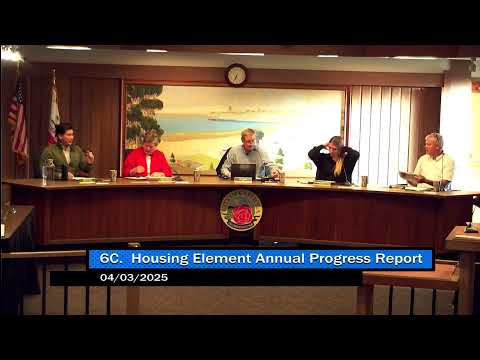
Planning staff presents 2024 housing element annual progress report; commission accepts presentation
Summary
Staff summarized the City of Capitola's 2024 housing activity, reporting 48 building permits issued counting toward RHNA in 2024, 70 entitled units with permits in progress, and housing programs and funding actions including a $1.25 million city commitment to a 52-unit project and partnerships for housing rehabilitation.
Planning staff presented the City of Capitola's 2024 annual housing element progress report on April 3, summarizing development activity, program implementation and next steps on multifamily standards and commercial redevelopment work.
Staff said the city must submit an annual progress report to the California Department of Housing and Community Development (HCD). For the most recent year staff reported 48 units with building permits issued in 2024 that count toward the Regional Housing Needs Allocation (RHNA). In addition, staff reported 70 units in entitled projects where building permits have not yet been issued; the largest of those is a 52-unit development at 109830 Eighth Avenue that is seeking financing and has received $1,250,000 in city funding.
The presentation showed a breakdown of the 48 units permitted in 2024 by affordability: 25 very-low, 10 low, 0 moderate and 13 above-moderate. Staff described other 2024 accomplishments including rent-assistance and security-deposit programs, zoning-code updates intended to reduce barriers to housing and outreach to developers and nonprofits. Staff said the city is seeking to preserve affordability at the Dakota Apartments, which houses 25 low- and very-low-income households and has affordability restrictions that staff said will approach expiration in roughly two and a half years.
Staff reviewed 2025 priorities: continued work on multifamily development standards (pending state feedback from HCD), commercial redevelopment conversations about the mall that include a proposed 75-foot height limit and changes to floor-area calculations for parking, outreach on potential sites including state park or agency parcels, and housing-trust-fund programs partnering with Habitat for Humanity to support deed-restricted properties. Staff described a program that would provide about $12,000 per household in material value for rehabilitation work through the Habitat partnership, offsetting labor costs.
Commissioners asked about HCD timelines and whether nearby jurisdictions have been certified; staff said the City of Santa Cruz and Santa Cruz County are certified. Commissioners and staff discussed the schedule for multifamily standards and the potential for an extension if state responses are delayed. No public speakers addressed the housing report. The commission accepted the presentation; no formal vote was required.