Get Full Government Meeting Transcripts, Videos, & Alerts Forever!
Get email alerts on the Criminal Records Gun Policy topic
No spam. Unsubscribe anytime.
House General Laws panel delays debate on bill to dismiss pending unlawful-possession charges
Summary
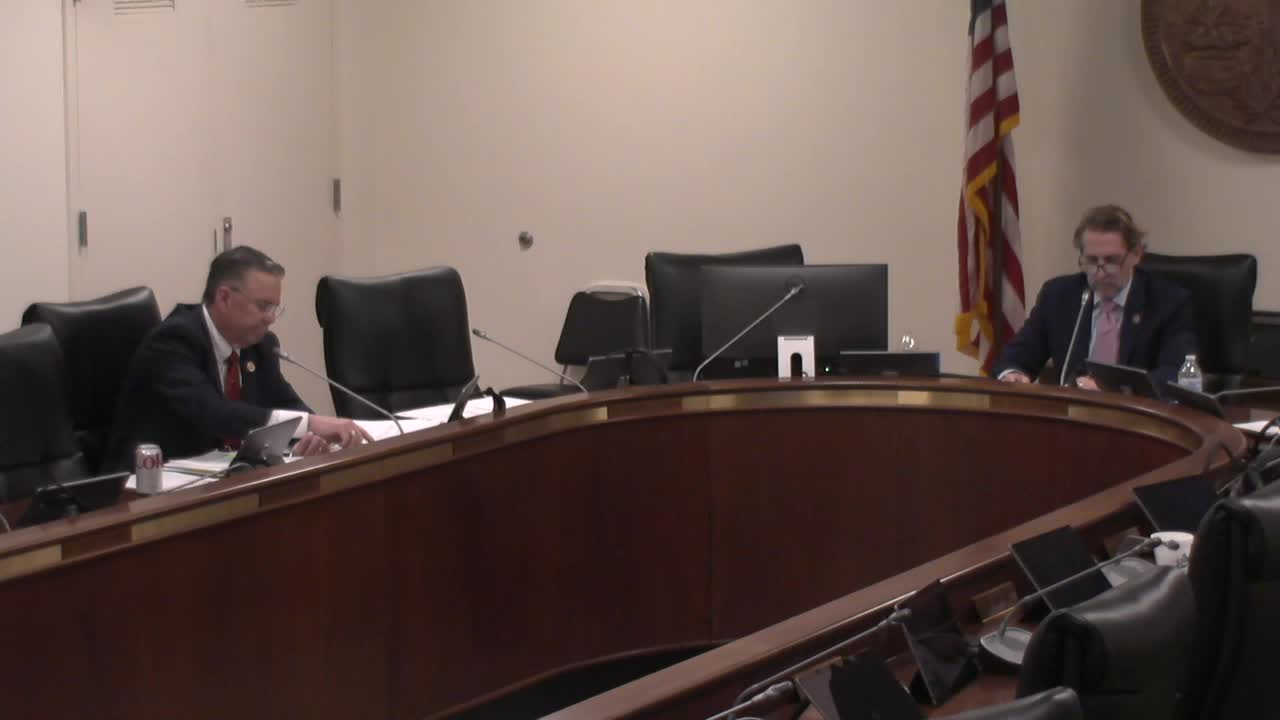
The House General Laws Committee on April 3 heard extended testimony on Senate Bill 136, a measure to require dismissal of pending charges for unlawful possession of a firearm or handgun when the possession occurred before the stateconstitutional-carry law took effect.
The House General Laws Committee on April 3 heard extended testimony on Senate Bill 136, a measure to require dismissal of pending charges for unlawful possession of a firearm or handgun when the possession occurred before the state constitutional carry law. Committee members heard from law enforcement representatives who opposed a broad dismissal and from the bill sponsor who said the measure corrects an unintended gap.
Senator Tedder, the bill sponsor, explained the billwould extend the expungement/dismissal remedy created when the legislature enacted constitutional carry so that people with pending charges — not only those already convicted before the law changed — would be eligible. "We passed the constitutional carry, to protect second amendment rights in South Carolina... we allow them that, that, expungement," Tedder said, urging the committee the fix is one of fairness for people whose cases remained pending when the law changed.
Why it matters: The bill touches criminal records, prosecutors discretion, and victims' safety; committee members pressed whether dismissing gun-possession counts could weaken bail decisions or lead to unintended releases.
Law enforcement opposition: JJ Jones, who identified himself as representing chiefs of police and the South Carolina Law Enforcement Officers Association, said he understood the bill association's position but ultimately opposed the measure. "I cannot go to bed at night knowing I didn't stand up to do the right thing," Jones said, arguing that dismissals could let dangerous people back into the community.
Sally Foster, director of the South Carolina Sheriffs' Association, told the committee the word "unlawful" matters to her members. "Again, unlawful is unlawful, and that I feel like that diminished my guys' previous law enforcement work," Foster said, thanking the sponsor for amendments but urging caution.
Scope and safeguards described by sponsor: Tedder said the bill has been amended to address prosecutors' and law enforcement concerns. He and other senators added language to make clear the bill applies only to the unlawful-possession count and does not automatically dismiss other criminal charges arising from the same stop or investigation. The measure also includes language intended to bar a dismissal under the new section from serving as a basis for civil liability, Tedder said.
Committee concerns and legal process: Committee members asked whether dismissing a pending possession count could create grounds to seek reduced bond or immediate release. Tedder and others replied that defendants have the right to file motions to reconsider bond and that judges would have discretion to consider violent-prior conduct or other pending charges. Committee members repeatedly pressed whether the changes could produce "loopholes" for defendants represented by skilled attorneys and noted solicitors' offices still had discretion in prosecutions.
Context and prior legislative history: Tedder told the committee the Senate and House previously passed a related bill last year; the governor vetoed it and the Senate subsequently overrode that veto, but time ran out before final action in the House. The sponsor and witnesses said there are an estimated "2 to 300" pending unlawful-carrying charges across the state that the bill would affect.
Committee action: With questions unresolved and additional testimony expected, a member moved to adjourn further debate until next week; the motion carried and the committee scheduled further consideration at a subsequent meeting.
Next steps: The committee will reconvene to continue discussion; no final vote on the merits was taken on April 3.