Get Full Government Meeting Transcripts, Videos, & Alerts Forever!
Get email alerts on the Committee Procedures And Votes topic
No spam. Unsubscribe anytime.
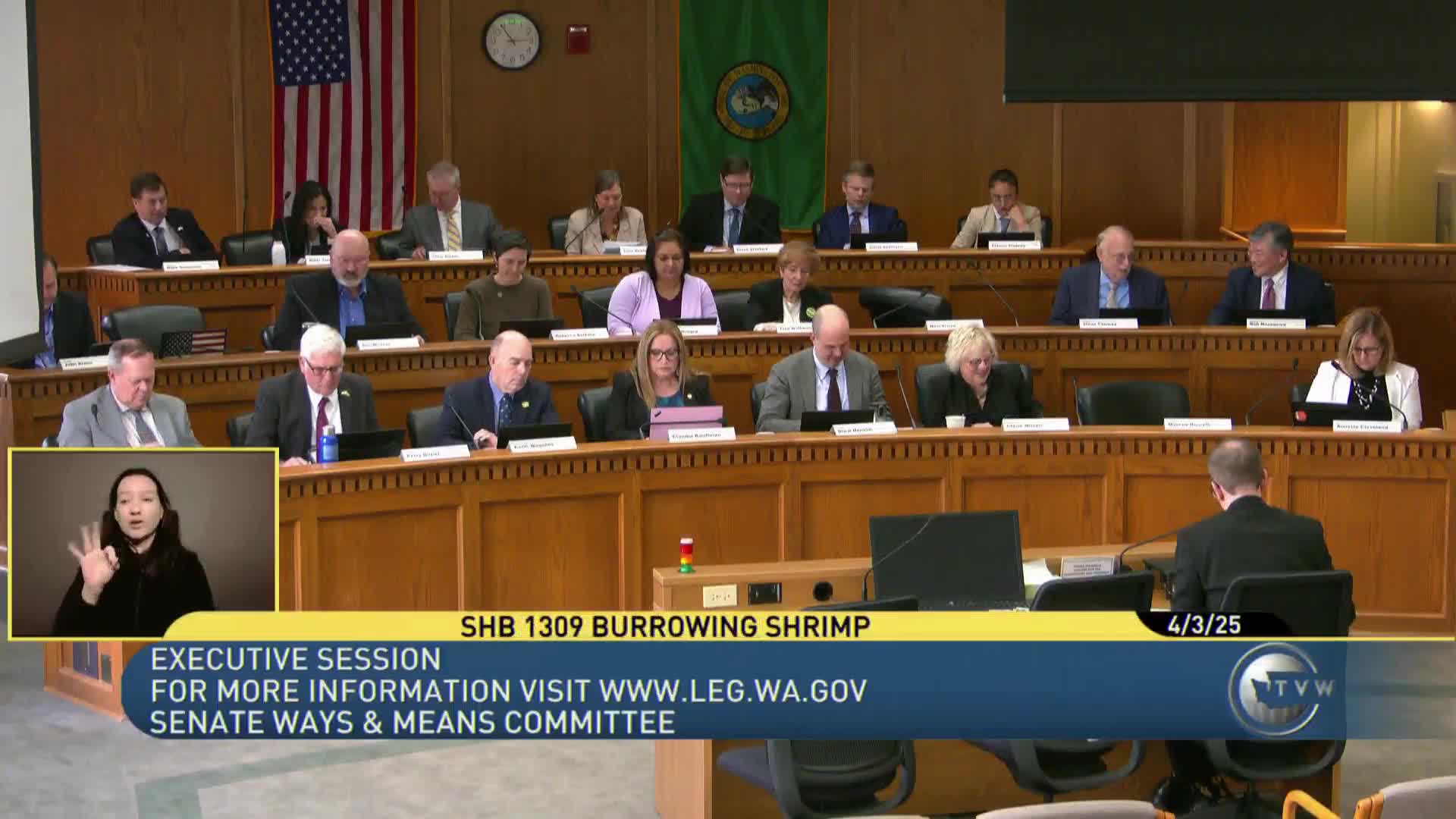
Ways & Means gives due‑pass recommendations to a slate of bills in executive session
Summary
In executive session the committee considered bills listed on the agenda (bills 3–12) and moved several substitute and engrossed House bills to the Rules Committee with due‑pass recommendations, usually subject to signatures and the adoption of striking amendments where noted.
The Senate Ways & Means Committee met in executive session April 3 to vote on a block of bills listed for consideration. For each bill the committee recorded moves and voice‑votes resulting in due‑pass recommendations (subject to signatures) and in several cases adopted striking or clarifying amendments before rolling the changes into substitutes.
Bills moved and passed (due‑pass recommendation to Rules Committee, subject to signatures) included: substitute House Bill 1309 (burrowing shrimp integrated pest management research program), substitute House Bill 1271 (permitting early deployment of state fire service resources, as amended), second substitute House Bill 1788 (workers' compensation permanent total disability benefit changes), House Bill 1494 (multifamily property tax exemption adjustments), substitute House Bill 1791 (real estate excise tax uses for affordable housing), substitute House Bill 1650 (airport maintenance and operation as REET‑eligible capital projects), engrossed substitute House Bill 1210 (targeted urban area tax preferences), Engrossed Substitute House Bill 1258 (Spokane County 911 revenue sharing, as amended), House Bill 1355 (tribal retail tax compacts), House Bill 1109 (public facilities district sales tax authorization period change, as amended), and several others enumerated on the committee agenda.
Committee practice in the session was to move each bill, adopt any staff‑briefed amendments (where offered) by voice vote, and then vote that the substituted or amended bill receive a due‑pass recommendation and be sent to the Rules Committee. Where striking amendments were adopted the chair announced that the bill had been amended by Ways & Means before being recommended to Rules. Several motions to adopt amendments were moved by individual senators and seconded on the floor before being adopted by voice vote.
Committee staff provided fiscal notes for bills during the public briefing earlier in the meeting; those fiscal notes remain the authoritative source for program and expenditure impacts. Committee members asked clarifying questions on select bills during the briefing stage, for example on bonding and tax credit duration for public facilities districts and on whether provisions altered local or state funding obligations.
Because the executive session encompassed a slate of bills rather than lengthy debate on a single measure, the committee used voice votes for action; the chair announced that the moved bills had received due‑pass recommendations subject to signatures and Rules Committee processing.