Get Full Government Meeting Transcripts, Videos, & Alerts Forever!
Get email alerts on the Charter Review topic
No spam. Unsubscribe anytime.
Augusta-Richmond County charter review committee hears bylaws, transparency and scheduling guidance at first meeting
Summary
The newly formed Augusta-Richmond County Charter Review Committee met for an organizational session where Institute of Government staff outlined the review process, public‑meeting rules and a proposed timeline; the committee did not elect officers and set follow-up scheduling tasks.
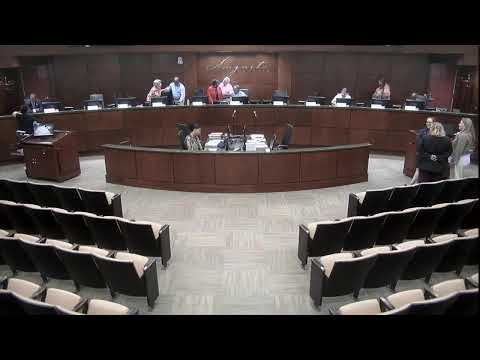
The Augusta-Richmond County Charter Review Committee convened for an organizational meeting where outside consultants and city staff laid out how the committee will review the county’s charter, how public access and open‑meetings rules will apply, and what the committee must do before sending proposed charter changes to the commission and legislature.
The committee was told its role is to analyze the current charter and propose deletions, additions or amendments for the Augusta Commission and, ultimately, the Georgia General Assembly and a voter referendum. Rex Facer, head of the Institute of Government’s local government unit, said the process will emphasize transparency: “we are going to make every effort to make sure that our meetings are as accessible as possible,” and that documents and redline drafts would be posted online.
The committee received a detailed overview of the charter review process and bylaws from Carl Vinson Institute staff and municipal counsel. Macy Lane Smith, research staff with the Carl Vinson Institute of Government, summarized the charter’s scope: “Your charter is basically a foundational document. It lines out your structure of government and the parameters of the three branches.” Jim Plunkett, interim city attorney, stressed public‑meeting rules and recordkeeping: “as a public body, all of your meetings are subject to the public” and communications among members can be subject to open‑records requests.
Why it matters: the charter defines government structure, elections, administrative duties and budgeting procedures. Changes proposed by this committee would travel from the committee to the Augusta Commission and the Georgia General Assembly and, if approved, to a public referendum. The committee’s work therefore frames how local power and services are organized for residents.
Key details discussed
- Scope and process: Institute staff said they will produce redline versions of the charter, maintain an online chart tracking proposed changes by section (vacancies, elections, qualifications, etc.), and prepare a report to accompany any revised charter submitted to the commission and legislature. (Rex Facer; Macy Lane Smith; Lori Bell, attorney with the Institute of Government.)
- Bylaws and officers: The meeting reviewed proposed bylaws that define officers (chair, vice chair, secretary), duties, agenda format and subcommittee rules. No officers were elected at the meeting. The consultants and counsel said a chair will be needed to set the committee’s work plan and call meetings; the body discussed delaying elections until members have more time to acquaint themselves.
- Public meetings and open‑records obligations: Plunkett and Institute staff reminded members that all committee meetings and many communications are subject to Georgia’s open‑meetings and open‑records laws. Plunkett cautioned members that text messages and personal social media activity can become public records and recommended using official channels for committee business. The consultants recommended holding public hearings and suggested multiple hearings to gather community input.
- Quorum, voting and removal: The enabling resolution sets an 11‑member committee with a quorum of seven and requires an affirmative vote of seven to adopt action. Members were told there is no proxy voting; missing more than three consecutive meetings without reason can trigger replacement by the appointing official. The committee’s authorized term runs through March 2026, with the possibility of extension if needed.
- Access and logistics: Staff said meetings will be livestreamed and posted on an Augusta web page created for the committee; the group discussed alternate rooms (Beasley Room, Conference Room 291) for better interaction and public access. Technical staff and the clerk will coordinate streaming and agenda notices.
What the committee decided and next steps
- The committee did not take formal votes on bylaws or officers at the session. Members and staff agreed to pause while the clerk and Institute staff check calendars and return with two proposed dates; Clerk Bonner will circulate the date that yields the greatest attendance. The consultants said they will come prepared to the next meeting with a limited presentation and options for dividing the charter into reviewable sections.
- Members raised preferences about pacing and whether to meet weekly or biweekly; no final meeting schedule was set. The committee will aim to balance thorough review with the committee’s statutory timeline and return with a proposed meeting schedule and nominations for officers at the next convening.
Ending
Committee members and staff closed the session after agreeing to reconvene on a date to be selected by Clerk Bonner from two Institute‑proposed options; the Institute will also post materials and a draft plan of work before the next meeting. The committee’s subsequent decisions — officer elections, bylaws adoption, public hearing schedule and any charter language changes — will be recorded in future meetings and, if adopted, forwarded to the Augusta Commission and the Georgia General Assembly for consideration.