Get Full Government Meeting Transcripts, Videos, & Alerts Forever!
Get email alerts on the Transportation topic
No spam. Unsubscribe anytime.
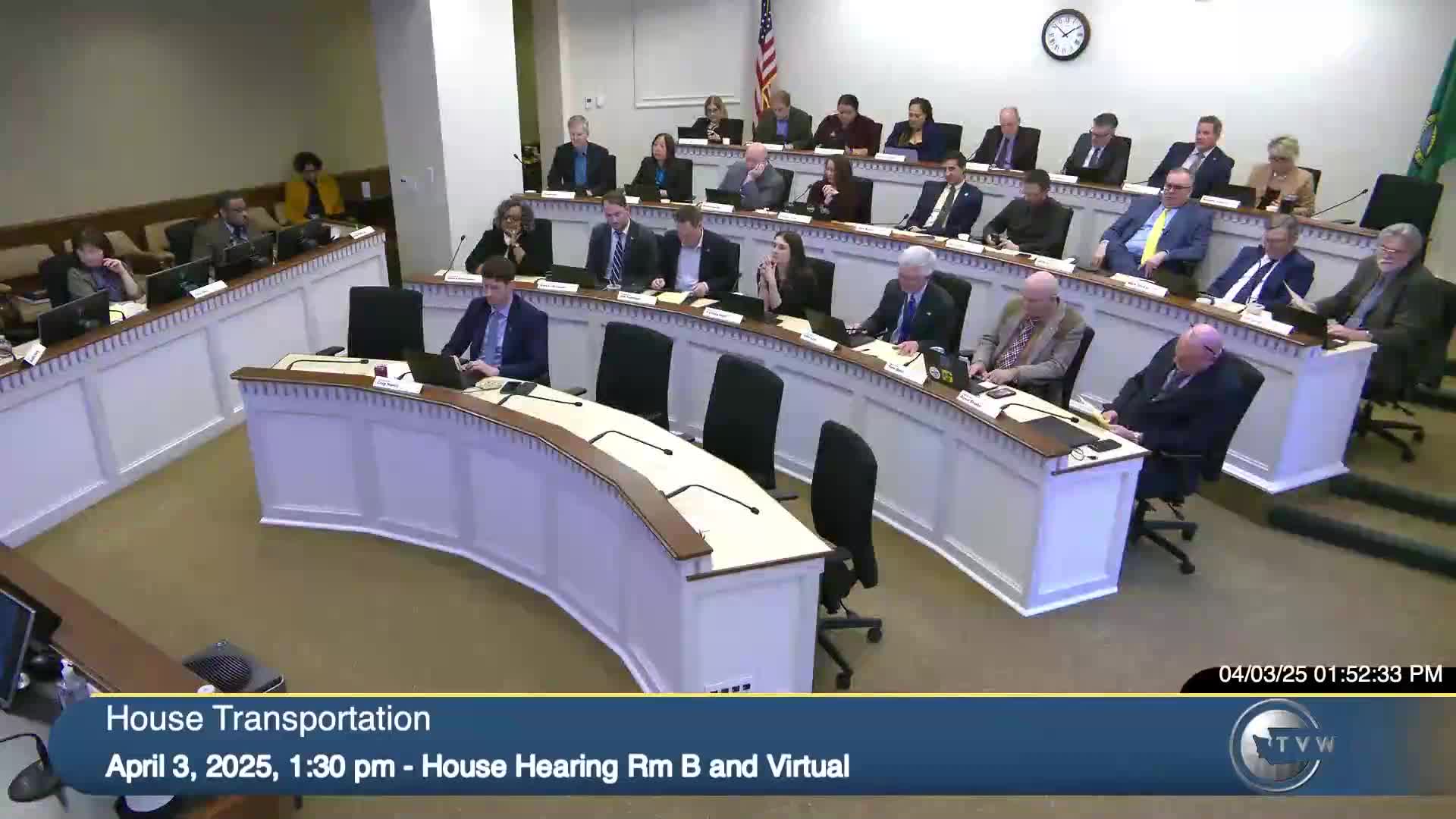
Committee hears bill to require covers on trucks carrying aggregate to reduce road debris and damage
Summary
Senators and witnesses debated a bill that would require coverings on vehicles carrying dirt, sand, gravel and other aggregate materials on paved public highways starting in 2028, with earlier limited requirements until 2028; exemptions and technical definitions prompted industry and equity concerns.
The Senate Transportation Committee took public testimony on substitute Senate Bill 52 15, which would require vehicles carrying dirt, sand, pebbles, cobbles, gravel and other aggregate materials on paved public highways to use covers to prevent spillage. The bill phases in requirements: an interim requirement applies until Jan. 1, 2028 for vehicles "susceptible to escaping" to use a cover if they are so equipped, and a full requirement beginning Jan. 1, 2028 that covered loads be used to prevent spillage and hazards to other highway users.
Staff briefed the committee on current law, which prohibits operating a vehicle with an unsecured load and provides a freeboard exemption allowing uncovered loads that maintain six inches of freeboard in certain circumstances. Sponsor Sen. Sharon Shumake said the bill aims to reduce collision- and damage-related insurance claims and lower premiums by reducing rocks and small debris on roads. "If we can reduce the amount of rocks and small debris that are on our roads, we can potentially reduce some of the amount of dings that we get on our windshields," she said, citing rising repair costs tied to advanced vehicle sensors.
Committee members raised technical questions about the statutory definitions. Staff noted the bill provides definitions for "aggregate materials," "covering," and "susceptible to being dropped, spilled, leaked, sifted, blown, or otherwise escaping," and committee staff offered to follow up on size thresholds and whether small loads such as a homeowner hauling a yard-bag of topsoil would be covered by the requirement. Industry witnesses, including the Washington Aggregates and Concrete Association and Washington Asphalt Pavement Association, said many members already comply with tarping rules but warned that some tarping systems cost substantially more than a $10 tarp. Michael Tranzo of the Aggregates Association estimated effective mechanical tarping costs at roughly $1,500 per truck-trailer and asked for clarifying amendments about how the standard would apply to side dumpers and partial loads.
Minority-owned-trucker advocates urged the committee to consider equity impacts and transitional assistance, saying mandated coverings could impose disproportionate costs on small, DBE- and minority-owned operators. Harpreet Kaur, representing minority-owned truckers, asked for further engagement and potential exceptions or financial support to avoid disadvantaging small fleets.
Staff said multiple agencies provided a fiscal note; cities and counties may incur training costs to enforce the change. Committee members pressed staff and sponsors for follow-up on the definitions and on the extent to which current law already prohibits unsecured loads. No committee vote was taken at the hearing; the public hearing was closed for this bill after testimony.
The hearing record shows a mix of support for the policy goal of reducing debris and concerns about implementation costs, statutory clarity and equity protections for small trucking businesses.