Get Full Government Meeting Transcripts, Videos, & Alerts Forever!
Get email alerts on the Public Safety topic
No spam. Unsubscribe anytime.
Advisory committee flags public-safety staffing concerns after recent stabbing incident; members debate funding options
Summary
Committee members described recent public-safety events and growing concern about police and fire staffing levels. Members debated whether staffing shortfalls could be treated as an emergency allowing use of one-time funds, and urged broader town discussion on sustainable funding for public safety.
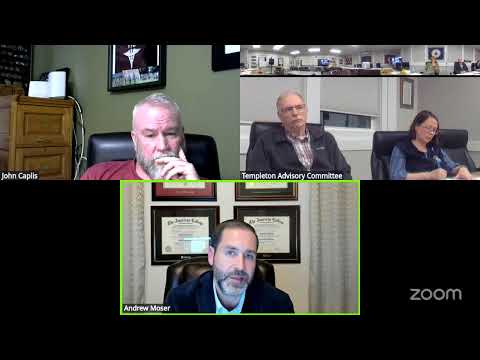
Members of the Templeton Advisory Committee spent substantial time discussing public-safety staffing after a recent stabbing in town. Members described the current police roster as smaller than recommended for the town’s recent population growth and warned that continuing to reduce staffing risks a serious incident and possible liability.
The conversation acknowledged a fiscal constraint: the town’s financial policy discourages using one-time (nonrecurring) funds to support ongoing staffing costs. Members noted that the policy includes an exception “in the event of an emergency or extraordinary or unforeseen events.” Several members argued the current staffing shortfall and the recent violent incident meet that standard; others cautioned that using free cash for recurring personnel costs would be unsustainable and contrary to fiscal policy.
Committee members discussed operational consequences: fewer officers limit nighttime enforcement (including OUI enforcement) and require more overtime and mutual-aid responses. Members also noted difficulty recruiting applicants for part-time positions following state training and certification requirements. Fire staffing was also raised; members said ambulance receipts partially offset firefighter compensation but that hiring remains challenging.
No formal motion to change budget policy or to authorize hiring from one-time funds was made. Instead, members framed the issue as an urgent topic for fuller town discussion and for the advisory committee’s continuing budget work. Committee members asked staff to bring sustainment options, cost estimates and possible funding pathways to future meetings. The advisory chair said the discussion was intended to provide public notice of the issue and to prompt further study by town leaders.
Why it matters: advisory members framed the staffing gap as a potential public-safety risk and a long-term fiscal challenge. The discussion did not create a new appropriation or policy change but generated a directive for more detailed analysis of options that may include reallocation, recurring revenue, or targeted capital/debt mechanisms.